Page 14 - Blog
- - January 04, 2026
Sharks have always held a certain allure, from their silent authority in ancient oceans to the awe their fossilized remains evoke today. Long before humans charted the seas, one of the most formidable predators to ever live ruled the waters—the Megalodon. Its legacy lives on not through bones, but through something more enduring: its teeth.
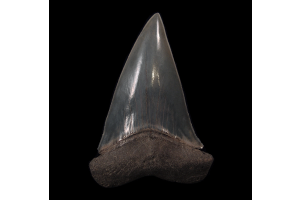
Nestled deep within the earth, each Aurora megalodon tooth offers a preserved echo of prehistoric life. These teeth, often found in phosphate-rich regions like Aurora, North Carolina, are more than pieces of hardened enamel; they’re tangible moments of an era long erased by time.
What makes this particular tooth so fascinating? It’s not only the age or the species, but where it comes from. Let’s shift from surface-level facts to the story behind these ancient treasures.
Why Aurora, North Carolina?
Among fossil collectors, Aurora holds a near-mythic status. The now-restricted Lee Creek mine, once a hub for public fossil hunting, has produced some of the
- - January 04, 2026
Megalodon teeth hold a powerful fascination. Whether you're a seasoned fossil collector or just beginning your interest in ancient marine life, authenticity matters. With demand for these fossils growing, the number of replicas on the market has increased. That makes it more important than ever to distinguish authentic specimens from imitations. We offer guidance to help collectors make informed decisions, especially when considering how to tell if a megalodon tooth is real. From physical traits to seller credibility, here’s a practical, research-based guide to help you evaluate what’s real and what’s not.
Why Identification Matters
Megalodon teeth are not only visually impressive but also scientifically valuable. Genuine teeth provide insight into the prehistoric ecosystems where these apex predators once thrived. Misidentifying a fake as real can lead to financial loss or unintentional misinformation. Knowing how to spot the indicators of authenticity allows buyers to make confident,
- - January 04, 2026
The ocean has always been a keeper of secrets. From coral-covered shipwrecks to species that glow in the dark, every corner of the sea holds a story. But among its most intriguing relics are those that come not from the present, but the ancient past—fossils formed over millions of years.
One such treasure, seemingly small and unassuming, has caught the attention of collectors and paleontologists alike. Tucked within layers of sediment and time lies a clue to a long-extinct predator. A clue no larger than your thumb.
Not far into this story's introduction lies a remarkable fossil: a baby megalodon tooth. Though miniature compared to its adult counterpart, its value runs deep—both in history and mystery.
Let’s explore why such a tiny artifact continues to spark wonder and conversation.
A Glimpse into Prehistoric Beginnings
The adult megalodon is a creature that requires no exaggerated storytelling. Estimated to have grown longer than 50 feet and ruled the seas more than 3 million years ago.
- - January 04, 2026
Collectors often assume every fossil tooth pendant is naturally preserved, but once you step into the world of high-grade specimens, authenticity requires far more scrutiny. Within the first moments of examining a megalodon shark tooth necklace, experienced paleontologists—and equally cautious collectors—begin evaluating a set of scientific markers that clearly distinguish authentic fossil features from polished or modified showroom pieces. At Buried Treasure Fossils, we help buyers make informed decisions so they can invest confidently in specimens that retain genuine prehistoric integrity rather than artificially enhanced surface appeal.
Why Authenticity Matters for Fossil Jewelry
Buying fossil jewelry isn’t only about aesthetics; for many collectors, a necklace represents a micro-collection of prehistoric evidence worn around the neck. Megalodon teeth carry scientific, financial, and cultural value, especially because mature Megalodon specimens are increasingly scarce in the market.
- - January 04, 2026
Understanding the deep-time record of ancient marine life requires geological precision, especially when examining iconic fossils such as a megalodon tooth in North Carolina. Within the first moments of studying these coastal deposits, researchers recognize how the Pungo River and Yorktown Formations preserve remarkably rich Miocene and Pliocene assemblages, allowing us to explore everything from sedimentary processes to the original habitat of giant sharks. At Buried Treasure Fossils, we work directly with specimens from these formations, including rare copper-red varieties associated with northern coastal localities, giving collectors and researchers access to authentic material supported by context and clarity.
Geological Setting: Why North Carolina Preserves Megalodon So Exceptionally
North Carolina offers one of the most scientifically valuable windows into the Neogene Atlantic coastal plain. Along ancient continental shelves and estuarine systems, conditions aligned perfectly to
- - January 04, 2026
Megalodon teeth are among the most sought-after fossils for collectors and enthusiasts alike. Their size, distinctive shape, and deep prehistoric significance make them an exciting discovery in the field. As enthusiasts of ancient marine relics, we offer helpful insights and tools for those ready to begin their own megalodon tooth-hunting adventure. With the right approach and knowledge, your first trip can lead to exciting finds. You might even uncover your first authentic megalodon tooth.
Understand What You’re Looking For
Before heading into the field, it’s crucial to know the basic characteristics of a megalodon tooth. These fossils can range from a few inches to over seven inches in length. The typical shape is triangular with fine serrated edges and a thick, strong root. While coloration can vary (from jet black to tan or grey), it often depends on the minerals in the surrounding sediment.
Don’t assume that every tooth-shaped object is a fossil. Megalodon teeth tend to have a heavier
- - January 04, 2026
Understanding the evolutionary strategies of apex marine predators requires examining the mechanical signatures they left behind, and few fossils provide more direct behavioral evidence than serrated shark teeth. Within the first layers of sedimentary preservation, specimens such as a big megalodon tooth allow us to assess not only tooth architecture but also edge wear, mineral replacement patterns, and micro-damage indicators often evaluated by scholars seeking to buy megalodon tooth specimens for research or collection. These physical traces make it possible to reconstruct predator-prey dynamics that shaped ancient marine ecosystems.
Microwear Analysis as a Tool for Behavioral Reconstruction
Microwear studies—microscopic evaluations of surface abrasion, edge rounding, and micro-chipping—offer a unique opportunity to quantify feeding behavior in extinct species. As we continue supporting researchers through our extensive fossil catalog at Buried Treasure Fossils, we consistently encounter
- - January 04, 2026
Verifying the authenticity of a megalodon tooth is essential for collectors, enthusiasts, and anyone fascinated by prehistoric relics. With many replicas and altered fossils on the market, recognizing what makes a tooth genuine can save you from costly mistakes. As fossil specialists, we have seen countless real and imitation specimens. An authentic megalodon tooth tells a story of deep time, and identifying one begins with knowing what to look for. We have examined numerous specimens over the years and can confirm that visual and tactile cues are often the most reliable indicators of the real thing.
1. Natural Serrations
Serrations are a defining feature of megalodon teeth. Real teeth display fine, consistent serrations along both edges, which were once used to slice through flesh. These should appear worn but still distinct, depending on age and preservation. Replicas may mimic this detail, but close inspection often reveals them to be too regular, too sharp, or entirely absent. Authentic
- - January 04, 2026
The ocean has always been a keeper of secrets—mysterious, vast, and brimming with remnants of ancient life. Among its most fascinating relics are the megalodon's fossilized teeth. This enormous prehistoric shark once ruled the seas. For those intrigued by the distant past and hungry for adventure, there’s something uniquely thrilling about discovering a piece of that history with your own hands.
Somewhere between wandering shorelines and exploring riverbeds, the journey to hunt a megalodon tooth becomes more than a simple search—it becomes a story. A story marked by patience, excitement, and the gentle crunch of gravel beneath your boots.
Let’s uncover the places where these ancient treasures are hiding and what makes the hunt so satisfying.
What Makes Megalodon Teeth So Desirable?
Megalodon teeth aren’t merely ancient bones buried in the earth—they’re sharp-edged symbols of survival from over 3 million years ago. Unlike bones, shark teeth are well-suited to fossilization due to their
- - January 04, 2026
Some relics from the past simply sit in museums, admired from a distance. But others are chased, collected, and talked about for generations. Fossilized teeth from an extinct sea predator fall into that latter category. They're not just rare—these teeth have a story to tell. Whether mounted behind glass or kept in a private collection, they serve as more than artifacts. They are fragments of the Earth's ancient past.
But what exactly makes a single Carcharocles megalodon tooth, buried for millions of years, so fascinating? The answer starts deep beneath the surface—literally and figuratively.
A Glimpse Into Prehistoric Depths
There was once a time when oceans weren’t places of quiet wonder. They were battlegrounds for survival. And at the top of this aquatic food chain was a predator so massive that even the largest great white shark today would seem like prey.
That predator was the Carcharocles megalodon, a name that sends a ripple of awe through marine historians and fossil collectors