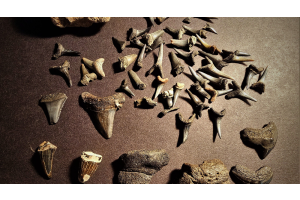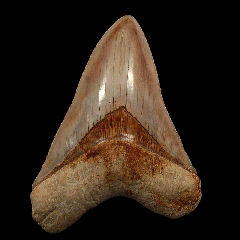
Shark teeth often feel like time capsules, carrying stories from oceans that vanished millions of years ago. Among these remarkable finds, fossilized Megalodon teeth fascinate collectors and scientists alike because they preserve both biological power and geological history. Within this category, the black megalodon tooth stands out as a striking example of how Earth’s processes shape prehistoric remains, revealing clues about ancient environments, burial conditions, and mineral transformation over deep time.
From Living Predator to Fossil Record
During the Miocene and Pliocene epochs, the Megalodon ruled prehistoric seas with massive jaws and serrated teeth designed to hunt whales and large marine mammals. As these sharks continuously shed teeth, countless specimens settled on ancient seafloors. When a tooth became buried under layers of sediment, fossilization began. A black megalodon tooth formed not through chance but through specific geological conditions that favored mineral-rich environments and limited oxygen exposure.
Mineral Replacement and the Science of Color
Fossilization transforms organic material into stone through mineral replacement. In the case of shark teeth, groundwater carries dissolved minerals into the porous structure of dentin and enamel. Iron, manganese, and other trace elements gradually replace original materials. When iron-rich sediments dominate, they react with oxygen over long periods, producing deep black or charcoal hues. This process explains why a black megalodon tooth often signals prolonged burial in oxygen-poor, mineral-dense sediments such as riverbeds, offshore deposits, or phosphate-rich layers.
Why Black Teeth Stand Out
Collectors often notice tan, gray, blue, or even reddish Megalodon teeth, each color reflecting a different fossilization pathway. Black specimens immediately attract attention because they indicate intense mineral saturation and significant geological age. Compared to lighter-colored teeth, black fossils usually experienced deeper burial or longer exposure to mineral-heavy groundwater. As a result, color becomes more than an aesthetic trait—it acts as a geological fingerprint that helps educators and students interpret ancient environments.
Geological Context and Locality Clues
Color variation also reflects where a tooth fossilized. Teeth recovered from Florida, the Carolinas, or offshore river systems frequently display dark tones due to phosphate-rich sediments. These environments encouraged mineral exchange at a faster and more complete rate. By examining a black megalodon tooth, paleontology enthusiasts can infer sediment chemistry, water movement, and even shifts in prehistoric sea levels. Each specimen connects biological history with Earth science, making it a powerful teaching tool.
Educational and Collecting Value
At Buried Treasure Fossils, authenticity and education guide every offering. Each Megalodon tooth includes historical context that explains age, habitat, and fossilization processes. For science enthusiasts, educators, and students, a black megalodon tooth provides a tangible way to explore mineral replacement, prehistoric ecosystems, and extinction events. Its bold color sparks curiosity while reinforcing lessons in geology, chemistry, and evolutionary biology.
Preserving Prehistoric Stories
Black fossil teeth also demonstrate durability. Heavy mineralization often strengthens the tooth, allowing serrations and structure to remain sharply defined. This preservation quality makes black specimens especially valuable for study and display. Museums, classrooms, and private collections rely on such fossils to communicate how life and Earth evolved together through immense spans of time.
Conclusion: Reading History in a Black Megalodon Tooth
A black megalodon tooth represents far more than a dramatic fossil color. It reveals mineral-rich burial environments, long-term geological processes, and the dynamic history of ancient oceans. By studying and collecting these specimens, science enthusiasts, educators, and students gain direct insight into fossil formation and prehistoric life. Exploring carefully curated Megalodon teeth allows curiosity to turn into understanding, encouraging deeper engagement with Earth’s past and the remarkable stories preserved beneath its surface.