

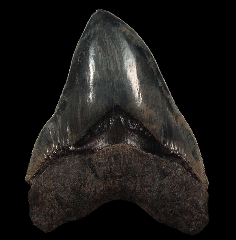
Hidden beneath ancient seabeds and river sediments, prehistoric shark fossils continue to fascinate serious collectors and long-term investors alike. Few specimens generate as much excitement as oversized shark teeth from the largest predator to ever roam the oceans. Within the first moments of exploration, collectors quickly learn why a megalodon tooth measuring over six inches commands exceptional attention, admiration, and value in the fossil market.
As collectors study fossil size distributions, a clear rarity curve emerges. While millions of teeth entered the fossil record, nature preserved only a tiny fraction of them in extreme sizes. A genuine megalodon tooth exceeding six inches represents the upper edge of biological possibility, mineral preservation, and geological survival, making such specimens highly sought after.
Understanding the Natural Size Limits of Megalodon Teeth
Megalodon sharks constantly shed and replace their teeth throughout their lives. However, most teeth fossilized in the five-inch range or smaller. Biology placed natural limits on how large each tooth could grow, even for a predator reaching nearly 60 feet in length. Only fully mature adults produced teeth approaching the six-inch threshold, and even then, breakage, feeding damage, and erosion reduced survival rates dramatically.
Collectors value these teeth because they sit at the extreme end of the size curve. A complete megalodon tooth over six inches reflects peak maturity, ideal jaw placement, and exceptional conditions during fossilization. Very few specimens escaped cracking, root loss, or serration damage over millions of years.
Geological Survival and the Rarity Curve
Size alone does not guarantee survival in the fossil record. Larger teeth experienced stronger water movement, sediment pressure, and environmental stress. As a result, most oversized teeth fractured long before discovery. This steep rarity curve explains why teeth larger than 6 to 6.5 inches appear so infrequently in verified collections.
When collectors encounter a large megalodon tooth with intact serrations, a solid bourlette, and a complete root, value increases exponentially. These characteristics signal minimal transport, stable burial, and favorable mineral replacement—conditions that rarely aligned.
Why Condition Drives Exceptional Value
Serious fossil investors focus on more than size. Condition ultimately determines long-term appreciation. Large teeth often display worn serrations or repaired roots, which reduces desirability. In contrast, museum-grade specimens preserve sharp cutting edges and symmetrical form.
A pristine megalodon tooth over six inches combines three critical value drivers: extreme size, structural integrity, and visual impact. These elements elevate a specimen from a collectible to an investment-grade fossil that anchors high-end collections.
Provenance and Authenticity Matter
Collectors also prioritize documented localities. Teeth recovered from well-known regions such as Florida, the Carolinas, or Sharktooth Hill carry added credibility due to established geological context. Authentic sourcing protects buyers from replicas and composites, which appear more frequently at larger sizes.
A verified megalodon tooth with clear provenance reassures investors and supports long-term market confidence. Legal collection practices and professional identification further enhance trust and resale potential.
Market Demand Among Serious Collectors
Demand for oversized specimens continues to grow as global fossil supplies tighten. Museums, private collectors, and educational institutions all compete for the same limited inventory. This competition drives consistent appreciation, especially for teeth exceeding six inches.
Because most surviving examples already reside in established collections, new discoveries rarely enter the market. Each time a high-quality megalodon tooth appears, it attracts immediate attention from seasoned buyers who understand the rarity curve.
Why Large Megalodon Teeth Remain Timeless Investments
Oversized megalodon teeth represent more than prehistoric artifacts. They embody apex predation, evolutionary history, and geological chance. Their scarcity ensures lasting appeal, while their dramatic presence makes them centerpiece fossils.
As collectors refine their focus toward quality over quantity, large specimens increasingly define elite collections. A well-preserved megalodon tooth over six inches consistently outperforms smaller examples in both desirability and long-term value.
Conclusion
A megalodon tooth exceeding six inches sits at the intersection of biology, geology, and rarity. Size distribution limits, survival challenges, and collector demand all contribute to its exceptional value. For serious fossil collectors and investors seeking specimens with lasting significance, these rare teeth represent the pinnacle of shark fossil collecting. Exploring carefully curated selections and securing authenticated examples allows collectors to add a truly iconic megalodon tooth to their collection while preserving a tangible piece of prehistoric ocean history.






