

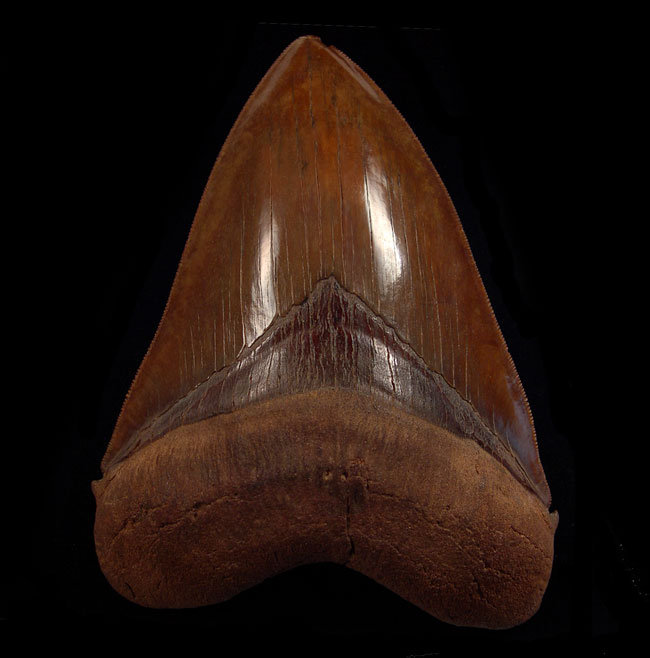
Megalodon teeth are among the most impressive prehistoric relics available to collectors, but not all are created equal. Some are rare not just because of their size or condition, but due to their striking coloration. Among these, copper‑red megalodon teeth hold a unique place in the fossil world. These specimens are known for their deep red to brown hues, smooth enamel, and remarkable preservation. We offer a wide variety of authentic fossil teeth, and one of the most in-demand selections is the copper‑red megalodon tooth in North Carolina.
What Is a Copper‑Red Megalodon Tooth?
A copper‑red megalodon tooth refers to a fossilized tooth that has taken on a deep reddish-brown hue during its preservation process. These colors are not artificial or enhanced. They form naturally over millions of years as the tooth absorbs minerals from its surrounding environment. In specific locations, iron-rich sediments interact with the fossilized enamel and dentin, resulting in a distinct copper or burgundy coloration.
While megalodon teeth are found across various coastal and river regions, copper‑red specimens are particularly associated with riverbeds and nearshore fossil layers where mineral conditions contribute to this transformation.
Why Color Matters in Fossil Collecting
Color is not just a visual detail; it reflects the geological history of the tooth. In copper‑red specimens, the unique mineral absorption indicates a particular type of sediment exposure. These mineral traces add an element of rarity and geographic distinction to the tooth.
Unlike traditional grey or black teeth commonly found in oceanic dredges or offshore collections, copper‑red teeth have a visibly warmer tone and are considered more eye-catching in displays. Their rarity and aesthetic appeal also drive demand among fossil enthusiasts and serious collectors.
Common Traits of Copper‑Red Teeth
When evaluating a megalodon tooth in North Carolina that has copper-red coloring, there are a few shared features that make them desirable:
● Deep red or reddish-brown enamel: This is the most notable characteristic and is usually uniform across the enamel surface.
● High-quality preservation: Many of these teeth have intact serrations, a solid root structure, and full enamel coverage.
● Smooth, polished surface: While not artificially polished, the fossilization process often leaves the tooth with a natural gloss.
● Minimal damage or repair: Due to where they are found, these teeth are often less eroded compared to offshore finds.
These factors contribute to a higher collectible value and a more impressive fossil overall.
What Makes North Carolina a Prime Source
The rivers and fossil beds of the East Coast are known for producing high-quality specimens. The megalodon tooth in North Carolina stands out because of its coloration and preservation. River diving and shoreline recovery methods often result in teeth with less wear compared to those found through offshore dredging.
Additionally, the fossil layers in certain parts of the state are mineral-rich with iron oxides. These minerals directly contribute to the copper-red tone. Teeth recovered from these layers can show a consistent color profile, adding to their value and authenticity.
How to Spot a High‑Grade Copper‑Red Tooth
For collectors, appearance is only one part of the equation. A high-grade copper-red specimen should also meet key quality benchmarks:
● Enamel integrity: No significant flaking or chips across the crown.
● Serration quality: Sharp, visible serrations along both edges.
● Root preservation: Full or nearly complete root without major breaks.
● No visible repairs or restorations: Authenticity is vital. Repaired specimens should always be disclosed.
Photographs are important, but direct inspection or purchasing from a reputable fossil provider helps ensure you get what you're paying for.
Why These Teeth Attract Experienced Collectors
While new collectors may gravitate toward large or black-colored teeth due to their dramatic look, experienced fossil buyers often seek out unique geological characteristics. A copper-red tooth offers both a striking appearance and a story about the conditions under which it fossilized.
Rarity also plays a role. Though teeth are still being recovered from rivers and nearshore zones, finding a well-preserved, richly colored megalodon tooth in North Carolina is not as common as it once was. As accessible fossil beds become more limited, the availability of high-quality copper-red examples continues to decline.
Buying Tips: What to Know Before You Purchase
Before investing in a copper-red specimen, consider the following:
● Ask about sourcing: Was the tooth found in a river or dredged from the ocean? River finds often retain more color and sharpness.
● Look for original condition: Teeth without repairs or enamel restoration are typically more valuable.
● Check the dimensions: Size still matters, especially when paired with exceptional coloration.
● Compare with others: Understanding the range of copper-red tones helps set your expectations for what a quality tooth should look like.
These tips can help collectors avoid overpriced or altered pieces and ensure the specimen is suitable for display or investment.
The Role of Mineral Composition
Copper-red teeth owe their color to iron oxide and other minerals in the soil and water where they fossilized. Sediment from certain river systems in the southeastern United States is especially rich in these minerals. Over thousands of years, the teeth absorb these elements, creating the deep red hues.
This mineral interaction is part of why no two teeth are exactly alike. Even within the same collection zone, variations in tone, sheen, and preservation occur. This uniqueness adds to the value for collectors who want a piece that feels truly distinct.
The Difference Between Red and Copper‑Red Teeth
It’s important to distinguish between standard “red” enamel tones and the deeper, more lustrous copper‑red category. True copper-red megalodon teeth often display a uniform tone that appears almost metallic in certain lighting conditions.
They are also less likely to have blotchy or uneven coloration. That consistency, combined with strong structure and sharp edges, places them in a higher quality bracket among fossil collectors.
Why These Teeth Make Strong Display Pieces
Apart from their rarity and historical value, copper‑red teeth are visually striking. Their rich tones offer a warm contrast to black or grey specimens, making them ideal for curated displays. The polished look of the enamel also helps them look refined in lighting-controlled cases or shadowbox frames.
Collectors who aim to build visually diverse displays often include a copper-red example as a centerpiece or highlight item. These teeth make a strong visual impression, especially when paired with information about their origin and preservation.
Conclusion: A Rare and Worthwhile Addition
A well-preserved megalodon tooth in North Carolina with copper-red coloration is more than just a fossil. It is a piece of ancient history preserved in vibrant mineral form. Its value lies not only in its size or sharpness but in the uniqueness of its color, which reflects the specific conditions under which it fossilized. These teeth are prized because they bring a distinct character to any fossil collection.
We offer authentic copper‑red specimens sourced from mineral-rich river systems known for producing these exceptional teeth. If you're looking to add a rare fossil to your collection, Buried Treasure Fossils provides quality, verified pieces that reflect the best of what the prehistoric world left behind.
Reach out to our team to explore available copper‑red megalodon teeth and get expert guidance on choosing the right fossil for your collection.






