

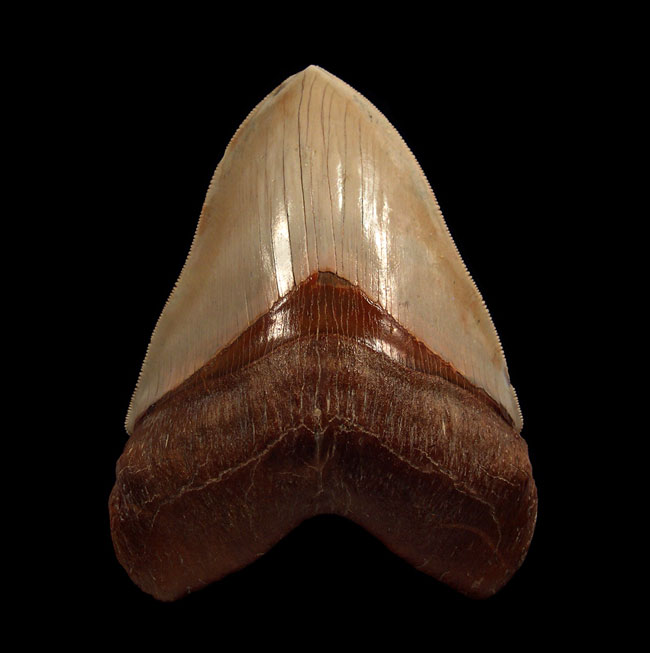
Each fossilized tooth tells a story millions of years in the making. Megalodon teeth are among the most fascinating relics of Earth’s deep past. When a megalodon tooth is found, it isn't just a spectacular fossil; it is a direct link to a time when oceans were ruled by one of the most powerful predators that ever lived. These teeth reveal valuable scientific information about marine ecosystems, migration patterns, and even prehistoric climate. At Buried Treasure Fossils, we offer authentic specimens that help collectors and researchers explore this prehistoric narrative.
What Exactly Is a Megalodon Tooth?
A megalodon tooth is a fossilized remnant of Otodus megalodon, a species of extinct shark that lived roughly 23 to 3.6 million years ago during the Miocene and Pliocene epochs. The teeth are enormous, triangular, and serrated, measuring up to 7 inches in length.
Because the megalodon’s skeleton was made of cartilage, teeth are some of the only surviving parts. That means every time a megalodon tooth is found, it becomes a crucial piece of evidence for understanding this apex predator.
Size Isn’t Just for Show
The size of a megalodon tooth isn’t just impressive. It holds important clues about the shark itself. Larger teeth typically suggest older and more mature individuals. In Chile, one of the largest teeth ever recorded was discovered, measuring over 7 inches. That particular tooth provides insights into the species' growth rates, hunting capacity, and even its geographical range.
By comparing teeth of various sizes from different regions, researchers can estimate how far these sharks traveled and how diverse their population was.
Ocean Chemistry Locked in Fossil Enamel
Fossilized enamel can retain isotopic signatures that inform scientists about the ocean’s chemistry millions of years ago. When a megalodon tooth is found, especially from a location like South America, the enamel may contain data about ocean temperatures, salinity levels, and the food web at that time.
Through stable isotope analysis, paleontologists gain an understanding of the ancient marine food chain. It shows what megalodons were eating and how climate shifts may have impacted their hunting habits and eventual extinction.
Migration Clues from Global Tooth Discoveries
Megalodon teeth have been found on every continent except Antarctica. Their global distribution reveals that megalodons were highly mobile and adaptable predators. Fossil finds in North and South America, Europe, and Asia confirm that these sharks swam across vast oceanic corridors.
This global presence suggests not only widespread migration patterns but also the existence of warm coastal waters in many regions during the Miocene and Pliocene epochs. As ocean currents changed and temperatures dropped, the species likely lost key hunting grounds, which contributed to its extinction.
What Tooth Locations Say About Prehistoric Geography
When researchers map where megalodon teeth have been discovered, they can reconstruct ancient coastlines and ocean geography. For instance, teeth found in the Atacama Desert in Chile confirm that the region was once covered by a shallow, warm sea.
Over time, tectonic activity uplifted the region, and what was once the seabed is now high desert terrain. These shifts in topography and climate are recorded in the fossil record, and megalodon teeth are among the most telling artifacts of those transitions.
Bite Marks Tell the Story of Prey and Predation
Some megalodon teeth show wear patterns and even breakage, indicating the kind of prey the sharks pursued. Others are found embedded in fossilized whale bones, suggesting active predation on large marine mammals.
These interactions give scientists a clear view of the food chain and show that megalodons were not only top predators but also likely shaped the evolution of their prey. The damage observed on some teeth reflects the force of their bite and the defensive mechanisms of ancient whales.
Why South American Finds Are So Important
Tooth discoveries from South America, particularly Chile, have proven crucial to understanding megalodon ecology. The tooth referenced in the Buried Treasure Fossils blog measures among the largest ever found. This specimen, unearthed from marine sedimentary rock, demonstrates that some of the most massive individuals lived in that region.
Moreover, the quality of preservation in Chilean fossils allows for more precise scientific analysis. It helps refine the timeline of megalodon extinction and offers a clearer picture of their final strongholds.
Connecting the Dots with Comparative Analysis
By comparing megalodon teeth found in various locations, researchers can determine differences in population size, tooth morphology, and even behavioral patterns. Teeth from Florida, for example, differ slightly in enamel color and density from those found in Peru or Chile.
These distinctions suggest that different subpopulations may have existed or that environmental conditions shaped tooth development differently. This comparative approach builds a more comprehensive view of the ancient marine world.
A Valuable Fossil for Science and Collectors
Whether it is found embedded in limestone or extracted from riverbeds, each megalodon tooth has scientific value. But collectors also prize these fossils for their rarity and history. Many specimens sold through specialized dealers are not just display pieces. They are windows into a long-lost ecosystem.
Collectors who acquire authentic specimens help preserve these stories and contribute indirectly to research. Fossil sourcing from reputable locations ensures that the specimen has been ethically and legally obtained and holds real paleontological importance.
Conclusion
When a megalodon tooth is found, it is more than a relic. It is a record of ancient oceans, prehistoric climate, and a predator that once ruled the seas. From analyzing the enamel for isotopes to tracking global migration through discovery sites, each tooth expands our understanding of Earth’s geological and biological history. The Chilean specimen discussed in the Buried Treasure Fossils blog is one of the finest examples of this.
A selection of authentic megalodon teeth is available through Buried Treasure Fossils, offering a tangible connection to this fascinating prehistoric predator. Whether you are a collector or a curious observer, each fossil holds the story of a prehistoric ocean waiting to be explored.
Explore our collection of authentic megalodon teeth and bring a piece of prehistoric ocean history home. Have questions? Contact us today to learn more about these incredible fossil specimens.






