Verifying the authenticity of a megalodon tooth is essential for collectors, enthusiasts, and anyone fascinated by prehistoric relics. With many replicas and altered fossils on the market, recognizing what makes a tooth genuine can save you from costly mistakes. As fossil specialists, we have seen countless real and imitation specimens. An authentic megalodon tooth tells a story of deep time, and identifying one begins with knowing what to look for. We have examined numerous specimens over the years and can confirm that visual and tactile cues are often the most reliable indicators of the real thing.
1. Natural Serrations
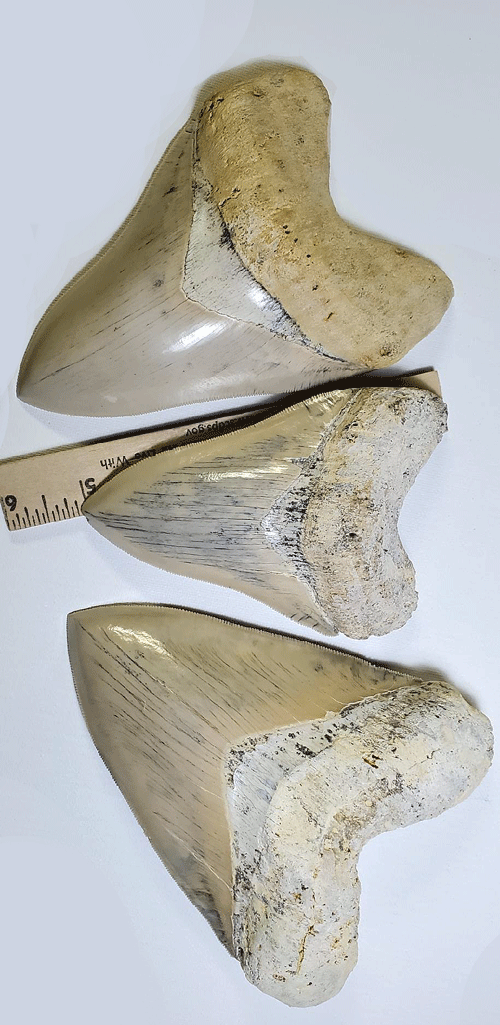
Serrations are a defining feature of megalodon teeth. Real teeth display fine, consistent serrations along both edges, which were once used to slice through flesh. These should appear worn but still distinct, depending on age and preservation. Replicas may mimic this detail, but close inspection often reveals them to be too regular, too sharp, or entirely absent. Authentic serrations have an organic, slightly imperfect pattern due to fossilization and wear over millions of years.
Collectors should also check whether the serrations are symmetrical on both sides of the tooth. Natural teeth may have one side slightly more worn than the other due to feeding behavior or environmental exposure, adding another layer of authenticity.
2. Visible Enamel and Texture
The enamel of a genuine megalodon tooth will show a natural sheen and subtle texturing. It is not smooth like a manufactured surface but displays microscopic ridges and pitting, especially under light. A fake tooth might have a glossy, plastic-like finish or an overly polished surface. In contrast, an authentic specimen retains the weathered texture of fossilization, which is difficult to replicate.
Some real teeth might even exhibit tiny barnacle scars or mineral streaks embedded within the enamel, further supporting their age and natural origin.
3. Well-Defined Root Structure
An authentic tooth will often include the root or part of it, showing dense, compact structure with possible mineral staining. The root can vary in color and completeness, but it usually contrasts with the enamel. A real fossilized root might display cracks or mineral lines that formed during fossilization. By comparison, artificial roots often appear smooth, clean, or too symmetrical, which suggests casting or artificial shaping.
If a tooth has a clean break line or looks like it has been reattached, that could be an indication of reconstruction rather than authenticity.
4. Color Derived from Sediment, Not Paint
Color is not just aesthetic. It is an important clue. The color of an authentic megalodon tooth depends on the minerals present in the sediment where it fossilized. These can range from black and gray to brown, tan, or even blue hues. Uniform or overly vibrant coloration may suggest artificial dye or paint. If the tooth's color appears painted or if it chips to reveal a different tone underneath, it may not be real. Genuine fossils show color changes that match their mineral context. This is a core detail in verifying an authentic megalodon tooth.
Keep in mind that color alone should not be the only factor used for evaluation, but it should be cross-checked with other physical signs.
5. Weight and Density
Fossilized teeth are mineral-heavy and often surprisingly dense. A megalodon tooth should feel solid and weighty in your hand. While exact weight varies with size and mineral content, a real fossil will never feel hollow or light like a resin replica. Counterfeits are often lighter due to synthetic material or filled molds. If the tooth feels unusually light for its size, it warrants closer inspection. Handling real specimens will help develop a sense for how heavy a genuine tooth should feel.
6. No Signs of Mold Lines or Air Bubbles
Replicas created using casting methods often leave behind mold lines, air bubbles, or seam marks. These imperfections usually appear along the sides or base of the tooth. A genuine megalodon tooth will not have these synthetic artifacts. Instead, natural imperfections such as chips, cracks, or weathering marks are normal and expected. Always inspect the tooth closely under natural light or magnification to catch these subtle clues.
7. Matrix Attachment or Residue
Matrix refers to the sediment or rock that surrounds a fossil during formation. Some authentic megalodon teeth come with traces of matrix still attached, especially around the root or base. While this is not always present, its presence is often a good sign. The matrix should look natural and match the fossil’s environment. Artificial residue or glue around the tooth might indicate a reconstructed or composite piece. A tooth that appears too clean or smooth on all sides may have been artificially cleaned or tampered with.
8. Signs of Wear and Damage Consistent with Age
Authentic fossils show natural wear from millions of years in sediment. You might notice chips, flaking, erosion, or even marine encrustations. These signs do not devalue the specimen. Instead, they help confirm authenticity. A tooth that looks too clean or too intact without any signs of age may be suspect. Collectors often seek teeth with wear because they tell a deeper story of time and environment. Look for scratches or worn tips, which are indicators that the tooth saw active use before fossilization.
9. No Added Restoration or Artificial Enhancement
Some fossils are partially restored, meaning parts may be filled or reconstructed to improve appearance. While not always deceptive, this affects authenticity. Full restorations, especially those that rebuild large portions or apply heavy paint, reduce the integrity of the specimen. A fully authentic megalodon tooth should be as unaltered as possible. Transparency from sellers about restoration is also an important factor. Always ask for restoration details if a seller does not provide that information up front.
10. Provenance and Seller Credibility
Where the tooth came from matters; provenance refers to the documented history of a fossil’s origin, such as the dig site, location, and collection date. Authentic fossils often include such documentation or come from reputable collectors. Reliable sellers are transparent about the source, age, and condition. Avoid listings that are vague or show generic images. Provenance adds scientific and collectible value, especially for serious fossil enthusiasts.
Conclusion: Authenticity Is in the Details
When it comes to verifying an authentic megalodon tooth, it is all about careful observation. Texture, color, weight, and origin all play a role in separating genuine specimens from imitations. As collectors or enthusiasts, being informed helps protect your investment and preserves the legacy of one of Earth’s most remarkable predators.
We have handled thousands of teeth, and each authentic megalodon tooth tells a unique story shaped by ancient oceans and time. For those seeking guaranteed authenticity and verified fossil specimens, Buried Treasure Fossils offers a trusted source backed by experience and care.
Have questions or need help identifying a genuine specimen? Reach out to us today for expert guidance and trusted support.