Megalodon teeth are some of the most awe-inspiring fossils you can add to your collection. But identifying their origin can be just as thrilling as the tooth itself. One location in particular has earned a reputation for producing highly sought-after specimens: Sharktooth Hill in California. We offer a wide range of authentic megalodon teeth, and if you're wondering whether your prized specimen hails from this famous site, this guide is for you. A true Sharktooth Hill Megalodon tooth has several telltale characteristics that set it apart. Knowing what to look for adds value and pride to your collection.
Why Sharktooth Hill Is So Famous
Sharktooth Hill is located in the Temblor Formation of central California, just outside of Bakersfield. This site has been a goldmine for marine fossils from the middle Miocene epoch, dating back roughly 15 million years. It's not just the abundance of teeth that makes this site famous. The excellent preservation and unique coloration are what collectors find truly irresistible.
When a Megalodon tooth is found at Sharktooth Hill, it tends to exhibit different textures, hues, and wear patterns than those discovered in places like the Southeast U.S. or coastal Peru. These traits make the Sharktooth Hill Megalodon tooth an impressive and distinct addition to any collection.
Pay Attention to the Color and Patina
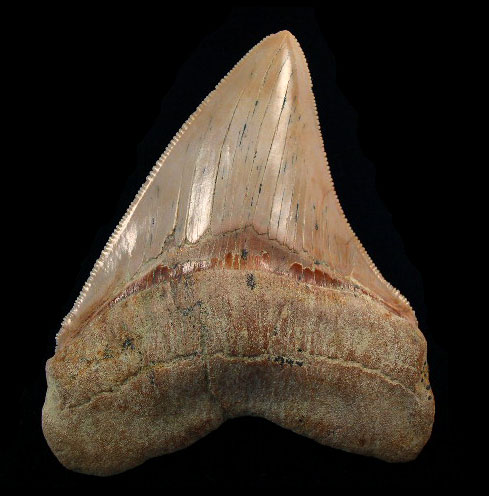
One of the first features you'll notice about a Sharktooth Hill Megalodon tooth is the earthy, sometimes orange or rusty-brown tone. The soil composition and mineral content in the area are responsible for this natural staining. Unlike the darker gray or black tones common in river finds from places like South Carolina, Sharktooth Hill specimens often appear lighter and more matte in finish.
The patina is a weathered surface layer formed over millions of years. It tends to have a soft, almost velvety appearance. This is a result of the arid environment and dry fossilization conditions. It stands in contrast to the polished, water-worn look of teeth from wet excavation zones.
Look at the Serrations and Root Shape
Another identifying feature is the condition of the serrations. Many Sharktooth Hill Megalodon teeth still retain visible serration lines despite their age. This is impressive considering the fossil dates back to the Miocene era. If your tooth has well-defined serrations and minimal erosion, especially along the edges, it may very well be from this site.
The root also provides clues. A typical Sharktooth Hill Megalodon tooth will have a thick and robust root that shows only slight erosion. These roots often retain more of their original structure compared to those found in saltwater or heavily eroded environments. Some collectors note a more squared-off or symmetrical base, which can help differentiate these teeth from others.
Enamel Texture and Color Contrast
Inspecting the enamel closely will also give you valuable information. Sharktooth Hill Megalodon teeth usually have a smooth enamel layer with minimal pitting or cracking. This preservation quality can be attributed to the site’s stable burial environment.
Another clue lies in the color contrast between the enamel and the root. On many Sharktooth Hill specimens, the enamel may appear brighter or glossier than the root. The root retains the muted, mineral-stained color from the surrounding sediment. If your fossil features this kind of contrast, you may be looking at an authentic Sharktooth Hill Megalodon tooth.
Size and Shape Variations
While Megalodon teeth can vary in size depending on where they’re found, Sharktooth Hill is known for producing medium to large specimens. These usually range between 3 and 5 inches. The shape tends to be triangular and well-balanced with slightly curved tips. Some may be wider than they are tall, which is a trait not as commonly found in East Coast finds.
The symmetry and overall condition of the tooth also play a role. Specimens from this location often show minimal distortion. They fossilized in more stable geological conditions, which helped preserve their shape.
Is Your Tooth an Upper or Lower?
The position of the tooth in the Megalodon’s jaw can add to your identification. Upper teeth are typically larger, broader, and more symmetrical. Lower teeth are often narrower and more angular. Sharktooth Hill yields a high number of upper jaw teeth. These are a favorite among collectors due to their striking appearance and surface area.
If your specimen is a wide, symmetrical, well-preserved tooth with clear serrations and light coloration, you may have an upper jaw fossil from Sharktooth Hill.
Origin Matters to Collectors
Why does the origin of a Megalodon tooth matter so much? For many collectors, it's about the narrative. A Sharktooth Hill Megalodon tooth carries with it a prehistoric story shaped by California’s ancient marine ecosystems. It represents a different chapter in the Megalodon's evolutionary timeline compared to specimens from other parts of the world.
Having a tooth from this specific site increases the collectible and resale value. This is especially true when it’s well-preserved. For fossil dealers and collectors alike, knowing the origin allows for accurate classification, pricing, and appreciation of each piece.
Confidence Through Trusted Sellers
While it’s exciting to try identifying your specimen based on physical traits, confirming the origin is best done through reliable sellers. Reputable fossil dealers will label the location of origin clearly and provide verification of authenticity whenever possible.
If you're actively seeking a Sharktooth Hill Megalodon tooth, make sure the dealer specifies the origin in the listing. They should also describe the key characteristics you’ve just learned about, such as coloration, enamel condition, and serration clarity. It also helps to study comparison photos and become familiar with other specimens from the same site.
Closing Thoughts
Knowing how to tell if your Megalodon tooth came from Sharktooth Hill isn’t just about satisfying curiosity. It adds depth to your collection, enriches your understanding of paleontology, and elevates the story behind the fossil. If your specimen features those classic reddish-brown hues, sharp serrations, thick roots, and minimal enamel wear, chances are good it originated from this iconic California fossil bed.
We offer a curated selection of fossil specimens, including those from renowned locations like Sharktooth Hill. To ensure you’re acquiring a genuine Sharktooth Hill Megalodon tooth, shop with a trusted source like Buried Treasure Fossils, where quality and authenticity are always prioritized.
Explore rare Sharktooth Hill Megalodon teeth, add real fossil history to your collection, and shop trusted, verified specimens with confidence.