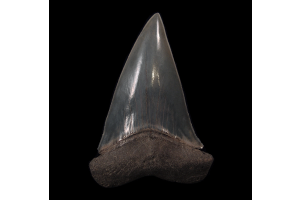
Page 8 - Megalodon
- - January 05, 2026
Some fossils aren't content to sit quietly in a drawer or behind museum glass—they beg for stories to be told. In the rocky cliffs and desert sands of North Africa, a specific relic continues to capture curious minds. With serrated edges and ocean-aged enamel, the teeth of Carcharocles megalodon - Morocco offer more than a glimpse into prehistoric life. They stir questions about what once ruled the seas—and what remains in stone.
These teeth are more than collectibles; they are slices of a forgotten era. Let’s explore why these fossils from Morocco are making waves among collectors and paleontology enthusiasts alike.
A Glimpse Into an Ancient Ocean
Millions of years ago, before sand claimed the seafloor and tectonic shifts shaped continents, the region we now call Morocco was submerged beneath vast oceans. These waters were home to some of the fiercest marine predators ever to exist. Among them, the megalodon reigned supreme—its bite force unmatched, its presence legendary.
As the land
- - January 05, 2026
For serious fossil enthusiasts, museum curators, and educators, few discoveries ignite the imagination quite like a towering shark tooth from Earth’s most legendary predator. Within the first moments of encountering a fossil this massive, its geological age and sheer presence speak for themselves. Among these treasures, the 8 inch megalodon tooth stands in a category of its own—an elite benchmark for rarity, beauty, and scientific importance that we at Buried Treasure Fossils are proud to offer to high-end collectors and institutions.
The Extraordinary Rarity of an 8-Inch Tooth
The journey from ancient ocean floor to the hands of a modern collector is incredibly improbable for any Megalodon tooth, but achieving a slant height of eight inches pushes that improbability into near-mythical territory. By including an 8 inch megalodon tooth in the earliest sections of this discussion, it becomes clear why these massive fossils demand deep respect: fewer than a fraction of one percent of all
- - January 05, 2026
Color in fossilized teeth serves as more than a visual feature. For collectors and fossil enthusiasts, it provides clear clues about a fossil’s condition and its origin. This becomes essential when identifying Otodus megalodon in Bone Valley specimens. The fossils found in this region display distinct traits, and color stands out among them. These tones help confirm authenticity, set expectations for value, and allow collectors to identify high-quality fossils from this historically significant location.
What Does Fossil Color Reveal About Otodus megalodon in Bone Valley?
Bone Valley preserves marine fossils with remarkable clarity. This region developed during the Miocene and Pliocene periods and contains phosphate-rich sediments. As prehistoric marine life settled into this soil, their remains absorbed minerals, altering their structure and color. Over millions of years, this process led to fossilized teeth that now display light beige, gray, pale blue, and tan hues. These shades reflect
- - January 05, 2026
When fossil collectors talk about “bucket list” pieces, one name comes up again and again: the Aurora Megalodon tooth. These teeth don’t just look impressive. They come from a famous site, they’re no longer being found, and they often show incredible natural color and detail. Let’s break down why serious collectors chase these teeth, what makes Aurora different from other Megalodon locations, and how specialists like Buried Treasure Fossils help collectors find the right piece with confidence.
What Is An Aurora Megalodon Tooth?
Megalodon was the largest shark that ever lived. It ruled the oceans from about 20 to 3 million years ago and may have reached 50–60 feet in length.Its teeth are big, thick, and triangular, with strong cutting edges. An Aurora Megalodon tooth is a Megalodon tooth found in or around the Lee Creek phosphate mine in Aurora, North Carolina. This mine exposed layers from the Miocene and Pliocene epochs, which preserved shark teeth in excellent condition over millions
- - January 05, 2026
The alarming actuality of the megalodon, the aged behemothic of the ocean, continues to absorb both scientists and enthusiasts alike. At Buried Treasure Fossils, we’ve long celebrated the fascination surrounding megalodon teeth — their sheer size and serrated beauty stir the imagination. However, there is a lesser-known yet equally intriguing aspect of this prehistoric predator: Megalodon tooth ledges. These captivating geological formations offer more than just ancient dental remains. They open a gateway into an oceanic world that existed millions of years ago, helping us better understand the vast and vibrant ecosystems that the megalodon once ruled.
Unearthing the Enigma of Megalodon Tooth Ledges
While many are familiar with individual megalodon teeth, few know about the incredible phenomenon of Megalodon tooth ledges. These are not isolated finds or random deposits, but rather distinct geological layers that lie on the ocean floor. Often found along continental shelves, these ledges
- - January 05, 2026
Collectors often talk about the almost magical look of certain fossil shark teeth, especially those prized for their deep blue crowns. These stunning specimens have fascinated beginners and seasoned collectors for years, not just for their beauty but for the scientific story their colors reveal. Within the first few layers of analysis, we encounter one of the most extraordinary examples of this phenomenon: Otodus megalodon from Lee Creek, a fossil type that consistently sparks curiosity among STEM learners, teachers, and fossil enthusiasts alike. At Buried Treasure Fossils, we’ve spent decades handling, studying, and sharing these remarkable pieces, and we’re thrilled to break down the science behind what makes them so uniquely blue.
Why Blue? The Geological Magic of the Pungo River Formation
When someone sees a blue-crowned Megalodon tooth for the first time, the reaction is almost always the same—surprise, awe, and disbelief that nature alone created such color. The secret lies in the
- - January 05, 2026
Fossil hunting has always been about more than finding ancient bones or buried shells. It’s a way to connect with Earth’s distant past—one that existed long before humans set foot on the planet. For those who find joy in tracing these ancient timelines, few discoveries evoke the same thrill as a fossilized megalodon tooth (Otodus).
Tucked into the dry hillsides near Bakersfield, California, sits a fossil site that has amazed collectors and paleontologists for decades. Revered for the volume and condition of its marine fossils, Otodus megalodon – Sharktooth Hill has earned its place in the fossil world.
This quiet stretch of land holds more than dust and stone—it has stories. Here’s why Sharktooth Hill continues to fascinate fossil lovers across the world and why a megalodon tooth from this site is more than a collectible—it’s a genuine piece of natural history.
A Fossil Bed Frozen in Time
Roughly 15 million years ago, the land now called Sharktooth Hill was underwater, covered by a warm,
- - January 05, 2026
A huge fossil tooth from Chile has grabbed attention all over the world. It comes from Megalodon, the giant prehistoric shark, and it ranks among the largest Megalodon teeth ever found in the region. Scientists study it for clues about ancient oceans, and fossil collectors love it because of its size, rarity, and story. This tooth is often talked about as the world’s biggest Megalodon tooth from Chile, and for good reason. It is extremely large, very well preserved, and found in a place that is already famous for marine fossils.
Why the Chile Tooth Stands Out
Chile has a rich geological history. Tectonic movements and volcanic activity have lifted ancient seafloors up into cliffs and coastal rock, turning parts of the shoreline into natural fossil beds. The Chile Megalodon tooth was discovered in these rugged coastal sediments by a team of geologists, paleontologists, and local experts. It stands out because:
● It is exceptionally large, placing it in the top size range for Megalodon
- - January 05, 2026
Buying a Carcharocles megalodon tooth online is exciting. You’re not just shopping for a “cool shark tooth.” You’re choosing a real fossil that has survived for millions of years. That also means you need to be a bit careful. There are many sellers, many prices, and many quality levels. Some fossils are top-grade. Some are heavily repaired. Some are not worth the money at all. With a few simple checks, you can avoid common beginner mistakes and feel confident about what you’re buying.
Mistake 1: Skipping the Seller Check
Many beginners look only at the tooth and ignore who is selling it. This is risky.
Before you buy, always check the seller:
● Do they specialize in fossils, especially shark teeth?
● Do they show clear, close-up photos of the exact tooth?
● Do they give a full description (size, location, condition)?
● Do they sound knowledgeable about Carcharocles megalodon and fossil grading?
Trusted dealers like Buried Treasure Fossils build their business around real, well-described
- - January 05, 2026
Long before curious learners and fossil collectors held a massive shark tooth in their hands, that relic began a remarkable journey shaped by ancient oceans, shifting continents, and millions of years of geological transformation. Within the first moments of imagining this prehistoric path, you might picture towering waves, enormous predators, and deep-sea landscapes that existed long before humans. And somewhere within that incredible timeline, the gigantic Otodus megalodon left behind the teeth that continue to captivate us today.
These extraordinary fossils connect us to a world that vanished more than three million years ago, yet they remain surprisingly accessible—especially in regions like coastal Georgia, where nature preserved them with exceptional care. At Buried Treasure Fossils, we’ve spent decades studying, sourcing, and sharing these remarkable teeth, helping collectors and science enthusiasts experience the awe of holding Earth’s ancient history.
When Giants Ruled the Miocene