

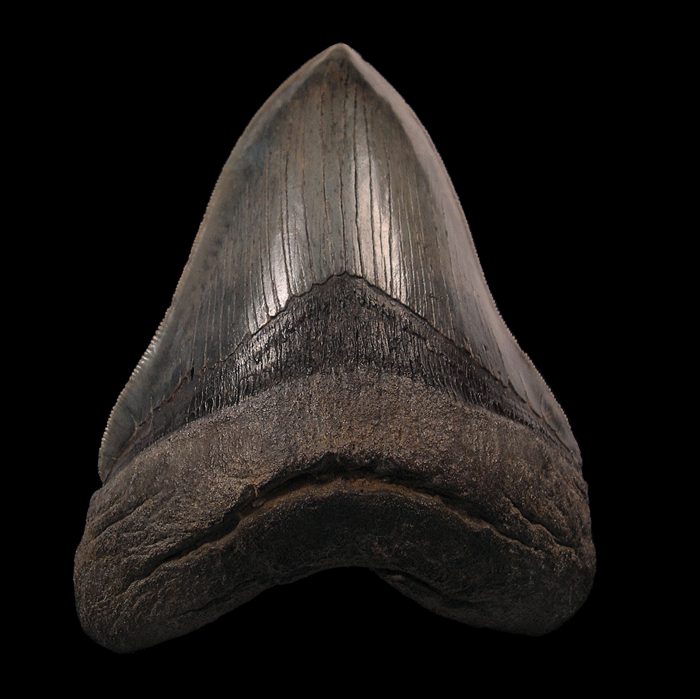
Long before curious learners and fossil collectors held a massive shark tooth in their hands, that relic began a remarkable journey shaped by ancient oceans, shifting continents, and millions of years of geological transformation. Within the first moments of imagining this prehistoric path, you might picture towering waves, enormous predators, and deep-sea landscapes that existed long before humans. And somewhere within that incredible timeline, the gigantic Otodus megalodon left behind the teeth that continue to captivate us today.
These extraordinary fossils connect us to a world that vanished more than three million years ago, yet they remain surprisingly accessible—especially in regions like coastal Georgia, where nature preserved them with exceptional care. At Buried Treasure Fossils, we’ve spent decades studying, sourcing, and sharing these remarkable teeth, helping collectors and science enthusiasts experience the awe of holding Earth’s ancient history.
When Giants Ruled the Miocene Seas
During the Miocene era, roughly 20 million years ago, the ocean was teeming with powerful marine mammals, thriving coral ecosystems, and expanding shark populations. At the top of the food chain was the legendary Otodus megalodon, a shark whose massive jaws and serrated teeth allowed it to dominate even the largest whales. Each tooth—sometimes reaching over 7 inches—functioned like a bone-crushing blade, built for both strength and efficiency.
Every time this giant lost a tooth, a new one grew in its place. Over thousands of generations, countless teeth settled onto the ocean floor, beginning the long process that would eventually transform them into the fossils we cherish today. But something special happened in what would one day become Georgia: the perfect combination of chemistry, sediment, and time.
From Ocean Predator to Buried Treasure: How Megalodon Teeth Fossilize
The fossilization journey begins the moment a tooth sinks into soft seabed sediment. In most environments, organic materials break down and disappear, but in rare conditions—like those found in the Miocene deposits beneath modern Georgia—the process unfolds differently.
Buried quickly under layers of sand, silt, and clay, the tooth is shielded from oxygen and decay. Mineral-rich groundwater slowly permeates the sediment, allowing the tooth to undergo permineralization. Over millions of years, the original biological material is replaced with minerals such as iron, phosphate, and manganese. These elements strengthen the tooth, turning it from biological matter into stone while preserving every serration and enamel ridge.
That’s why Otodus megalodon teeth often retain astonishing detail despite being older than most mountain ranges on Earth. For collectors and science lovers, the survival of these intricate features is nothing short of extraordinary.
Why Georgia Creates Some of the Finest Megalodon Teeth on Earth
Georgia’s coastal fossil beds are famously rich in dark-colored, exceptionally preserved Megalodon teeth. But what makes this region so unique?
Highly Mineralized Sediments
Millions of years ago, Georgia's coastal plain was submerged beneath warm, shallow seas. When Megalodon teeth settled there, they were surrounded by sediments rich in iron and manganese—minerals that contribute to their deep charcoal, blue-gray, or even jet-black coloration. Unlike lighter teeth found in Florida or the Carolinas, Georgia specimens are known for their dramatic hues and superior structural integrity.
Gentle Geological Activity
Some regions experience tectonic uplift or heavy erosion that damages fossil layers. Georgia, however, offers more stable conditions. Teeth from this area often appear remarkably intact, with thick roots, bold serrations, and unbroken bourlettes.
Limited Wear
Because many Georgia Megalodon teeth remained buried rather than tumbled by waves or dredged by strong currents, they show minimal rolling or abrasion. This is why collectors often remark that Georgia teeth feel “fresher” despite their ancient age.
Depth and Protection
Some Georgia deposits are deeply buried, protecting fossils from modern environmental disruptions. When these layers are exposed—sometimes through legal land-based digging or riverbank erosion—collectors discover teeth that look almost untouched by time.
As part of our work at Buried Treasure Fossils, we’ve handled thousands of specimens, and Georgia pieces consistently stand out for their exceptional preservation, striking colors, and impressive size. These qualities are precisely why premium specimens—like the massive 6-5/16" Georgia tooth highlighted in our collection—are so sought after.
The Geological Ballet Behind Their Iconic Dark Coloration
One of the first things collectors notice about Georgia Megalodon teeth is the deep, almost smoky richness of their color. This is not paint, staining, or artificial enhancement—it's the result of a slow and delicate natural process.
Iron and Manganese Enrichment
As groundwater migrated through sediment layers, it infused the buried teeth with dissolved minerals. Teeth exposed to higher iron concentrations acquired reddish or brown undertones, while manganese contributed to the classic dark gray or black tones.
Anoxic Conditions
Low-oxygen environments prevent decay and allow minerals to accumulate uniformly. These stable conditions create some of the most visually stunning fossil teeth in the world.
Time and Pressure
Over millions of years, sediment compression increases mineral retention. The darker the tooth, the longer and more thoroughly these minerals replaced the organic structures.
This combination of chemistry and time results in the dramatic spectrum of hues seen in Georgia Megalodon teeth—colors that continue to fascinate collectors, educators, and scientists.
How These Ancient Treasures Reach Us Today
Finding a Megalodon tooth is never simple. Even in fossil-rich regions, these specimens remain buried beneath layers of soil, clay, and rock. Collectors legally recover Georgia teeth through careful land access agreements, river dives, and excavation on private properties. At Buried Treasure Fossils, we ensure every tooth we offer is ethically sourced, legally collected, and fully authenticated.
We evaluate each fossil based on enamel quality, bourlette completeness, serration sharpness, root integrity, and overall preservation. This commitment helps beginners, educators, investors, and seasoned collectors alike feel confident when adding a new fossil to their collection.
For us, every tooth tells a story—a story that began on the Miocene ocean floor and continues each time someone holds that piece of Earth’s history for the first time.
Conclusion: Connecting Past and Present Through Otodus megalodon Fossils
The journey of a Megalodon tooth, from resting beneath a Miocene sea to emerging in the fossil beds of modern Georgia, is a testament to nature’s power to preserve its own history. These ancient treasures offer a window into a world ruled by the mighty Otodus megalodon, allowing us to learn, appreciate, and share the mysteries of prehistoric life. As you explore your own fossil journey, we invite you to discover more extraordinary specimens, deepen your understanding, and let curiosity guide you—because the next remarkable find might be waiting just for you.






