

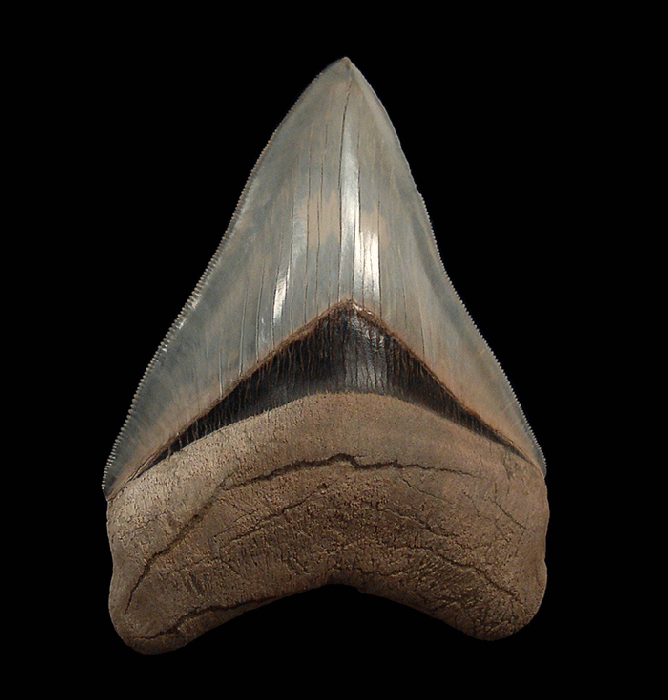
Collectors often talk about the almost magical look of certain fossil shark teeth, especially those prized for their deep blue crowns. These stunning specimens have fascinated beginners and seasoned collectors for years, not just for their beauty but for the scientific story their colors reveal. Within the first few layers of analysis, we encounter one of the most extraordinary examples of this phenomenon: Otodus megalodon from Lee Creek, a fossil type that consistently sparks curiosity among STEM learners, teachers, and fossil enthusiasts alike. At Buried Treasure Fossils, we’ve spent decades handling, studying, and sharing these remarkable pieces, and we’re thrilled to break down the science behind what makes them so uniquely blue.
Why Blue? The Geological Magic of the Pungo River Formation
When someone sees a blue-crowned Megalodon tooth for the first time, the reaction is almost always the same—surprise, awe, and disbelief that nature alone created such color. The secret lies in the sediments of the Pungo River Formation, where Otodus megalodon from Lee Creek specimens were buried for millions of years. This marine deposit, dating back roughly 14–15 million years, is incredibly rich in phosphate minerals. As tooth enamel absorbs minerals from its surrounding environment during fossilization, it undergoes chemical transformation.
In the case of the Lee Creek mine, the sediments contain a unique blend of phosphate, glauconite (a greenish mineral that turns blue in certain conditions), iron, and trace elements like manganese. When these elements interact with fossilized enamel over millions of years, they help create that striking cool-toned spectrum—ranging from smoky blue-gray to electric, ocean-inspired blue. The mineral cocktail of this formation exists nowhere else in exactly the same balance, which is why Lee Creek fossils stand apart from those found in other regions.
How Fossilization Creates a Blue Crown
To understand what makes Otodus megalodon from Lee Creek so special, it helps to look at the fossilization process itself. When a Megalodon shed a tooth—something it did relentlessly throughout its lifespan—it would sink into soft sediment where oxygen rapidly decreased. This low-oxygen environment preserved the tooth long enough for minerals to gradually replace original biological material. Over hundreds of thousands of years, then millions more, the transformation continued as groundwater seeped through layers of sediment rich in phosphate and glauconite.
Unlike other fossil sites where minerals tend toward sandy tans, charcoals, or jet blacks, Lee Creek’s mineral profile saturates the enamel with subtle metallic ions that shift toward blue. Manganese often contributes darker blue-black tones, while iron can produce lighter, brighter blue shades when oxidized under the right conditions. This interaction is so distinctive that experienced collectors can often identify a Lee Creek tooth by color alone—no labels required.
For those exploring fossil collecting for the first time, these subtle shifts in mineral chemistry are often a fun and fascinating entry point into paleontology. And for our more advanced collectors, the presence of blue coloring can significantly increase a tooth’s rarity and desirability.
Why Lee Creek Teeth Are Different From Other Megalodon Sites
Across the globe, Megalodon teeth appear in a variety of colors—from chocolate brown to cream, jet black, orange, olive, and even red—depending on the sediments they fossilized in. But only a handful of sites produce natural blue tones, and none do it as consistently or as vibrantly as the Lee Creek phosphate mine.
Several factors make this location truly exceptional:
1. The Mineral-Rich Sediments
The phosphate-heavy deposits of the Pungo River Formation are world-renowned. This mineral density not only contributes color but preserves enamel and serrations with exceptional clarity, giving collectors beautifully sharp teeth with little weathering.
2. Rapid Burial in Marine Sediments
Because Megalodon teeth in this region were buried quickly, they avoided erosion and mineral leaching. This means Lee Creek specimens often show crisper bourlettes, intact serrations, and tighter root structures compared to fossils from riverbanks or coastal deposits.
3. Unique Glauconite Presence
Glauconite is the true color-maker. Its ability to shift toward blue and green tones under long-term geological pressure is the reason these teeth have crowns unlike anything found elsewhere.
4. Relatively Stable Groundwater Chemistry
The slow and steady movement of mineral-rich groundwater at Lee Creek allowed color to intensify over extended periods rather than fade or distort.
5. A Fossilizing Environment That No Longer Exists
Because the mine closed to public collecting in 2008, no new Lee Creek Megalodon teeth are being unearthed. All currently circulating specimens come from older private collections or early excavation periods. This rare context adds to their scientific value—and their collector appeal.
The Human Story: Why These Fossils Fascinate Us
At Buried Treasure Fossils, we often see how excited new collectors feel when handling their first blue-crowned Megalodon tooth. There’s something magical about holding a piece of deep-ocean history, especially one so visually striking. STEM educators love using these fossils to spark discussions about geological chemistry, environmental science, and prehistoric ecosystems. Even advanced collectors often say that Lee Creek teeth feel like the “crown jewels” of their shark tooth displays.
Beyond beauty, each tooth tells a story. The Megalodon that dropped it may have hunted early whales along ancient coastlines. Its tooth may have fallen during a feeding strike or routine shedding cycle. Then the ocean floor buried it, mineralized it, and transformed it. Millions of years later, it emerges as a scientific artifact and a natural work of art.
The Blue Crown as a Marker of Quality
When collectors browse high-grade fossils, blue crowns tend to stand out—not only aesthetically, but because they indicate a tooth formed under stable conditions with ideal sediment chemistry. Most Lee Creek teeth with strong blue coloration also boast:
● Excellent enamel preservation
● Crisp bourlette texture
● Minimal root erosion
● Strong contrast between crown and root
This makes them appealing to fossil investors as well. With mine access permanently closed and demand continually rising, high-quality Lee Creek teeth often appreciate in value over time.
Conclusion: A Rare Treasure in the World of Fossil Collecting
The breathtaking color of an Otodus megalodon from Lee Creek tooth isn’t an accident—it’s the result of millions of years of geological artistry within the Pungo River Formation. This unique blend of phosphate-rich sediment, glauconite minerals, and stable fossilization conditions explains why these teeth look so different from those found anywhere else in the world. For curious learners, beginner collectors, and passionate STEM explorers, these fossils offer not just beauty but an entire story about Earth’s prehistoric oceans and the forces that shaped them.
For anyone eager to experience that sense of wonder firsthand, we encourage you to explore our collection and discover the rare blue treasures waiting to become part of your journey into natural history. Whether you're growing your collection or finding your very first specimen, there’s always something extraordinary to uncover when you learn with us—and when you collect with us.






