

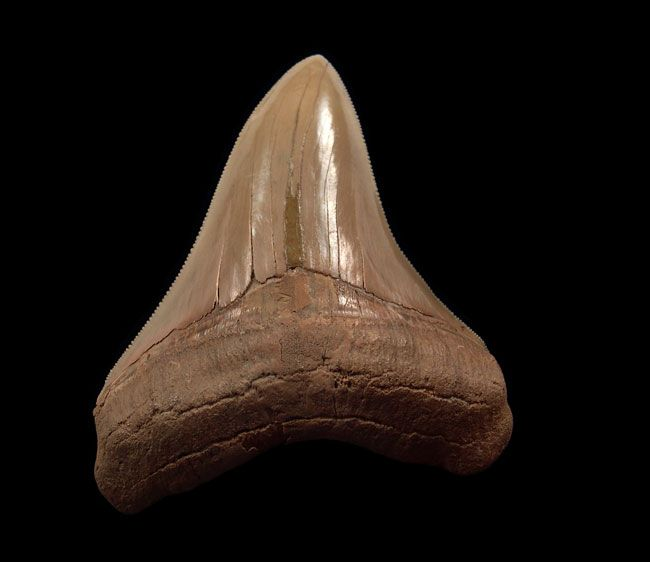
The first thing most new fossil collectors learn is that not all ancient shark teeth are created equal. Some come from riverbeds, some from deep offshore dredges, and some—like the extraordinary finds along Maryland’s Calvert Cliffs—come from one of the most scientifically rich marine deposits in North America. Within these layers lies something truly iconic: Otodus megalodon from Calvert Cliffs, a name that excites everyone from casual collectors to seasoned paleontology enthusiasts.
For us at Buried Treasure Fossils, Calvert Cliffs hold a special meaning. We’ve worked with collectors for decades, and the stories that accompany fossils from this region reveal just as much wonder as the specimens themselves. These cliffs continue to inspire us because they offer a rare window into the ancient Miocene world—and some of the most distinctive fossil shark teeth ever discovered.
A Geological Time Capsule: Why Calvert Cliffs Matter
What makes Calvert Cliffs so unique starts with their formation. Stretching nearly 25 miles along the Chesapeake Bay, these dramatic, crumbly walls of sediment represent Miocene-era layers deposited between 18 and 10 million years ago. During this time, warm shallow seas covered the region, attracting abundant marine life—whales, dolphins, seals, giant fish, rays, and of course, the apex predator of its age, the Megalodon. These cliffs are not just visually striking; they are actively eroding. With every storm and tide cycle, new fossil material breaks free from the clay-rich wall, revealing treasures that have been sealed away for millions of years. This constant exposure is one reason why collectors dream of finding Otodus megalodon from Calvert Cliffs here. The site is both a museum and an excavation zone, sculpted naturally by the Chesapeake Bay itself.
Why Megalodon Teeth From This Region Are So Special
In the fossil world, locality matters. A tooth from the rivers of the Southeast may be impressive, but a Megalodon tooth from Calvert Cliffs tells a more specific geological story. These fossils often show a signature palette—creamy tans, pale yellows, soft browns, and subtle bluish hues unique to the region’s mineral composition. This gives Otodus megalodon from Calvert Cliffs a recognizable character prized by both beginners and advanced collectors.
Additionally, the Miocene formations at Calvert Cliffs are incredibly well-studied. When you hold a tooth from this region, you’re not just examining an isolated fossil; you’re holding part of a detailed scientific narrative about ancient marine ecosystems. The cliffs provide context—depth, time period, associated fauna, and even climate insights. That is one reason we love sharing Calvert Cliffs fossils with new collectors: they instantly spark curiosity about Earth’s history.
A Collector’s Dream: Beauty, Rarity, and Scientific Value
Calvert Cliffs Megalodon teeth are rare compared to teeth from more commonly hunted regions. Their scarcity alone elevates their appeal, but their aesthetics seal the deal. Many display sharp serrations, well-preserved bourlettes, and surprisingly complete root structures. The calming pastel coloration makes them stand out in any display.
This combination—low supply, high scientific relevance, and natural beauty—means collectors keep their eyes open for opportunities to acquire one. We regularly hear from customers who have spent years hoping to find a Calvert Cliffs specimen that meets their standards. When a high-quality tooth emerges, especially one with great enamel, crisp serrations, or unusual color patterns, it becomes a memorable acquisition.
A Glimpse Into Megalodon’s World
The Miocene oceans were dynamic, bustling ecosystems, and Megalodon sat at the top of the food chain. Its teeth reveal much about its lifestyle. The massive triangular shape, robust structure, and serrated edges were ideal for slicing through prey such as early whales. A single adult Megalodon could reach around 60 feet in length—making it one of the most powerful predators that ever lived.
At Calvert Cliffs, many associated fossils help paint the full ecological picture. Whale bones, porpoise skulls, ray plates, fish remains, and smaller shark species all appear in the same layers. To us, this interwoven fossil record is what makes the cliffs so compelling. A Megalodon tooth isn’t just a fossil—it's a clue to a once-thriving ancient ecosystem.
Why Beginners Love Calvert Cliffs Fossils
New collectors often feel intimidated by the vast range of fossil types available. But Calvert Cliffs fossils make learning easier, because they come with:
● Clear age and locality
● Consistent geological context
● A strong scientific foundation
● Aesthetic appeal that feels rewarding even to first-time buyers
Plus, the cliffs have a long history of accessible fossil hunting, which means many collectors have nostalgic ties to the region. Even those who never visited the site often feel a personal sense of connection when they hold a tooth from such a famous fossil locality.
How We Support Collectors Discovering Calvert Cliffs Fossils
Since 2000, we have made it our mission to bring authentic, carefully sourced fossils to collectors of all experience levels. When we offer a Calvert Cliffs Megalodon tooth, it is always selected based on quality, provenance, and overall collector value. We highlight details such as enamel condition, serration sharpness, root completeness, and any repairs, because transparency is one of our core principles.
We also know that beginners appreciate guidance. That’s why we provide background information on every specimen we carry—helping collectors feel confident, informed, and excited about their discoveries.
The Lasting Appeal of Calvert Cliffs Megalodon Teeth
Calvert Cliffs aren’t just a fossil site—they’re a storybook carved into sediment. As long as the cliffs continue to erode, they’ll reveal more secrets from the Miocene seas. And each Otodus megalodon from Calvert Cliffs tooth remains a reminder of a world where giant sharks ruled the oceans.
Collectors treasure these fossils because they ignite imagination. They serve as conversation pieces, educational tools, scientific specimens, and personal treasures all at once. Whether you're just starting your fossil journey or expanding a collection, these teeth offer both beauty and meaning.
Conclusion
Calvert Cliffs stand apart because they combine geological richness, continuous natural exposure, and the rare opportunity to uncover Otodus megalodon from Calvert Cliffs fossils that are as scientifically valuable as they are visually stunning. These teeth reveal the story of ancient oceans, the power of the legendary Megalodon, and the unique mineral history of the region. If you’re ready to explore this fascinating part of prehistoric life firsthand, we invite you to discover more remarkable specimens and begin your own journey into the world of fossil collecting.






