

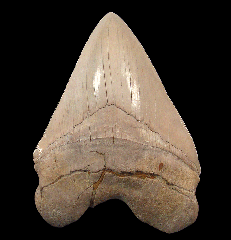
The world of prehistoric marine life is endlessly fascinating, and few fossils capture the imagination quite like a Megalodon tooth. Within the first moments of holding one, you feel connected to an ocean that existed millions of years before humans walked the Earth—an ocean filled with massive predators, shifting coastlines, and dramatic climatic changes that shaped every fossil we uncover today. Among these extraordinary relics, the Sharktooth Hill Megalodon tooth stands out as one of the most intriguing, especially when we look closely at the rare and breathtaking Bakersfield “white” specimens that collectors dream of adding to their shelves.
At Buried Treasure Fossils, we’ve spent decades helping enthusiasts discover authentic, high-quality fossils with real scientific and historical value. That passion fuels our excitement every time a new fossil arrives from the legendary Sharktooth Hill region—an area that continues to surprise paleontologists and collectors with its exceptional preservation and geological richness. Though it may appear to be a simple sedimentary landscape north of Bakersfield, California, Sharktooth Hill is actually one of the most scientifically significant marine fossil deposits in the world, especially for specimens from the middle Miocene epoch.
The Geological Magic of Sharktooth Hill
To understand why a Sharktooth Hill Megalodon tooth is so special, we have to look back roughly 12 to 15 million years. During the middle Miocene, the area now known as central California was covered by a warm inland sea teeming with life. Massive sharks, marine mammals, rays, and fish thrived in these waters—and when they died, many of their bones and teeth settled into a thick, silty seabed. Over millions of years, that sediment hardened into what we now call the Round Mountain Silt, the geological layer that preserves one of the richest marine vertebrate fossil beds on Earth.
If you’ve ever examined Sharktooth Hill fossils up close, you’ve likely noticed that they possess a distinctive range of colors, from soft browns and tans to striking whites and creams. This unique coloration is directly tied to the mineral composition of the surrounding sediments. The region’s sediments lacked heavy iron content, which prevented darker mineral staining and allowed some fossils—especially the rare “white” Megalodon teeth—to retain an unusually light, almost luminous appearance.
A Treasure from the Ernst Whale Quarry
The famous Ernst “whale quarry” is one of the only places where the Bakersfield “white” Megalodon teeth have been discovered. These teeth are so rare that even seasoned fossil hunters can go their entire careers without finding one. In fact, the quarry has produced very few Megalodon teeth overall, making every specimen precious. When a Sharktooth Hill Megalodon tooth emerges from this site, collectors immediately recognize that it represents an extraordinary piece of Miocene history.
One of the most exceptional features of these teeth is their preservation. The enamel on Bakersfield white specimens often displays a soft, light tan glow, sometimes transitioning into pale cream or snowy white across the bourlette. Many of these teeth also show beautifully articulated roots and sharply preserved serrations—sometimes with every serration intact, a rarity considering the fossil’s age and the environmental pressures it has endured.
Another hallmark of these teeth is the subtle grooving found on the ends of the root lobes. This detail is a diagnostic feature of Miocene-era Megalodon teeth and provides insight into how the species evolved over millions of years. These anatomical traits embody the scientific excitement we feel whenever we share specimens from this region with collectors, educators, and enthusiasts.
Why Bakersfield White Megalodon Teeth Are So Valuable
From a collector’s standpoint, the value of a fossil is shaped by multiple factors: rarity, condition, color, locality, and scientific significance. Bakersfield white specimens check all these boxes. Their scarcity alone sets them apart—very few Megalodon teeth have ever been recovered from the Round Mountain Silt, and only a fraction of those exhibit the distinctive white coloration.
The color itself is highly sought after in the fossil world. Unlike darker Megalodon teeth found in coastal sands or phosphate pits, Bakersfield whites offer a soft, elegant palette that instantly catches the eye. Their enamel is often silky smooth and retains its natural luster, a testament to the stable depositional conditions that protected these fossils from harsh environmental erosion.
These teeth also hold enormous scientific interest. They represent Megalodon sharks from the middle Miocene—earlier than most other Megalodon teeth typically sold or collected. That earlier age means they are physically different from their younger cousins, offering clues about evolutionary transitions in serration style, root development, and overall morphology. For fossil enthusiasts and paleontology-curious individuals, owning such a fossil is like holding a chapter of evolutionary history in your hands.
At Buried Treasure Fossils, we love being able to offer these rare specimens when they become available. Every time one arrives, we feel honored to steward an irreplaceable part of Earth’s natural story and share it with our community of collectors who value authenticity, education, and the thrill of discovery.
The Geological Journey Behind the Tooth
The formation of a Bakersfield white Megalodon tooth is a slow, beautiful process shaped by millions of years of geological activity. After a Megalodon shed or lost its tooth in the Miocene sea, that tooth settled into soft silts where minimal oxygen and slow sedimentation rates created an ideal environment for preservation. Over time, minerals replaced the organic material, preserving every ridge, serration, and root structure with astonishing detail. The lack of heavy mineral staining, combined with gentle sediment chemistry, is what produced the pale coloration that collectors prize today.
Additionally, regional uplift and erosion exposed portions of the Round Mountain Silt, allowing these fossils to come within reach of trained collectors working on private lands. Each recovered tooth carries its own journey from ocean predator to buried relic to treasured scientific specimen.
Conclusion: A Rare Window into Prehistoric Oceans
The Sharktooth Hill Megalodon tooth is far more than a collector’s item—it’s a tangible connection to a world that vanished millions of years ago. The Bakersfield white specimens, in particular, tell a story of extraordinary preservation, unique geological conditions, and the incredible biodiversity of the Miocene seas. As we continue to explore and share these fossils, we’re reminded of how much beauty and mystery still lie hidden beneath the Earth’s surface.
If you’re passionate about prehistoric life or eager to add a remarkable specimen to your collection, now is the perfect time to explore these rare fossils further. Every piece we share represents our dedication to authenticity, education, and the joy of discovery—and we’re always excited to help fellow enthusiasts find the fossil that speaks to them.






