

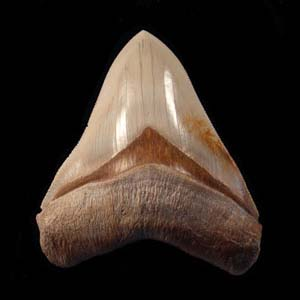
When fossil collectors talk about “bucket list” pieces, one name comes up again and again: the Aurora Megalodon tooth. These teeth don’t just look impressive. They come from a famous site, they’re no longer being found, and they often show incredible natural color and detail. Let’s break down why serious collectors chase these teeth, what makes Aurora different from other Megalodon locations, and how specialists like Buried Treasure Fossils help collectors find the right piece with confidence.
What Is An Aurora Megalodon Tooth?
Megalodon was the largest shark that ever lived. It ruled the oceans from about 20 to 3 million years ago and may have reached 50–60 feet in length.Its teeth are big, thick, and triangular, with strong cutting edges. An Aurora Megalodon tooth is a Megalodon tooth found in or around the Lee Creek phosphate mine in Aurora, North Carolina. This mine exposed layers from the Miocene and Pliocene epochs, which preserved shark teeth in excellent condition over millions of years.
What Makes Aurora Teeth Stand Out?
Collectors care about details, and Aurora delivers in several key areas.
1. Color And Enamel: Teeth from Lee Creek are known for their striking colors: soft blues, tans, grays, and rich browns. The phosphate-rich sediments helped preserve glossy enamel, so many crowns still look smooth and bright even after millions of years.
2. Beautiful Bourlette And Roots: The dark band between the crown and root (the bourlette) often shows strong contrast and good coverage on Aurora teeth. Roots can be complete, with only minor “hydration cracks” that formed over time.
3. Sharp Serrations: Many Aurora Megalodon teeth still have sharp, well-defined serrations along the edges. Collectors love seeing those tiny “saw teeth” intact because they show how powerful the original bite was.
Put together, these features make an Aurora Megalodon tooth visually stand out even in a collection that already has other Megalodon fossils.
Why Serious Collectors Want At Least One
For advanced collectors, an Aurora specimen checks several boxes at once:
● Historic locality – Lee Creek is one of the most famous shark tooth localities in North America.
● High preservation – Many teeth show sharp serrations, glossy enamel, and complete roots.
● Permanent scarcity – The site is closed, and teeth now come only from older collections.
Because of this mix of history, looks, and rarity, an Aurora Megalodon tooth often becomes the centerpiece of a shark tooth display. Even collectors who already own large Meg teeth from other places tend to treat their Aurora piece as something special.
Final Thoughts
Serious collectors are obsessed with Aurora for good reasons: a famous closed site, fossils with standout color and preservation, and a limited supply that will only get tighter over time. When those teeth are sourced and documented by experts like Buried Treasure Fossils, they become more than display pieces—they become reliable, long-term anchors in a collection.






