Page 11 - Gary Greaser
- - January 05, 2026
Long before curious learners and fossil collectors held a massive shark tooth in their hands, that relic began a remarkable journey shaped by ancient oceans, shifting continents, and millions of years of geological transformation. Within the first moments of imagining this prehistoric path, you might picture towering waves, enormous predators, and deep-sea landscapes that existed long before humans. And somewhere within that incredible timeline, the gigantic Otodus megalodon left behind the teeth that continue to captivate us today.
These extraordinary fossils connect us to a world that vanished more than three million years ago, yet they remain surprisingly accessible—especially in regions like coastal Georgia, where nature preserved them with exceptional care. At Buried Treasure Fossils, we’ve spent decades studying, sourcing, and sharing these remarkable teeth, helping collectors and science enthusiasts experience the awe of holding Earth’s ancient history.
When Giants Ruled the Miocene
- - January 05, 2026
At Buried Treasure Fossils, we take pride in offering more than just ancient relics – we showcase the extraordinary. Among the most captivating and surreal pieces in our collection are the Pathological Megalodon tooth for sale, true anomalies of the natural world. These fossilized treasures are not only rare but exhibit striking abnormalities that make them highly prized by collectors and enthusiasts alike.
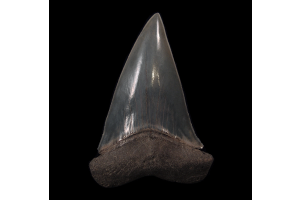
One of the most sought-after examples is a Top Quality, Pathologic Otodus obliquus tooth from the Khouribga phosphate mining region in Morocco. This specimen stands out not just for its age and preservation, but for the unique physical distortion in both the crown and the root – a trait that makes it truly one-of-a-kind. If you're captivated by the unusual and fascinated by nature’s deviations, you'll want to explore this remarkable fossil.
What Are Pathologic Shark Teeth?
Shark teeth are a popular area of fossil collecting, with each tooth offering a glimpse into prehistoric ocean
- - January 05, 2026
Lately, more and more beginners are starting their fossil journey with a baby megalodon tooth fossil instead of a giant one. These smaller teeth feel easier to buy, easier to understand, and easier to display. At the same time, they still give you a real, exciting link to this huge ancient shark. Let’s look at what a “baby” megalodon tooth really is, why these fossils are trending, and what new collectors should know before they choose one from a specialized shop like Buried Treasure Fossils.
What Is a Baby Megalodon Tooth?
A baby megalodon tooth does not mean a tiny species. It simply comes from a young megalodon shark. Scientists call these sharks “juveniles.” Compared with large adult teeth, a juvenile or baby megalodon tooth:
● Is smaller in size
● Still has the same triangle shape
● Shows sharp little serrations on the edges
● Has a thick root that once held it in the jaw
Many of these young teeth are found in special fossil layers called nursery areas. These were warm,
- - January 05, 2026
Let’s understand why a record-size tooth changes the way fans and collectors look at Megalodon fossils. The idea of the biggest Megalodon tooth ever found is exciting for both scientists and fossil collectors. This tooth, discovered along the fossil-rich coast of Chile, is not just large. It also gives us fresh clues about how huge Megalodon really was, how it lived, and why its fossils are so highly valued today.
What Was Megalodon And Why Do Its Teeth Matter?
Megalodon was a giant prehistoric shark that lived millions of years ago. Scientists think it could reach more than 50–60 feet in length, much larger than today’s great white sharks. Sharks have skeletons made mostly of cartilage, which does not fossilize well. Their teeth, however, are hard and durable. That’s why teeth are the main fossils we have from Megalodon. By studying tooth size, shape, and wear, researchers can:
● Estimate how big the shark was
● Learn what kind of prey it hunted
● Understand how it bit and fed
- - January 05, 2026
The world of prehistoric marine life is endlessly fascinating, and few fossils capture the imagination quite like a Megalodon tooth. Within the first moments of holding one, you feel connected to an ocean that existed millions of years before humans walked the Earth—an ocean filled with massive predators, shifting coastlines, and dramatic climatic changes that shaped every fossil we uncover today. Among these extraordinary relics, the Sharktooth Hill Megalodon tooth stands out as one of the most intriguing, especially when we look closely at the rare and breathtaking Bakersfield “white” specimens that collectors dream of adding to their shelves.
At Buried Treasure Fossils, we’ve spent decades helping enthusiasts discover authentic, high-quality fossils with real scientific and historical value. That passion fuels our excitement every time a new fossil arrives from the legendary Sharktooth Hill region—an area that continues to surprise paleontologists and collectors with its exceptional
- - January 05, 2026
Sharks have ruled the oceans for millions of years. While they have taken many forms throughout history, few are as captivating as the enormous Megalodon and the powerful Great White. At Buried Treasure Fossils, we invite you to dive into the depths of ancient oceans by exploring the fascinating stories behind fossilized shark teeth. From their shape to their size, these relics open a window into a world long lost beneath the waves. When it comes to the Megalodon vs Great White tooth, there’s more than size that sets them apart — each tooth reveals secrets about two legendary predators and the environments they once ruled.
Let’s take a closer look at what makes these fossilized teeth so intriguing and why they remain such treasured finds for collectors and ocean enthusiasts alike.
The Legacy of Fossilized Shark Teeth
Fossilized shark teeth are among the most common and prized fossils found across the world. These ancient remnants are more than just minerals — they are snapshots of prehistoric
- - January 05, 2026
Some fossils aren't content to sit quietly in a drawer or behind museum glass—they beg for stories to be told. In the rocky cliffs and desert sands of North Africa, a specific relic continues to capture curious minds. With serrated edges and ocean-aged enamel, the teeth of Carcharocles megalodon - Morocco offer more than a glimpse into prehistoric life. They stir questions about what once ruled the seas—and what remains in stone.
These teeth are more than collectibles; they are slices of a forgotten era. Let’s explore why these fossils from Morocco are making waves among collectors and paleontology enthusiasts alike.
A Glimpse Into an Ancient Ocean
Millions of years ago, before sand claimed the seafloor and tectonic shifts shaped continents, the region we now call Morocco was submerged beneath vast oceans. These waters were home to some of the fiercest marine predators ever to exist. Among them, the megalodon reigned supreme—its bite force unmatched, its presence legendary.
As the land
- - January 05, 2026
Collectors often notice that fossil shark teeth come in a stunning range of shades—from jet black to warm browns, icy grays, and even deep blues—but one question comes up again and again: why do some specimens, including a megalodon tooth fossil, display such dramatically different colors? If you're a beginner collector, curious buyer, or museum enthusiast exploring our catalog, you’ve probably wondered how one prehistoric tooth can look so different from another. The short answer is that mineral absorption, burial conditions, and the chemistry of the surrounding environment are nature’s paintbrush, working slowly over millions of years. At Buried Treasure Fossils, we love sharing the science behind these incredible transformations because each fossil tells a story far deeper than its surface.
Understanding the color variations in fossils helps you appreciate their authenticity, geological journey, and long history locked inside the earth. We’ve spent decades studying, collecting, and
- - January 05, 2026
At Buried Treasure Fossils, we specialize in offering authentic, museum-quality fossil shark teeth to collectors and enthusiasts across the world. Among our most coveted pieces are the rare, copper-red Otodus megalodon teeth from North Carolina's Meherrin River. These teeth are unlike anything else due to their origin, color, and state of preservation. If you're seeking a true centerpiece for your fossil collection, this blog will show you why a Megalodon tooth from North Carolina deserves your attention.
The Mystique of the Megalodon
The Megalodon, an ancient apex predator, ruled the oceans during the Miocene and Pliocene epochs. Its teeth have become legendary among fossil collectors, not only for their impressive size but also for their serrated edges and historical significance. At Buried Treasure Fossils, we are proud to offer a hand-selected range of Megalodon teeth, including extremely rare finds from specialized locations like the copper-red site along the Meherrin River in
- - January 05, 2026
Buying a fossil for the first time should feel exciting, not uncertain. For new collectors, choosing the right Megalodon tooth often raises questions about what’s real, what holds value, and what to avoid. The truth is, many beginners struggle to tell the difference between a genuine fossil and a replica. My First Megalodon exists to solve that problem by offering a real, entry-level specimen that gives collectors a trustworthy place to begin. This guide explains exactly what to look for, what to avoid, and how to start your fossil journey the right way.
Which Traits Define My First Megalodon?
You do not need expert tools to recognize an authentic Megalodon tooth. You need to slow down and examine a few clear signs. First, check the edges for visible serrations. These small notches once helped the Megalodon rip through prey and still appear on well-preserved fossils. Next, study the enamel. Authentic enamel feels dense and shows natural texture. You may see cracks or slight layering.