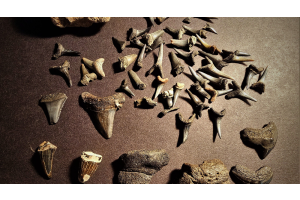
Collectors often assume every fossil tooth pendant is naturally preserved, but once you step into the world of high-grade specimens, authenticity requires far more scrutiny. Within the first moments of examining a megalodon shark tooth necklace, experienced paleontologists—and equally cautious collectors—begin evaluating a set of scientific markers that clearly distinguish authentic fossil features from polished or modified showroom pieces. At Buried Treasure Fossils, we help buyers make informed decisions so they can invest confidently in specimens that retain genuine prehistoric integrity rather than artificially enhanced surface appeal.
Why Authenticity Matters for Fossil Jewelry
Buying fossil jewelry isn’t only about aesthetics; for many collectors, a necklace represents a micro-collection of prehistoric evidence worn around the neck. Megalodon teeth carry scientific, financial, and cultural value, especially because mature Megalodon specimens are increasingly scarce in the market. When a tooth is reshaped, artificially sharpened, machine-polished, color-stabilized, or patched with fillers, the fossil loses the traits that make it historically meaningful. We take authenticity extremely seriously because fossil alterations mislead buyers and artificially inflate value in a way that harms both the collecting community and paleontology as a discipline.
Understanding the Natural Anatomy of a Megalodon Tooth
Before identifying modifications, collectors should learn the structural elements that define a naturally preserved tooth. Megalodon teeth are composed of two primary parts: the root and the crown. The crown contains the blade, enamel, and serrations. The root preserves vascular pores, nutrient channels, and varying degrees of surface texture depending on fossilization conditions.
Natural enamel has a matte-to-soft-sheen finish borne from millions of years of mineralization. Serrations display micro-variations because Megalodon sharks shed tens of thousands of teeth throughout life, and none were perfectly identical. Root density varies with age and depositional environment, leading to a spectrum of colors—tan, gray, black, brown, or blended.
Understanding these features gives collectors a baseline for detecting unnatural enhancements.
How Paleontologists Identify Authentic Versus Modified Teeth
Surface Texture and Enamel Sheen
Authentic fossil enamel exhibits subtle irregularities. Under magnification, enamel includes mineral inclusions, tiny pores, and textural complexity from diagenesis. Modified teeth, however, often display:
● machine-buffed surfaces
● uniform reflective shine
● micro-scratches from rotary tools
● wax or resin coatings that conceal imperfections
Experts run angled light across the surface to detect unnatural reflectivity. Polished pieces reflect light in a uniform band—something natural enamel does not do.
Serration Integrity
One of the quickest giveaways of alteration is serration modification. Natural serrations show microscopic variability, rounding, or partial wear. Artificial serrations are:
● too sharp
● too uniform
● too symmetrical
● cut in straight rhythmic patterns
A collector can often feel the difference with a fingertip: machine-cut serrations feel sharp in a repetitive pattern while natural serrations feel varied and slightly irregular.
Crown Geometry and Edge Lines
A naturally worn Megalodon tooth blade may be chipped, slightly eroded, or asymmetrical. If a tooth was shaped to look “perfect,” the edges may have:
● evenly curved profiles
● symmetrical grinding marks
● unnatural angles
● overly straight edge lines
Recontouring is one of the most common modifications because sellers attempt to improve aesthetics for jewelry buyers. We inspect edge transitions under magnification to verify that the geometry aligns with natural feeding wear rather than modern grinding.
Root Porosity and Coloration
The root is one of the most diagnostic features of authenticity. Natural roots contain open pores, subtle mineral infill, and textural variation. Modified roots may be:
● filled with epoxy
● patched with sediment-colored filler
● artificially darkened with dye
● sanded to flatten the back surface
Collectors should look for color bleeding around pores—an indicator of artificial staining—as well as unnatural smoothness.
Mineralization Consistency
A meg tooth forms and fossilizes as one structure. If the crown and root display mismatched color temperatures or sediment patterns, the tooth may have been assembled from two separate fossils, repaired, or artificially tinted. Paleontologists evaluate mineral gradients that should appear continuous, not abrupt or segmented.
Jewelry Mounting Assessment
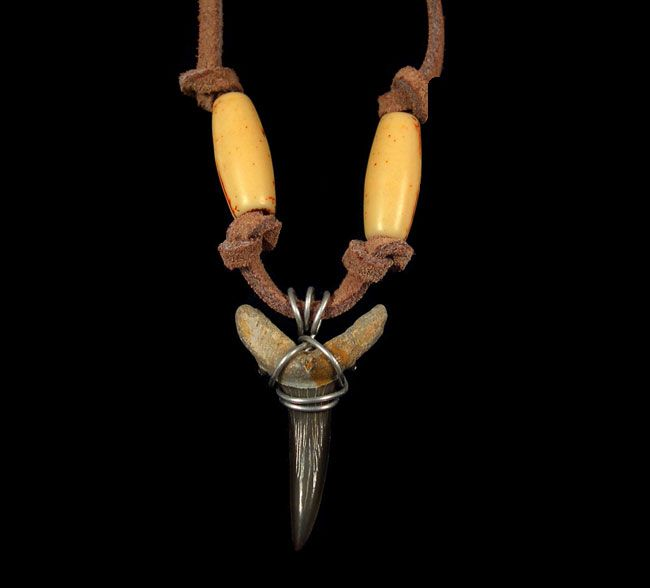
Although the necklace form itself is not part of the fossil, an expert still evaluates how the fossil was mounted. Wire wrapping or drilling should not obscure authentic features, nor should it cover cracks or repairs. When we design pieces—whether simple wire wraps or bead-based arrangements—we preserve the natural fossil integrity without altering the tooth to fit jewelry hardware.
Why Modification Happens in the Market
Not all sellers modify fossils maliciously. Some do it to make lower-grade teeth appear high-grade; others follow jewelry industry aesthetics rather than paleontological standards. Modified teeth may look smoother, shinier, or more symmetrical, which appeals to casual buyers. But serious collectors, investors, and educators recognize that authenticity always outweighs appearance.
At Buried Treasure Fossils, we ensure that any tooth used in a necklace—whether Megalodon, Mako, or Sand Tiger—is a genuine fossil specimen with no artificial reshaping. For example, our Sand Tiger fossil shark tooth pendant (SKU SC15J) illustrates what responsible fossil jewelry looks like: an authentic Miocene-age tooth wire-wrapped for wear without altering the fossil’s natural morphology.
What Serious Collectors Should Examine Before Buying
Provenance Documentation
Whenever possible, collectors should choose sellers who provide clear locality data and age range. We always include collection information so the buyer understands not just what they are purchasing, but where it came from and how it fits into geological history.
High-Resolution Photos
Authentic specimens reveal their story under close inspection. Look for multiple angles, including root profile, serrations, enamel detail, and backside texture. Modified teeth often avoid close-up shots because the inconsistencies are obvious.
Transparency From the Seller
Reputable dealers openly disclose any repairs or stabilization treatments. These are not necessarily negative—they are acceptable in paleontology when performed ethically—but they must be identified. We believe transparency protects collectors and strengthens the entire fossil market.
Price Versus Condition Analysis
A fossil priced higher than comparable specimens but with suspiciously perfect features is a red flag. Authentic Megalodon teeth have personality—micro-wear, natural asymmetry, and mineral complexity. If a tooth looks carved or “too good,” assume enhancement until proven otherwise.
How We Protect Buyers at Buried Treasure Fossils
Our mission is to make fossil collecting accessible while ensuring scientific authenticity. Since 2000, we have offered teeth legally collected from private land, accurately described, and vetted through rigorous paleontological standards. We cater to serious collectors, STEM educators, investors, and science enthusiasts who value integrity over cosmetic alterations. Our catalog includes everything from entry-level shark teeth to museum-grade Megalodon specimens exceeding six inches.
When we offer a megalodon shark tooth necklace, the fossil component is always genuine. We never reshape, grind, polish, or artificially enhance teeth. Every fossil carries the history nature gave it—nothing added, nothing hidden.
Conclusion
Evaluating authenticity in a megalodon shark tooth necklace requires the same level of scrutiny applied to standalone fossils. Paleontologists differentiate genuine prehistoric features from polished or reshaped surfaces using structural, mineralogical, and textural cues that remain consistent across naturally preserved specimens. As collectors grow more educated, the difference between authentic and altered pieces becomes unmistakable. If you want to build a fossil collection grounded in accuracy and long-term value, now is the perfect moment to explore high-quality options backed by scientific integrity—and we’re here to help you take that next step with confidence.