Megalodon teeth hold a powerful fascination. Whether you're a seasoned fossil collector or just beginning your interest in ancient marine life, authenticity matters. With demand for these fossils growing, the number of replicas on the market has increased. That makes it more important than ever to distinguish authentic specimens from imitations. We offer guidance to help collectors make informed decisions, especially when considering how to tell if a megalodon tooth is real. From physical traits to seller credibility, here’s a practical, research-based guide to help you evaluate what’s real and what’s not.
Why Identification Matters
Megalodon teeth are not only visually impressive but also scientifically valuable. Genuine teeth provide insight into the prehistoric ecosystems where these apex predators once thrived. Misidentifying a fake as real can lead to financial loss or unintentional misinformation. Knowing how to spot the indicators of authenticity allows buyers to make confident, well-informed purchases.
Examine the Enamel and Serrations
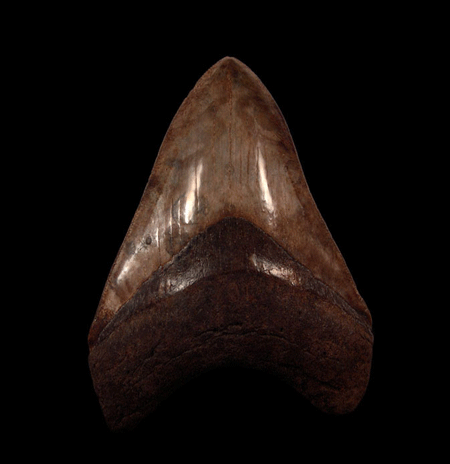
One of the first signs of authenticity is the condition and texture of the enamel. Real megalodon teeth often exhibit a smooth yet slightly worn surface, especially near the tip. The edges may show uniform serrations, which are small, evenly spaced notches used by the shark to tear through prey. These features form naturally and should look integrated with the tooth’s structure, not artificially added or too sharp.
In contrast, replicas may feature serrations that look too consistent or are molded onto the surface without depth. Also, enamel on fake teeth may appear overly polished or plastic-like. They may also lack the slight imperfections found in natural fossils.
Check for Root Porosity and Natural Wear
The root of a real megalodon tooth usually shows signs of mineral replacement and often appears porous or chalky. Fossilization leads to the absorption of minerals from sediment over millions of years, which creates texture differences between the enamel and root. This contrast is difficult to replicate artificially.
Fake teeth or cast replicas often feature roots that appear too smooth or symmetrical. If the transition between enamel and root is too sharp or looks glued together, it’s a red flag. Knowing how to tell if a megalodon tooth is real includes recognizing these textural inconsistencies.
Look at the Color Variations
Authentic megalodon teeth come in a variety of colors, including gray, black, brown, or even blue, depending on the minerals in the sediment where they were buried. These colors are natural and often uneven. A genuine fossil might have streaks, patches, or gradients that occur organically.
If the tooth features solid, uniform coloring without any subtle transitions, it might be painted. Replicas are often coated to resemble popular hues found in real specimens, but they can lack the depth and irregularity of natural fossil coloration.
Weight and Density Are Key Indicators
Real megalodon teeth are dense due to fossilization, and they feel noticeably heavy when held. While replicas can be crafted from heavy materials like resin or stone composites, they rarely replicate the exact density of fossilized enamel and root.
When possible, compare a suspected tooth with a known authentic one in terms of weight and balance. Real teeth often feel more substantial at the root. In contrast, fakes might have an even weight distribution or feel hollow in places.
Surface Details and Microfractures
Another crucial detail in evaluating authenticity is the presence of microfractures. These are fine lines and surface cracks that develop over time during burial and fossilization. These fractures don’t compromise the integrity of the tooth but instead serve as evidence of age and geological pressure.
Cast replicas are often too smooth and uniform, and they may be missing these subtle imperfections. Some manufacturers try to mimic them by engraving surface cracks, but these tend to follow repetitive patterns instead of the chaotic natural fractures seen in real fossils.
Compare Sizes Realistically
While megalodon teeth are known for their size, not all are six inches or larger. Many authentic teeth fall in the 3 to 5 inch range. Be cautious of sellers advertising unusually large teeth without documentation or offering such items frequently. Large teeth are rarer and command higher prices, so abundance or affordability could suggest an artificial origin.
If you’re trying to determine how to tell if a megalodon tooth is real, consider whether the size aligns with known fossil records. Teeth over 6 inches are rare and usually well-documented by legitimate sellers or institutions.
Seller Credibility and Provenance
Provenance matters. Reliable sellers usually provide details about the tooth’s origin, such as the geographic location where it was found and the type of sediment it was buried in. They may also share context about the layer of earth it came from or the collection history.
Reputable dealers don’t shy away from questions and often back their items with documentation or lifetime authenticity guarantees. If a seller is vague or avoids providing background information, it’s reasonable to question the tooth’s legitimacy.
Common Fake Types to Watch Out For
There are several types of fakes circulating in the market:
● Resin Casts: These are molded from real teeth and painted to look authentic. They're usually lighter and lack detailed surface texture.
● Composite Teeth: Made by attaching a real root to a fake or damaged crown. These are harder to detect but often reveal seams or mismatched colors at the junction.
● Over-Restored Teeth: Sometimes, real teeth are heavily restored to improve their appearance. While not entirely fake, they can be misleading if not disclosed by the seller.
Knowing these categories helps you assess what kind of replica you might be dealing with, especially when a tooth seems too good in condition or price.
Tactile and Sound Test (When Possible)
Suppose you have the chance to handle the tooth in person, run your fingernail over the serrations and surface. Genuine fossils feel slightly rough with some variation. You can also gently tap the tooth with a fingernail or coin. Real fossil teeth emit a denser, stone-like sound compared to the dull thud of resin.
This method isn’t foolproof, especially for partial fossils or heavily restored teeth, but it adds another layer to your evaluation process.
Final Thoughts
Whether you’re new to fossil collecting or refining an existing collection, learning how to tell if a megalodon tooth is real requires careful observation, research, and a bit of hands-on experience. Focus on the details: enamel quality, natural wear, weight, root texture, and seller credibility. These factors help you separate authentic specimens from well-crafted imitations.
Buried Treasure Fossils offers a wide range of verified megalodon teeth with transparent sourcing and detailed product information. If you're serious about collecting, investing, or gifting one of these prehistoric marvels, choosing an experienced, trusted source ensures you receive the real deal from root to tip.
Explore our authentic megalodon tooth collection today and add a genuine piece of prehistory to your fossil collection.