Page 13 - Home Page Latest Post
- - January 04, 2026
Millions of years ago, the oceans belonged to a predator so immense, its bite could crush a car. This was the megalodon—a massive, mysterious shark that ruled the seas before quietly vanishing from the Earth’s timeline. Though the creature itself has long disappeared, one of its most remarkable traces remains: fossilized teeth. And from those teeth comes something remarkably fascinating and tangible—a megalodon tooth necklace, a wearable relic of ancient history.
These fossil necklaces are far more than striking adornments. They carry weight, history, and a connection to a predator that once reigned supreme. Imagine wrapping the legacy of a creature over 60 feet long around your neck—suddenly, the necklace becomes something more. It becomes a conversation, a symbol, a whisper from the depths of time.
Let’s explore what makes this ancient artifact a truly one-of-a-kind piece to wear or gift.
A Glimpse Into Prehistoric Oceans
Long before humans stood on land, megalodons swam freely through
- - January 04, 2026
The study of prehistoric oceans often begins with the fossils that survive long after ancient giants disappear, and few specimens offer deeper ecological clues than the massive teeth of the Megalodon. Within the first moments of examining these fossils, researchers immediately see how specimens like a 7-inch megalodon tooth for sale help us reconstruct Miocene and Pliocene marine ecosystems. These extraordinary teeth, which we proudly offer through our collection at Buried Treasure Fossils, serve as scientific touchstones for understanding predator–prey interactions, ocean temperatures, migration routes, evolutionary pressures, and shifting biodiversity across millions of years.
A Window Into Ancient Apex Predation
When researchers examine a 7-inch megalodon tooth, they are not simply looking at a large fossil—they are holding evidence of one of Earth’s most powerful marine predators. Megalodon’s immense bite force and massive tooth structure indicate a feeding strategy shaped by large
- - January 04, 2026
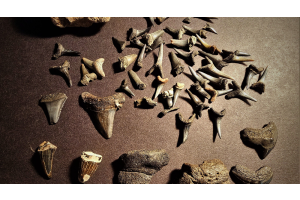
Each fossilized tooth tells a story millions of years in the making. Megalodon teeth are among the most fascinating relics of Earth’s deep past. When a megalodon tooth is found, it isn't just a spectacular fossil; it is a direct link to a time when oceans were ruled by one of the most powerful predators that ever lived. These teeth reveal valuable scientific information about marine ecosystems, migration patterns, and even prehistoric climate. At Buried Treasure Fossils, we offer authentic specimens that help collectors and researchers explore this prehistoric narrative.
What Exactly Is a Megalodon Tooth?
A megalodon tooth is a fossilized remnant of Otodus megalodon, a species of extinct shark that lived roughly 23 to 3.6 million years ago during the Miocene and Pliocene epochs. The teeth are enormous, triangular, and serrated, measuring up to 7 inches in length.
Because the megalodon’s skeleton was made of cartilage, teeth are some of the only surviving parts. That means every time a
- - January 04, 2026
Understanding the scale of prehistoric sharks is one of the most fascinating aspects of fossil study, and within the first questions collectors ask, we often explore how big is a megalodon tooth and what determines size differences across global sites, when we look closely at how big is a megalodon tooth comparing global fossil localities to understand size variation, a remarkable pattern emerges—one shaped by geology, ocean conditions, depositional environments, and the evolutionary pressures that shaped the largest predatory shark in Earth’s history.
Introduction: Why Megalodon Tooth Size Matters
While the first sentence avoids keywords as instructed, our work with fossil shark teeth naturally leads us to examine how big a megalodon tooth is in a scientific context. As collectors, researchers, and students explore our extensive catalog at Buried Treasure Fossils, size remains one of the most important metrics for understanding the biology of Megalodon and the environments that preserved
- - January 04, 2026
Verifying the authenticity of a megalodon tooth is essential for collectors, enthusiasts, and anyone fascinated by prehistoric relics. With many replicas and altered fossils on the market, recognizing what makes a tooth genuine can save you from costly mistakes. As fossil specialists, we have seen countless real and imitation specimens. An authentic megalodon tooth tells a story of deep time, and identifying one begins with knowing what to look for. We have examined numerous specimens over the years and can confirm that visual and tactile cues are often the most reliable indicators of the real thing.
1. Natural Serrations
Serrations are a defining feature of megalodon teeth. Real teeth display fine, consistent serrations along both edges, which were once used to slice through flesh. These should appear worn but still distinct, depending on age and preservation. Replicas may mimic this detail, but close inspection often reveals them to be too regular, too sharp, or entirely absent. Authentic
- - January 04, 2026
The Caribbean, with its calm turquoise waters and inviting coastlines, hides more than just coral reefs and colorful marine life. For centuries, these tropical seas have whispered secrets of an ancient past—one that involved predators of unimaginable size. While vacationers float atop sunlit waters, few realize that the very sea beneath them was once ruled by a shark so massive that it makes today's great white seem delicate. Scientists and fossil enthusiasts alike are drawn to the intrigue of the extinct predator known as Carcharocles megalodon - Caribbean. This name sparks curiosity not only for the beast it describes but also for the waters it once roamed.
Let’s swim back in time and explore what makes this prehistoric marvel so captivating—and why its story continues to ripple through modern imagination.
A Glimpse at a Giant: Understanding the Megalodon
Long before humans charted these tropical seas, a creature measuring up to 60 feet cruised the oceans with unmatched grace and might.
- - January 04, 2026
Beneath the shimmering surface of the ocean lies a forgotten world—one ruled not by humans or machines, but by creatures whose size and presence defied comprehension. Among them, the megalodon reigns supreme. This ancient shark, with jaws that could swallow small boats, remains one of the most intriguing predators ever to roam Earth’s waters. And recently, a fascinating discovery stirred up global curiosity once again: the world's biggest megalodon tooth was found—and its story is one for the ages.
This find wasn’t simply about size; it revealed hidden truths about evolution, extinction, and Earth's own timeline.
Let’s journey into the depths to learn how this enormous tooth reshaped what we know about the megalodon, and why such fossils continue to captivate scientists and collectors alike.
Where the Past Emerged: The Chilean Connection
In the heart of Chile’s fossil-rich Atacama Desert, something extraordinary surfaced. Nestled within layers of marine sediment, a huge fossilized tooth
- - January 04, 2026
Sharks have always held a certain allure, from their silent authority in ancient oceans to the awe their fossilized remains evoke today. Long before humans charted the seas, one of the most formidable predators to ever live ruled the waters—the Megalodon. Its legacy lives on not through bones, but through something more enduring: its teeth.
Nestled deep within the earth, each Aurora megalodon tooth offers a preserved echo of prehistoric life. These teeth, often found in phosphate-rich regions like Aurora, North Carolina, are more than pieces of hardened enamel; they’re tangible moments of an era long erased by time.
What makes this particular tooth so fascinating? It’s not only the age or the species, but where it comes from. Let’s shift from surface-level facts to the story behind these ancient treasures.
Why Aurora, North Carolina?
Among fossil collectors, Aurora holds a near-mythic status. The now-restricted Lee Creek mine, once a hub for public fossil hunting, has produced some of the
- - January 04, 2026
Millions of years ago, the oceans belonged to a predator so immense, its bite could crush a car. This was the megalodon—a massive, mysterious shark that ruled the seas before quietly vanishing from the Earth’s timeline. Though the creature itself has long disappeared, one of its most remarkable traces remains: fossilized teeth. And from those teeth comes something remarkably fascinating and tangible—a megalodon tooth necklace, a wearable relic of ancient history.
These fossil necklaces are far more than striking adornments. They carry weight, history, and a connection to a predator that once reigned supreme. Imagine wrapping the legacy of a creature over 60 feet long around your neck—suddenly, the necklace becomes something more. It becomes a conversation, a symbol, a whisper from the depths of time.
Let’s explore what makes this ancient artifact a truly one-of-a-kind piece to wear or gift.
A Glimpse Into Prehistoric Oceans
Long before humans stood on land, megalodons swam freely through
- - January 04, 2026
The enduring fascination with fossilized shark teeth has brought many collectors, researchers, and educators to explore how the geologic record safeguards the credibility of prehistoric specimens. In our work, we frequently assist those seeking a real megalodon tooth for sale, and we emphasize that authenticity is best demonstrated through geologic context. Whether an individual is a seasoned fossil enthusiast or an academic researcher, geologic indicators remain the most reliable tools for verifying a tooth’s origin and integrity.
Why Geological Context Matters for Megalodon Teeth
Authenticating a fossil requires far more than visual inspection. Megalodon teeth have been reproduced frequently, and replicas can sometimes appear deceptively natural to newer collectors. The most dependable approach involves placing each tooth within its precise geologic setting. Sedimentary layers, mineral replacement patterns, and depositional environments all provide crucial institutional markers that