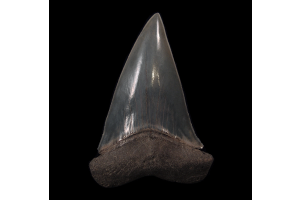
Page 22 - Megalodon
- - December 28, 2025
Long before the oceans were ruled by the massive Megalodon, their ancient ancestor, Otodus obliquus, dominated the seas of the Eocene epoch. Both species belonged to the lineage of mackerel sharks, but their evolutionary connection becomes truly fascinating when studied through rare fossilized deformities. These unusual abnormalities—often preserved as pathological megalodon tooth for sale specimens—offer paleontologists a deeper window into how evolutionary pressures, feeding habits, and environmental challenges shaped the apex predators of prehistoric oceans. The same insight applies when studying pathological Otodus obliquus teeth, which demonstrate the earliest hints of Megalodon’s evolutionary journey.
Understanding Pathological Shark Teeth
Pathological teeth, in the simplest sense, are shark teeth that developed abnormally due to physical trauma, genetic mutations, or disease. In sharks, where teeth are constantly replaced, such irregularities are exceedingly rare because defective
- - December 28, 2025
In the vast world of fossil collecting, authenticity is everything. Within the first few moments of examining a specimen, experienced collectors can often sense whether they’re holding a relic of prehistory or a skillfully crafted replica. When it comes to megalodon tooth fake vs real, the difference lies in the details—especially in how natural geological processes, particularly ocean sediments, influence fossil formation. For paleontology students, fossil enthusiasts, and professional collectors alike, understanding how authentic fossils form and what characteristics define them is essential for both scientific study and ethical collecting.
The Science Behind Fossilization
When the colossal Megalodon ruled the seas roughly 23 to 3.6 million years ago, its teeth regularly fell to the ocean floor. Unlike bones, shark teeth are composed largely of dentin covered by hard enamel, which makes them more resistant to decomposition. Over millions of years, sedimentary layers gradually covered
- - December 28, 2025
Owning a genuine Megalodon tooth is more than a fascinating conversation starter—it’s a direct connection to one of Earth’s most awe-inspiring marine giants. At Buried Treasure Fossils, we are passionate about helping collectors and enthusiasts experience the raw power and mystery of prehistoric oceans through high-quality fossil specimens. One of the most common questions we hear is how big was the Megalodon tooth, and the answer often leaves people amazed. These teeth can reach lengths over 7 inches, hinting at a predator that once dominated the seas.
But before diving into the grandeur and significance of these fossils, it’s crucial to understand why buying from an authentic seller matters more than ever.
Why Authentic Sellers Matter
In today’s market, the appeal of Megalodon teeth has led to an influx of inferior or misleading specimens. Many of these have excessive river polish, visible restoration, or outright damage, often masked by clever photography or vague descriptions. This
- - December 28, 2025
A man walked along a familiar shoreline after a storm. He noticed something sharp and dark, partly buried in the sand. He picked it up, examined the serrated edges, and realized it was more than debris. It was a fossilized tooth, larger than his palm and unmistakably shaped. This was no ordinary find. It belonged to the megalodon, an ancient predator known for its massive teeth. When a man finds a megalodon tooth in an area not known for fossil deposits, people start asking questions. The discovery caught the attention of collectors and scientists. Could erosion or recent natural shifts have revealed something new? Or has everyone overlooked this location? This moment turned a simple walk into a story that would challenge long-held assumptions.
Man Finds a Megalodon Tooth on Shore After Unexpected Discovery
Megalodon teeth usually turn up in predictable regions. Most serious fossil collectors focus their searches on fossil beds, riverbanks, and underwater ledges where sediment layers
- - December 28, 2025
Every serious fossil collector wants the real thing. That is especially true when building a meaningful megalodon tooth collection. Megalodon teeth represent a direct link to a creature that ruled ancient oceans. These fossils tell a story through their age, shape, and the way they endured through time. But in today’s growing fossil market, buyers often face a significant issue. Fake, restored, or altered teeth are everywhere. These imitations look convincing, but they lack the natural weight, character, and history of real fossils. Suppose you want your collection to reflect actual prehistoric value. In that case, you need to know how to spot the signs of authenticity. This guide helps you do just that.
Why Fake Fossils Still Threaten Your Megalodon Tooth Collection?
Collectors drive strong demand for large, intact, and rare megalodon teeth. That demand fuels a market where sellers sometimes cut corners. Some fix broken teeth using fillers. Others polish and stain low-grade fossils to
- - December 28, 2025
The fossilized teeth of the Megalodon continue to stir fascination not just for their sheer size but for the stories they tell about a long-extinct apex predator. These teeth, some measuring over six inches, have become prized collectibles, offering clues into the prehistoric oceans this massive shark once ruled. As we explore how big a megalodon tooth can get, we’ll look at actual measurements, scientific context, and the factors that influence these jaw-dropping variations in size. At Buried Treasure Fossils, we’ve seen first-hand the incredible range of these specimens and what makes each one unique.
What Is Considered a Large Megalodon Tooth?
Most Megalodon teeth found today fall between 3 and 5 inches. While impressive on their own, it’s the rare few that exceed the 6-inch mark that captivate collectors and scientists alike. A tooth over 6 inches is not just large, it’s exceptional. These are the specimens that spark questions like how big a megalodon tooth can get and lead fossil
- - December 28, 2025
Not everything buried beneath the ocean floor is forgotten. Sometimes, it resurfaces with whispers of a past too colossal to ignore. Among the treasures brought to light by early oceanic explorers, few rival the intrigue of the HMS Challenger megalodon tooth. Tucked away in maritime legend and biological mystery, this fossilized remnant is more than a relic—it’s a silent witness to an ocean once ruled by giants.
The HMS Challenger expedition wasn’t initially searching for sea monsters. In the late 19th century, the crew set out to chart the unknown depths, not to stumble upon a predator’s fossilized grin. Yet, what they recovered was something more enduring than their original goal: a piece of a megalodon tooth, fossilized and embedded in scientific controversy ever since.
Before diving deeper, let’s set the stage for this unusual discovery.
A Glimpse into the Depths of Time
The megalodon shark—formally known as Otodus megalodon—was a behemoth. With jaws large enough to crush whales and
- - December 28, 2025
Shark teeth have long been treasures of the sea—small, ancient clues whispering secrets from a time when giants ruled the deep. Most are discovered quietly, brushed off, and displayed on a dusty shelf. But every now and then, something bigger breaks the silence of prehistory.
In 2016, the ocean revealed one of its rarest keepsakes. This wasn’t a fossil you’d find buried under driftwood or wedged into a rocky shoreline. It was one of the largest, most intact specimens ever recovered—a megalodon tooth found in 2016—drawing both excitement and awe from marine fossil enthusiasts across the globe.
A Glimpse Into the Mouth of a Legend
For those unfamiliar, the megalodon wasn’t your average predator. Measuring up to 60 feet in length, this ancient shark would have dwarfed today’s great white. Its teeth alone could span over seven inches—razor-edged, triangular relics designed to crush bone and carve through thick hide.
The discovery in 2016 was exceptionally breathtaking, not just for its
- - December 28, 2025
The Megalodon, an ancient giant of the deep, continues to capture our imagination long after its extinction. This enormous prehistoric shark, believed to have vanished millions of years ago, is primarily known through one fascinating relic, its teeth. At Buried Treasure Fossils, we are passionate about bringing these incredible pieces of history into the hands of enthusiasts and collectors. These fossils are more than just captivating displays, they are rare windows into the world of a dominant ocean predator. One of the most common questions we receive is about the Megalodon tooth's worth, and it is no surprise. These massive teeth are not only impressive in size and detail but also deeply significant to those who value the mysteries of the ancient sea.
As experts in the fossil community, we know that each tooth tells a story. Whether you are drawn to their scientific relevance or simply mesmerized by their sheer size and power, Megalodon teeth continue to be some of the most sought-after
- - December 28, 2025
Millions of years ago, the oceans were ruled by a colossal predator—the megalodon. With teeth as long as 7 inches, this prehistoric shark didn’t simply swim; it dominated. Today, those serrated giants are buried beneath layers of sediment, fossilized over time, and preserved like secrets from a forgotten era. Owning one is like holding a fragment of natural history in your hands.
If you're wondering where I can buy a megalodon tooth, you're not alone. It’s a question that has captivated fossil collectors, marine enthusiasts, and curious adventurers alike.
Let’s step beyond the question and dive into what makes a megalodon tooth more than a collector’s item—and how to make sure what you're getting is the real thing.
What Makes a Megalodon Tooth So Desirable?
A megalodon tooth is more than a fossil; it’s a tangible link to an ancient world. These teeth have a magnetic quality—sharp edges, curved silhouettes, and intricate serrations that once tore through the sea. Their size alone commands