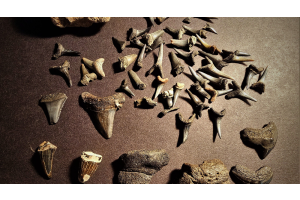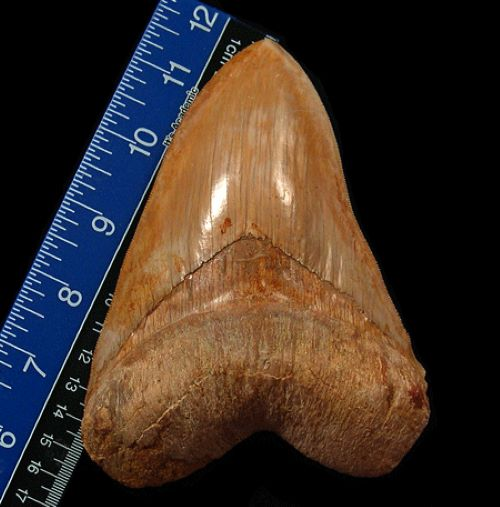
The fossilized teeth of the Megalodon continue to stir fascination not just for their sheer size but for the stories they tell about a long-extinct apex predator. These teeth, some measuring over six inches, have become prized collectibles, offering clues into the prehistoric oceans this massive shark once ruled. As we explore how big a megalodon tooth can get, we’ll look at actual measurements, scientific context, and the factors that influence these jaw-dropping variations in size. At Buried Treasure Fossils, we’ve seen first-hand the incredible range of these specimens and what makes each one unique.
What Is Considered a Large Megalodon Tooth?
Most Megalodon teeth found today fall between 3 and 5 inches. While impressive on their own, it’s the rare few that exceed the 6-inch mark that captivate collectors and scientists alike. A tooth over 6 inches is not just large, it’s exceptional. These are the specimens that spark questions like how big a megalodon tooth can get and lead fossil hunters to search beaches, rivers, and dive sites around the globe.
Such large teeth represent not just individual finds but also provide a glimpse into the size of the Megalodon that grew them. A 6-inch-plus tooth could belong to a shark estimated at over 50 feet long, a scale that far exceeds any modern shark species.
Measuring Megalodon Teeth: What Counts?
When measuring Megalodon teeth, the industry standard is the slant height—the length from the tip of the crown to the root edge along one side. This diagonal measurement gives the most consistent reading across different tooth shapes. Some collectors also look at root width and overall mass, but slant height remains the go-to metric when discussing size.
The largest verified Megalodon tooth recorded to date measures 7.48 inches. While teeth over 7 inches are incredibly rare, their discovery continues to push the upper boundaries of known Megalodon growth.
Location Matters: Where the Biggest Teeth Are Found
Some locations are more likely to yield larger Megalodon teeth than others. The coastal riverbeds and offshore fossil beds of North and South Carolina are known hotspots. Peru and Morocco have also produced notable specimens. These sites differ in sediment type, age, and marine conditions, but what they share is a fossil-rich history of marine life that includes large predators like the Megalodon.
The sedimentary conditions in these regions often preserve fossils exceptionally well, contributing to both the size and condition of the recovered teeth. In contrast, other locations may yield more fragmented or worn teeth due to erosion or environmental exposure.
How Big Can a Megalodon Tooth Get and Why?
So, how big can a megalodon tooth get? While the upper threshold remains close to 7.5 inches, it's important to understand what influences that size. Megalodons, like other sharks, continually grew and replaced their teeth throughout their lives. As they aged and grew larger, so did their teeth. The largest teeth likely came from the oldest, most mature individuals, sharks that had decades of growth behind them.
Size also varies based on tooth position in the jaw. Anterior (front) teeth tend to be broader and longer, while posterior (back) teeth are smaller and more compact. When collectors mention a tooth’s size, they’re almost always referring to the larger anterior teeth.
Environmental factors during the Megalodon’s lifetime, such as food availability, water temperature, and genetic traits, would have also played a role. Larger teeth meant stronger bite force and an ability to take down bigger prey, making these massive predators even more formidable.
Condition vs Size: What Do Collectors Look For?
A massive Megalodon tooth in poor condition may not command as much interest as a slightly smaller tooth that’s near flawless. Collectors often evaluate teeth based on enamel quality, serration sharpness, root completeness, and coloration. The most valuable teeth typically feature a combination of large size and excellent preservation.
Interestingly, coloration doesn’t reflect the original color of the tooth but rather the minerals present in the sediment where it fossilized. This adds a layer of uniqueness to each tooth, even among specimens of the same size.
Rare but Real: Examples of Teeth Over 7 Inches
Teeth over 7 inches are among the rarest fossil finds. These are not everyday discoveries; they come from very specific conditions and often require significant digging or diving efforts. Even seasoned collectors may only come across one or two such specimens in a lifetime.
These teeth typically come from known high-yield fossil sites and are often verified through museum comparisons or expert analysis. When one of these rare giants enters the market, it draws attention not just for its rarity but for the insight it offers into the size of the shark it belonged to.
How to Estimate a Megalodon’s Size from Its Tooth
Paleontologists use tooth size to estimate the overall size of the shark. A rough formula places every inch of tooth at about 10 feet of shark length. So, a 6-inch tooth might represent a 60-foot Megalodon. While not exact, this estimate helps provide a ballpark figure that brings the prehistoric predator into clearer focus.
However, this ratio can vary based on the tooth’s position and the shark’s age. Front teeth may offer more accurate body length estimates, while lateral teeth are less reliable for size calculations.
What Makes Megalodon Teeth So Popular?
Beyond their sheer size, Megalodon teeth capture the imagination because they’re physical remnants of one of Earth’s most powerful predators. Unlike bones, which are rarely preserved, teeth fossilize more easily due to their enamel content. That makes them one of the most commonly found and collected fossils from this species.
Collectors value them for their historical significance, visual appeal, and rarity. Whether mounted for display or added to a growing collection, a large, well-preserved Megalodon tooth becomes a centerpiece conversation starter.
Conclusion
So, how big can a megalodon tooth get? The largest verified specimens reach up to 7.48 inches, with most ranging between 3 and 5 inches. Teeth over 6 inches are considered exceptional and provide rare insights into the size and age of the sharks that once ruled ancient oceans. These teeth are not just collectors’ items; they are fossilized evidence of a predator unmatched in size and strength. For those fascinated by prehistoric life and seeking authentic specimens, Buried Treasure Fossils offers access to some of the finest and most accurately sourced Megalodon teeth available today.
Contact us today to explore our rare Megalodon tooth collection and add an authentic prehistoric treasure to your collection.