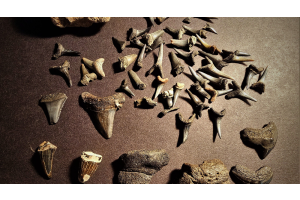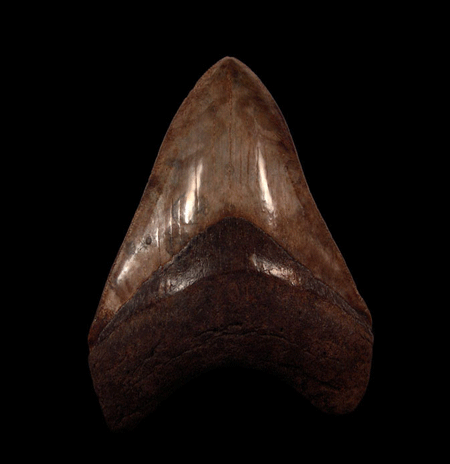
In the vast world of fossil collecting, authenticity is everything. Within the first few moments of examining a specimen, experienced collectors can often sense whether they’re holding a relic of prehistory or a skillfully crafted replica. When it comes to megalodon tooth fake vs real, the difference lies in the details—especially in how natural geological processes, particularly ocean sediments, influence fossil formation. For paleontology students, fossil enthusiasts, and professional collectors alike, understanding how authentic fossils form and what characteristics define them is essential for both scientific study and ethical collecting.
The Science Behind Fossilization
When the colossal Megalodon ruled the seas roughly 23 to 3.6 million years ago, its teeth regularly fell to the ocean floor. Unlike bones, shark teeth are composed largely of dentin covered by hard enamel, which makes them more resistant to decomposition. Over millions of years, sedimentary layers gradually covered these teeth, initiating the fossilization process.
Ocean sediments—composed of silt, clay, and mineral-rich particles—play a critical role in fossil preservation. These sediments not only protect the tooth from physical erosion but also facilitate mineralization, where the original biological material is slowly replaced by minerals such as calcite, silica, or phosphate. This transformation gives genuine Megalodon teeth their density, weight, and striking coloration, which can range from gray and black to reddish-brown, depending on the mineral content of the sediments in which they were buried.
The Role of Ocean Sediments in Authentic Fossil Formation
Oceanic environments provide varying chemical conditions that dramatically affect fossil appearance. For instance, in phosphate-rich regions like the southeastern U.S., Megalodon teeth often acquire a deep black or bluish hue. In contrast, sediments rich in iron oxide can give teeth a reddish tint. These natural colorations cannot be easily replicated by artificial means, making them a crucial indicator when identifying megalodon tooth fake vs real specimens.
The pressure and mineral exchange that occur beneath the seafloor also influence texture. Authentic Megalodon fossils exhibit natural pitting and subtle irregularities, signs of millions of years of burial and chemical transformation. Artificial replicas, even when crafted with skill, often lack this micro-level authenticity—appearing too smooth or too uniform under close inspection.
How Weight and Density Reveal the Truth
One of the simplest yet most reliable ways to distinguish a genuine Megalodon tooth from a fake is through its weight and density. Fossilized teeth are significantly heavier than modern or artificial counterparts due to mineral replacement. The mineralization process adds mass and gives the tooth a stone-like feel.
Collectors can compare the suspected specimen’s weight to that of a confirmed fossil of similar size. If the tooth feels unusually light, it may be made of resin, plaster, or composite materials—common choices for replicas. This tactile examination, paired with visual cues, can be an effective first step in determining authenticity.
Surface Texture: Reading the Story Etched by Time
Every authentic fossil tells a story written on its surface. Under magnification, a genuine Megalodon tooth shows a network of fine scratches, minute pits, and sometimes remnants of sediment adhered to the enamel. These imperfections are not flaws but the signature of time. Fake teeth, on the other hand, often appear glossy and overly polished.
The surface texture of a real fossil should feel slightly rough or grainy in certain areas—especially along the root or where mineral deposits have formed. This natural weathering effect is nearly impossible to replicate accurately through artificial aging techniques.
Blade Serrations: The Evolutionary Fingerprint
The Megalodon’s teeth were formidable tools, featuring razor-sharp serrations designed for cutting through thick marine flesh. Although millions of years have worn down many of these serrations, they are often still visible in well-preserved fossils. Examining the edges of the tooth closely reveals small, evenly spaced notches.
Fake teeth frequently lack these fine serrations or display inconsistent patterns. When comparing megalodon tooth fake vs real, note how genuine fossils have serrations that align precisely with the tooth’s curvature—a feature that artificial molds often fail to capture accurately.
Geological Context: Authenticity Begins at the Source
Authentic Megalodon teeth are almost always accompanied by documentation of origin—information about where they were found, the type of sedimentary deposit, and sometimes even the geological age. Reputable dealers, like us at Buried Treasure Fossils, prioritize transparency and provide full provenance details with each specimen.
We work with legally sourced fossils from private lands in regions known for rich Miocene and Pliocene deposits, such as South Carolina, North Carolina, and Morocco. These localities are renowned for producing high-quality Megalodon teeth, with distinct sediment signatures that contribute to their authenticity and unique appearance.
Mineralization and Color: The Chemistry of Authenticity
Over time, groundwater percolates through ocean sediments, carrying dissolved minerals that replace the organic material in buried teeth. This process, known as permineralization, results in fossilized structures that are denser and more colorful than their original biological forms.
Fake Megalodon teeth are often painted or dyed to imitate these natural hues, but close examination under light can reveal inconsistencies. Genuine fossils show gradual color transitions and subtle variations—reflecting the uneven flow of minerals during fossilization—whereas artificial ones display abrupt or uniform coloring.
The Sediment Matrix: A Hidden Indicator of Age
Occasionally, authentic Megalodon fossils retain small patches of the original sediment matrix—the rock or material in which they were encased. This matrix can provide vital clues about the fossil’s age and origin. For instance, sandy matrices suggest coastal deposits, while fine-grained clay indicates deeper marine burial.
When examining megalodon tooth fake vs real specimens, traces of natural sediment adhering to the fossil are strong evidence of authenticity. Replicas typically lack these subtle geological remnants, as they are molded in isolation rather than unearthed from sedimentary deposits.
Why Buying from Trusted Sources Matters
In today’s online fossil market, fakes can be convincing. That’s why sourcing from experienced, transparent, and knowledgeable sellers is crucial. At Buried Treasure Fossils, we are passionate about preserving the integrity of paleontology. Every fossil in our collection undergoes careful inspection for authenticity and condition before being made available to collectors and researchers.
Our goal isn’t just to sell fossils—it’s to educate and inspire. Whether you’re a student studying paleobiology or a seasoned collector, understanding how ocean sediments shape the authenticity of fossils deepens your appreciation for Earth’s prehistoric story.
Practical Tips for Testing Authenticity
1. Visual Analysis: Look for natural imperfections, mineral staining, and color variation.
2. Weight Test: Genuine fossils are heavier than replicas due to mineralization.
3. Surface Texture: Authentic fossils show micro-abrasions and irregularities.
4. Magnification Check: Under magnification, observe serrations and enamel grain.
5. Provenance Verification: Always ask for source information and collection details.
By combining these observational and tactile tests, collectors can confidently distinguish megalodon tooth fake vs real and avoid the disappointment of buying replicas.
The Academic Value of Authentic Megalodon Teeth
Beyond their aesthetic appeal, real Megalodon fossils provide crucial insights into marine evolution and paleoecology. Their morphology, wear patterns, and isotopic composition allow researchers to reconstruct the predator’s feeding habits, migratory patterns, and environmental adaptations.
Each genuine fossil serves as a data point in understanding prehistoric ocean ecosystems—something fake reproductions can never replicate. This underscores why authenticity verification is not just a collector’s concern but a scientific necessity.
Conclusion: Preserving Prehistory Through Authentic Fossils
The fascination surrounding the Megalodon is timeless, and so is the quest to uncover its true legacy. Knowing how to tell megalodon tooth fake vs real apart is more than a collector’s skill—it’s a way of honoring millions of years of Earth’s history. From the role of ocean sediments in shaping genuine fossils to the scientific methods used in testing authenticity, every detail helps safeguard the story of this ancient predator.
At Buried Treasure Fossils, we take pride in offering only verified, authentic fossils sourced responsibly and legally. Our collection bridges the gap between science and wonder, providing students, researchers, and enthusiasts access to genuine pieces of prehistoric life. Explore our curated selection and discover the unmatched beauty and authenticity that only nature—and time—can create.