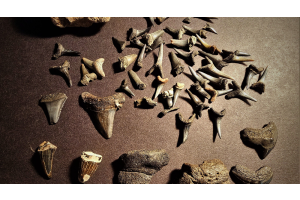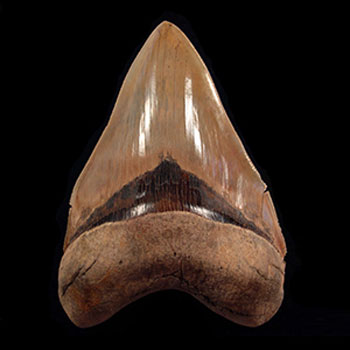
The faint scent of earth mixed with saltwater lingers when a fossil emerges from its ancient resting place. Within the first sixty words, it’s clear that this story is not about an ordinary discovery but about how a man finds the tooth of Megalodon and, in doing so, inhales the whispers of an ancient ocean. The moment the fossil is uncovered, time folds in on itself — a prehistoric predator returns, not in flesh, but in memory and mineral.
The Moment of Discovery: Unearthing the Ocean’s Echo
Imagine standing ankle-deep in river silt or coastal clay, your fingers brushing across something smooth, dense, and triangular. What you hold is no ordinary relic — it’s the remnant of Carcharocles megalodon, a shark so immense that its bite could crush the skull of a whale. For those who’ve ever had the privilege of finding or holding one, there’s a strange sensory experience — an aroma that feels ancient, metallic, and saline. The smell isn’t merely from the soil; it’s a geological time capsule containing remnants of prehistoric seas.
When a man finds a tooth of megalodon, he’s not just uncovering a fossil. He’s reaching back millions of years into the Miocene and Pliocene epochs when warm, shallow seas were alive with whales, giant squids, and these colossal apex predators. That mineralized scent carries traces of phosphate and calcium, chemicals that once coursed through marine ecosystems now long vanished.
Ancient Aromas: The Chemistry Behind the Fossil’s Scent
Every fossil tells a chemical story. The aroma that emerges when a Megalodon tooth is first freed from the earth is the product of thousands of years of mineral exchange. Sedimentary layers rich in iron, sulfur, and marine carbon compounds interact with the fossil’s enamel and dentin, creating faint but distinct smells reminiscent of brine and metal. It’s as if the fossil exudes a breath from the ancient ocean itself.
To scientists and collectors, these sensory cues are not trivial. The smell can hint at the preservation environment — river sediment, deep marine limestone, or coastal silt beds. For instance, fossils found in phosphate-rich sediments from Florida or Sharktooth Hill in California may carry a stronger mineral tang, whereas those from Morocco often reveal a subtler, chalky scent. To seasoned fossil hunters like us at Buried Treasure Fossils, even that earthy perfume is part of the thrill of discovery.
The Giant Behind the Tooth: Understanding the Megalodon
Before we explore the cultural and emotional power of such finds, it’s worth recalling what the Megalodon truly was. Known scientifically as Otodus megalodon, this giant shark lived between 23 to 3.6 million years ago. Reaching lengths of 60 feet and weighing up to 75 tons, the Megalodon was the largest marine predator to ever exist. Its teeth — heart-shaped, serrated, and often larger than a human hand — were designed for one purpose: to tear through the flesh of whales.
Each time a man finds a tooth of megalodon, he holds proof of an animal whose bite force could reach up to 180,000 newtons — enough to crush bone and shell with terrifying ease. The shape and serrations of each tooth tell us about its feeding behavior and ecological role. Some scientists suggest that the Megalodon targeted whale fins first, immobilizing its prey before devouring it whole. These fossils are more than relics — they’re anatomical records of power, evolution, and extinction.
The Scent of Time: How Fossils Connect Us to the Prehistoric World
There’s something poetic about the fact that a smell can trigger memory — even a collective one. When a fossil hunter brushes dirt from a Megalodon tooth, that earthy scent mingles with salt-like minerals, evoking images of warm prehistoric waters teeming with life. For marine historians and educators, this sensory link bridges human experience and deep time. It reminds us that oceans have always been our planet’s cradle of life.
Paleontologists often remark on how fossils retain not just form but essence — a molecular echo of environments long gone. That faint oceanic smell connects us to the chemistry of ancient ecosystems: dissolved carbonates, decayed marine matter, and the silt that once cushioned these predators’ bones. Through scent, sight, and touch, fossils make the prehistoric world tangible.
Collecting the Past: From Discovery to Display
At Buried Treasure Fossils, we understand that when collectors acquire a Megalodon tooth, they’re not just purchasing a specimen — they’re bringing home a fragment of Earth’s deep history. Each tooth we offer has its own provenance, from Florida’s riverbeds to Chile’s coastal cliffs. Every fossil has been carefully authenticated and legally sourced, ensuring both scientific integrity and ethical collection practices.
For beginners, smaller Megalodon teeth offer an affordable entry into fossil collecting, while seasoned enthusiasts often pursue rare specimens over six inches long — some exceeding even seven. Our Megalodon Shark Teeth selection showcases extraordinary examples with intact serrations, glossy enamel, and stunning color variations. These are not only educational tools but natural artworks shaped by millions of years of geology.
We take pride in making the collecting experience approachable. With detailed descriptions, geological context, and fossil identification support, we help both educators and hobbyists understand the meaning behind each specimen. The excitement of holding a 10-million-year-old artifact is an experience everyone should feel at least once.
Scientific Insights: What Megalodon Teeth Teach Us
Beyond their aesthetic value, Megalodon teeth are vital to paleontological research. Their structure reveals not only diet but also the environmental shifts that led to the species’ extinction. Studies show that Megalodon populations declined as ocean temperatures cooled and prey availability changed. Each fossil tooth functions as a miniature geological record — capturing isotopic data that can be analyzed to reconstruct ancient climates and migration patterns.
When a man finds a tooth of megalodon, he contributes, knowingly or not, to this scientific narrative. The sediment in which the fossil was found might hold microfossils or mineral traces that allow researchers to date it accurately. Even the smallest grain of sand attached to a tooth can reveal the ocean chemistry of a bygone era.
At Buried Treasure Fossils, we value not just the beauty of these finds but the knowledge they carry. That’s why we provide collectors with information about each fossil’s locality and age — transforming every purchase into an opportunity to learn.
Why the Megalodon Still Captivates Us
The Megalodon’s legend has outlived its species by millions of years. Movies and myths depict it as a monster of the deep, yet the real fascination lies in its existence as a natural marvel — an apex predator that shaped marine ecosystems long before humans appeared. Holding one of its teeth is like touching a piece of that myth made real. The size, weight, and even the subtle scent of the fossil remind us of nature’s scale and the ocean’s enduring mystery.
For educators and experiential learners, this fascination translates into a teaching tool. A single tooth can open discussions about evolution, extinction, and climate change. It’s a bridge between science and wonder, curiosity and comprehension.
The Enduring Aroma of Discovery
Long after a fossil is cleaned and displayed, that first impression — the smell of the sediment, the oceanic tang — lingers in memory. It’s a sensory bookmark to a moment when time stood still, and the boundaries between past and present blurred. When a man finds a tooth of megalodon, he doesn’t just find a fossil; he finds a story, a connection to Earth’s vast biological narrative, and perhaps even to himself.
At Buried Treasure Fossils, we live for such moments. Each specimen in our collection carries that same spirit of discovery — the scent, texture, and thrill that come from unearthing the deep past. Whether you’re a marine historian, paleontology fan, or educator, exploring our collection allows you to hold that ancient ocean in your hands.
Conclusion: Holding History, Smelling the Sea
In the end, when man finds the tooth of megalodon, he uncovers more than a fossil — he breathes in an ocean that has been silent for millions of years. That faint mineral scent connects us to an era when giants ruled the seas and evolution was in full motion. Through fossils, we don’t just study history; we sense it.
If you’ve ever wanted to experience that connection — to feel, smell, and study the deep ocean past — explore our exceptional selection of Megalodon Shark Teeth and other fossils. Let the ancient sea speak to you through the artifacts we preserve, authenticate, and share with passion. The next remarkable discovery could be in your hands.