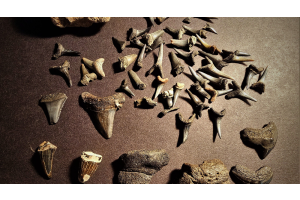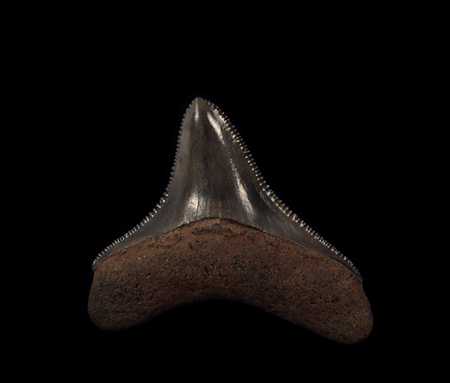
The discovery of ancient marine fossils continues to captivate both scientists and fossil enthusiasts. Among these remarkable finds, a new megalodon tooth found buried deep within sediment layers always sparks immense excitement and curiosity. At Buried Treasure Fossils, we share that same thrill of discovery. Every authentic fossil tells a story millions of years in the making—and with each one, science gives us another glimpse into the life and environment of Earth’s most fearsome prehistoric predator, the Megalodon. Understanding how scientists date such a specimen requires a fascinating dive into geology, chemistry, and paleontology.
The First Step: Locating and Identifying the Tooth
Before scientists can begin dating a new Megalodon tooth, they first confirm that it truly belongs to Otodus megalodon, the massive prehistoric shark that dominated Earth’s oceans between roughly 23 and 3.6 million years ago. Identification starts with physical characteristics—size, shape, serration, and enamel texture. Megalodon teeth are typically large, triangular, and sharply serrated, capable of slicing through whale bone and thick blubber. The enamel is often glossy and well-preserved, even after millions of years underground.
Once the specimen is confirmed, paleontologists turn their focus to where it was found. The sedimentary environment around the tooth offers critical information. Each layer of earth—whether marine sand, clay, or limestone—acts as a geological timestamp, recording environmental conditions over millions of years.
Reading the Layers: Stratigraphy and the Geological Clock
The oldest and most foundational method scientists use to determine fossil age is stratigraphy. This method is based on the Law of Superposition, which states that in undisturbed layers of sediment, the oldest layers lie at the bottom, while newer ones form on top. When a new megalodon tooth found is uncovered, scientists analyze the surrounding rock and sediment layers to identify which geological period it belongs to.
Stratigraphy also involves examining index fossils—fossils of species that lived during a known, specific timeframe. If these are found in the same layer as the Megalodon tooth, they serve as markers that help establish an approximate age. For instance, finding the tooth in layers containing fossils from the Miocene epoch can indicate that the Megalodon likely swam the seas during that time.
This approach doesn’t give an exact date, but it helps establish a reliable relative timeline. It’s a crucial first step before applying more advanced techniques.
Unlocking Time with Radiometric Dating
Scientists use the fascinating method of radiometric dating to uncover the precise ages of fossils! By measuring the natural decay of radioactive isotopes in minerals from the same sedimentary layer, they gain valuable insights. Although organic materials like shark teeth don’t have suitable isotopes, researchers skillfully date the surrounding rock and volcanic ash layers instead. This clever technique not only boosts the accuracy of age estimates but also reinforces the reliability of the fossils' context. It’s an exciting process that deepens our understanding of Earth's history!
For example, if a layer of volcanic ash lies directly above or below where the Megalodon tooth was discovered, scientists can measure isotopes such as potassium-40 and uranium-238 to determine the absolute age of that layer. Since these isotopes decay at predictable rates, they function like natural clocks that reveal the rock's formation period. If the sediment layer dates to around 10 million years ago, the tooth embedded within it likely belongs to that same period.
This process allows paleontologists not just to confirm when the shark lived but also correlate findings from around the world, helping build a unified picture of Megalodon’s evolutionary timeline.
The Science of Fossil Correlation
Beyond stratigraphy and radiometric analysis, another powerful method scientists use is fossil correlation. This technique compares the newly discovered fossil to other known specimens from established geological sites. By analyzing the morphology and mineralization patterns of a new megalodon tooth found, researchers can determine whether it aligns with earlier discoveries from specific epochs.
For example, if the newly uncovered tooth matches others found in Pliocene deposits in North America or the Miocene layers of Morocco, scientists can correlate it with those timeframes. Fossil correlation is particularly useful when radiometric data isn’t available or when sedimentary contexts are complex.
At Buried Treasure Fossils, we deeply appreciate how fossil correlation enhances the educational value of each specimen. Many of our Megalodon teeth are accompanied by detailed information about their geological origins, ensuring collectors and educators alike understand the fossil’s historical context.
Chemical Signatures: Isotopic and Elemental Analysis
A more recent addition to fossil dating is isotopic and elemental analysis, which explores the chemical makeup of a fossil to reveal clues about its age and environment. Scientists study oxygen and carbon isotopes trapped within the tooth’s enamel to infer the temperature and composition of ancient seawater. These chemical fingerprints not only help estimate the fossil’s geological age but also reconstruct the prehistoric climate in which the Megalodon thrived.
For example, higher ratios of oxygen-18 in a tooth might indicate colder ocean conditions—signaling a time closer to the Megalodon’s eventual extinction during global cooling events of the late Pliocene epoch.
This type of research underscores how fossil teeth are more than just relics—they’re molecular time capsules that record the chemistry of ancient oceans.
The Role of Paleomagnetic Dating
Another fascinating approach used in dating fossils involves paleomagnetic dating—the study of Earth’s magnetic field as recorded in rock layers. Throughout history, Earth’s magnetic field has flipped many times, and these reversals are preserved in iron-bearing minerals within sediments. When scientists uncover a new Megalodon tooth found in a layer with a known magnetic signature, they can match that signal to established global magnetic reversal timelines, adding yet another layer of precision to the dating process.
This method helps bridge gaps between relative and absolute dating, offering a cross-verified timeline that enhances scientific accuracy.
What Each Dating Method Reveals About Megalodon
Combining these techniques gives scientists an incredibly detailed understanding of the Megalodon’s timeline. Radiometric data confirms when the sediment formed, stratigraphy shows the order of deposition, and isotopic chemistry provides insight into the shark’s environment. Collectively, they allow researchers to reconstruct not only when this apex predator lived but also how it adapted to changing ocean conditions over millions of years.
These methods reveal that Megalodons thrived from the early Miocene to the late Pliocene epochs—roughly between 23 and 3.6 million years ago. As Earth’s oceans cooled and prey species like whales migrated to colder waters, the Megalodon’s dominance began to fade, leading to its extinction.
Why Megalodon Teeth Are So Valuable to Science and Collectors
Every Megalodon tooth tells a unique story of survival, adaptation, and extinction. Their durability makes them some of the most accessible and scientifically valuable fossils for study. The enamel and dentin layers preserve microscopic and chemical data that can reveal diet, habitat, and even migration patterns.
At Buried Treasure Fossils, we’ve seen how collectors, educators, and researchers share a deep fascination with these extraordinary remnants of the past. Whether you’re a geology student exploring stratigraphy or a fossil enthusiast adding a rare specimen to your collection, Megalodon teeth connect us directly to one of the ocean’s most magnificent creatures.
Our extensive catalog includes legally collected and fully authenticated specimens—some reaching up to seven inches in size. Each piece is chosen not only for its beauty but also for its educational value, allowing collectors to appreciate both the science and the story behind every fossil.
Conclusion: Unearthing the Story Behind Every Fossil
Understanding how scientists date a new megalodon tooth found in sediment layers highlights the powerful intersection between geology, chemistry, and paleontology. Through methods like stratigraphy, radiometric dating, fossil correlation, and isotopic analysis, researchers unravel the mysteries of Earth’s ancient past—one layer and one tooth at a time.
At Buried Treasure Fossils, we share that same passion for discovery. Every fossil in our collection—from Megalodon teeth to ammonites and dinosaur bones—embodies a chapter in Earth’s evolutionary history. Whether you’re an educator seeking teaching material, a student eager to learn, or a collector hunting for your next great piece, we invite you to explore our extraordinary collection and uncover your own prehistoric story with us.
Explore more authentic specimens and enrich your understanding of ancient life through our growing fossil catalog at Buried Treasure Fossils.