

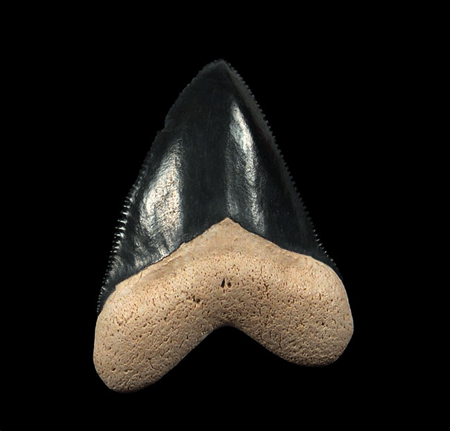
When we imagine the Megalodon, we often picture a colossal predator dominating the prehistoric oceans, its massive jaws capable of crushing anything in its path. Yet even this marine giant began life as a small, vulnerable offspring. By examining baby megalodon tooth size and studying the patterns of early growth, researchers gain rare insight into how these ancient sharks developed into the greatest predators the oceans have ever known. Fossils unearthed and studied by experts—including the fascinating specimens we showcase at Buried Treasure Fossils—offer an exceptional glimpse into the early life stages of this awe-inspiring creature.
Tracing the Origins: The Early Life of a Megalodon
Every Megalodon, no matter how massive in adulthood, started as a hatchling measuring just a few feet in length. Scientists believe these young sharks spent their earliest months in protected nursery areas—warm, shallow coastal zones rich in food and safe from larger predators. The discovery of clusters of small Megalodon teeth in regions such as Panama, South Carolina, and Japan supports this theory. By analyzing baby megalodon tooth size, researchers can estimate both the age and growth stage of these juveniles, building a timeline of the Megalodon’s development from infancy to adulthood.
These findings reveal much more than size alone. The physical characteristics of baby teeth—the enamel thickness, root shape, and serration depth—unveil crucial information about how these young predators fed, what prey they targeted, and the environmental conditions they lived in. In many ways, each tiny fossil is a biological snapshot of an oceanic nursery that existed millions of years ago.
Anatomy of a Baby Megalodon Tooth
The anatomy of a baby Megalodon tooth offers a miniature yet remarkably detailed version of the adult form. While adult Megalodon teeth can reach lengths exceeding seven inches, the teeth of a newborn or juvenile are typically less than one inch long. Despite their small size, these teeth share the same broad, triangular shape and finely serrated edges that characterized their adult counterparts.
The baby megalodon tooth size indicates that even newborns were formidable predators from the start. The robust enamel and sharp serrations suggest a diet consisting of small fish and marine mammals, adapted perfectly for slicing flesh efficiently. Furthermore, microscopic wear patterns on the teeth allow paleontologists to infer feeding habits—whether the juveniles were scavengers or active hunters, and how quickly they replaced lost teeth as they grew.
Growth Rings and Life Stages
One of the most fascinating aspects of shark biology is that their teeth and vertebrae often carry “growth rings,” much like tree trunks. By counting these rings in fossilized Megalodon remains, scientists can estimate not only the age at which a shark lost a tooth but also how quickly it grew. Studies suggest that juvenile Megalodons grew rapidly, sometimes exceeding one meter per year during their early life stages.
This accelerated growth rate likely played a crucial role in survival. In prehistoric oceans teeming with predators, growing fast meant reaching a size where few could threaten them. The baby megalodon tooth size and spacing of growth rings reveal how their life cycle was finely tuned for both speed and strength—a biological advantage that allowed the species to dominate global seas for over 20 million years.
Insights from Fossil Clusters and Habitat Clues
Clusters of smaller Megalodon teeth often mark the ancient breeding and nursery grounds where generations of young sharks once thrived. These sites, often found in warm coastal sediments, tell a story not just of biology but of ancient climate and ecology. The distribution of these fossils reveals preferred water temperatures—typically between 12°C and 27°C—ideal for young Megalodons to grow and hunt with minimal competition.
By examining these clusters, we can deduce that the species thrived in coastal zones teeming with fish and small marine mammals, offering both nourishment and refuge. These vital nursery areas likely served as the cornerstone of Megalodon population stability, enabling the species to endure across millions of years. At Buried Treasure Fossils, we find these discoveries particularly exhilarating, as they intricately link the dimensions of a single tooth to the grand narrative of ancient marine ecosystems.
Evolutionary Connections and Adaptive Mechanisms
The Megalodon’s extinction remains one of paleontology’s greatest mysteries, yet its evolutionary connections to modern sharks are well documented. The species most closely related to Megalodon, the Great White Shark (Carcharodon carcharias), provides clues to its ancient cousin’s biology. By comparing baby megalodon tooth size with those of modern Great White juveniles, researchers note striking similarities in structure and enamel composition—suggesting a shared evolutionary lineage.
The serrated design, for example, was an adaptive advantage passed down through generations, enabling efficient meat slicing and faster energy intake. For baby Megalodons, this adaptation was essential to survival. The resilience and efficiency encoded in their tooth morphology demonstrate how evolution fine-tuned every aspect of their anatomy for dominance. Studying these fossils today allows us to appreciate the precision of natural selection and the incredible adaptability of sharks over geological time.
The Science of Preservation and Discovery
At Buried Treasure Fossils, we take immense pride in preserving and presenting authentic Megalodon teeth, including rare juvenile specimens. Each fossil we curate tells a part of Earth’s evolutionary story, connecting collectors and researchers directly to the prehistoric oceans. The authenticity of our fossils is paramount—every item in our catalog is legally and ethically sourced, many from private land discoveries in the U.S. and Morocco.
When handling fossils like juvenile Megalodon teeth, our team examines subtle characteristics such as mineralization, enamel integrity, and coloration, ensuring each specimen retains its natural historical value. Beyond their scientific worth, these teeth captivate both collectors and academic researchers for their aesthetic beauty and tangible link to deep time.
Educational and Research Value
For marine biology students and fossil enthusiasts, studying baby megalodon tooth size offers an exciting entry point into understanding paleobiology and shark evolution. These teeth are more than mere remnants; they are primary data for reconstructing ancient ecosystems. By analyzing chemical isotopes trapped within the enamel, scientists can determine ancient ocean temperatures, salinity, and even migration patterns.
At Buried Treasure Fossils, we believe education and accessibility go hand in hand. Our platform caters to beginners, seasoned collectors, and researchers alike, offering both affordable specimens and museum-grade fossils. Whether you’re analyzing enamel microstructure or expanding a fossil display, our collection bridges the gap between academic curiosity and personal passion.
From Tiny Teeth to Giant Legends
The transition from baby Megalodon to oceanic titan is a story of unparalleled growth. From a tooth smaller than an inch to jaws spanning over ten feet, the Megalodon’s life history embodies evolution’s power and precision. The incremental changes recorded in each fossilized tooth represent millions of years of adaptation and dominance.
Understanding the size of baby megalodon teeth deepens our appreciation of these magnificent predators—not as distant monsters, but as vital components of Earth’s evolutionary tapestry. They remind us that every giant once began as something small, and every fossil carries the memory of survival, adaptation, and natural wonder.
Conclusion
The study of baby megalodon tooth size is far more than a curiosity—it’s a scientific key to unlocking the life history of one of the ocean’s greatest predators. Each fossilized tooth tells a story of growth, adaptation, and resilience, offering modern researchers and fossil collectors alike a direct connection to a vanished world. As we continue to explore, study, and preserve these incredible specimens, we reaffirm our dedication to understanding Earth’s ancient past and protecting its living oceans for future generations.
At Buried Treasure Fossils, we invite you to explore our curated collection of authentic Megalodon fossils and discover the thrill of holding a piece of prehistory in your hands—because every fossil we share carries the story of evolution, science, and the eternal power of the sea.






