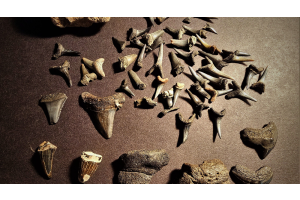
Few natural wonders capture the imagination of marine science students and fossil researchers quite like the immense teeth of the prehistoric Otodus megalodon. Within the first sixty words of this exploration, we must highlight the marvel of the West Java Megalodon tooth, a fossil whose preservation tells a remarkable geological story rooted in the chemistry and patience of time. Unearthed from dense limestone deposits in Indonesia, this extraordinary specimen reveals not just the power of ancient oceans, but also the unique geological protection that allowed its perfection to endure for millions of years.
The Geological Treasure of West Java
In the verdant landscapes of Indonesia, particularly within the Bentang Formation of West Java, miners painstakingly uncover teeth of the giant white shark—Otodus megalodon. Each find is a moment frozen in time, connecting us directly to the Miocene epoch nearly fifteen million years ago. What makes these discoveries exceptional is not merely the size or sharpness of the teeth, but their unmatched preservation. The surrounding limestone matrix, dense and chemically stable, has safeguarded the West Java Megalodon tooth from the ravages of moisture, pressure, and chemical decay.
Limestone acts as a natural vault, sealing fossils from oxygen exposure and microbial activity that might otherwise degrade enamel. The carbonate-rich environment neutralizes acids, helping to maintain the tooth’s glossy enamel, flawless serrations, and distinct color bands. This geological interplay of chemistry and protection explains why these teeth display brilliant hues of gold, tan, red, and even blue—colors rarely preserved in fossils from other regions.
Why Limestone Makes All the Difference
At Buried Treasure Fossils, we’re passionate about helping collectors and researchers understand the science behind fossil beauty. The secret to the pristine condition of these teeth lies in the limestone’s unique mineral composition. Unlike sand or clay deposits that can leach minerals and erode enamel, limestone contains high concentrations of calcium carbonate, a mineral that reacts gently with surrounding materials. This creates a buffered micro-environment where enamel integrity remains remarkably stable.
Over millions of years, groundwater carrying dissolved minerals slowly permeated the limestone. Instead of corroding the tooth, this process infused it with trace elements that enhanced color and durability. The result is a fossil whose enamel feels almost like glass and whose serrations remain crisp—an astonishing level of preservation that makes every West Java Megalodon tooth a geological masterpiece.
The Artistry of Preservation: Nature’s Role in Fossil Beauty
Beyond chemistry, the physical structure of limestone contributes to fossil perfection. Its fine-grained, compact nature limits mechanical wear, preventing micro-fractures that could dull edges or cause hydration cracks. In tropical environments like West Java, where acidic soils often erode bone and shell material, the limestone acts as a barrier, isolating the fossil from external conditions. This isolation is why these teeth exhibit vibrant surface sheen and minimal weathering compared with specimens from other dig sites.
Every tooth removed from this matrix embodies the essence of geological artistry—its smooth enamel, vibrant bourlettes, and intricate serrations that stretch astonishingly close to the root. Each distinctive feature narrates a tale not only of the apex predator's formidable strength but also of Earth's remarkable ability to immortalize that might in exquisite detail.
From Discovery to Collector’s Showcase
When local miners in West Java hand-dig through steep hillsides and stream beds, they face a challenge that blends physical endurance with geological skill. The amount of limestone removed to find just one tooth is immense, making each discovery truly rare. Because of this rarity and the exceptional condition of the finds, collectors prize them highly. At Buried Treasure Fossils, we ensure that every specimen is ethically sourced and legally collected, maintaining the authenticity that serious collectors and scientists rely on.
Our team carefully inspects each fossil, documenting its origin, color, and preservation details. We understand that to a marine science student, a West Java Megalodon tooth is more than an artifact—it’s a window into oceanic ecosystems that once teemed with life. To a researcher, it offers valuable insight into sedimentary preservation processes and mineral interaction over deep time.
A Color Palette Born of Ancient Seas
One of the most captivating features of these fossils is their striking coloration. The range of tans, golds, reds, browns, blues, and blacks comes from subtle variations in the mineral content of the limestone. Iron oxides may lend deep red hues, while phosphate and manganese create darker shades. The interplay of these minerals gives rise to distinctive patterns such as the “Tiger Eye” design—vertical streaks of gold and red that shimmer when viewed under light.
These colors aren’t superficial stains; they are embedded within the enamel itself, created by millions of years of slow mineral replacement. Each hue represents a chapter in the fossil’s geological journey, an imprint of the conditions that shaped it. Such beauty explains why collectors around the world seek West Java specimens as centerpiece fossils in their displays.
The Science Behind Enamel Perfection
The enamel of a Megalodon tooth is incredibly dense, but it’s still susceptible to chemical alteration if exposed to harsh environmental conditions. The limestone’s neutral pH and low permeability prevent acidic water from dissolving the enamel or dulling the serrations. Additionally, the lack of oxygen within the limestone limits oxidation, which can otherwise cause discoloration or micro-damage over time.
This preservation is so complete that some West Java Megalodon teeth display enamel clarity comparable to that of modern shark teeth. The serrations often remain sharp enough to suggest the sheer cutting power these prehistoric giants once wielded. For students studying paleobiology or taphonomy, these fossils offer a rare chance to analyze pristine structures—nearly as fresh as the day they fell from the shark’s jaw.
The Human Element: Passion Meets Preservation
Since 2000, we at Buried Treasure Fossils have shared founder Gary Greaser’s lifelong passion for fossil discovery and education. Our mission is to make fossils like the West Java Megalodon tooth accessible to both newcomers and experts. By offering authentic, legally collected specimens, we bridge the gap between scientific curiosity and personal connection. Every fossil we curate carries our guarantee of authenticity and quality, ensuring that collectors and educators alike can explore prehistory with confidence.
Our catalog extends far beyond shark teeth, encompassing dinosaur bones, ammonites, trilobites, and mammal fossils. But few items inspire the same awe as a Megalodon tooth glowing with the warmth of West Java’s earth tones. Each specimen stands as proof of nature’s ability to preserve beauty even as entire species vanish.
Connecting with the Past Through Science and Story
For marine science students, these fossils represent far more than study material. They embody the convergence of biology, geology, and chemistry—the perfect case study in how environment dictates preservation. Understanding how limestone protected these fossils enriches our comprehension of Earth’s natural systems and the balance between destruction and preservation in the fossil record.
For collectors, the story behind each tooth deepens its value. Knowing that limestone’s gentle chemistry shielded these ancient predators’ remains adds a new dimension of respect for nature’s craftsmanship. Every West Java Megalodon tooth we handle reminds us that perfection in fossils is rarely accidental—it’s earned through eons of geological patience.
Conclusion: Holding Prehistoric Perfection in Your Hands
In the grand narrative of paleontology, few fossils illustrate the harmony of nature’s chemistry and time as elegantly as the West Java Megalodon tooth. Encased for millions of years within protective limestone, these teeth survived unaltered—proof that Earth itself can be the ultimate conservator. Their flawless enamel, vivid color, and intact serrations tell a story of survival, transformation, and discovery.
As passionate fossil enthusiasts and educators, we take pride in sharing these natural works of art with those who appreciate both science and beauty. Explore our collection and experience firsthand how geological wonder meets prehistoric power. Each fossil you study or collect through us isn’t just a specimen—it’s a tangible piece of Earth’s memory, preserved to perfection.