

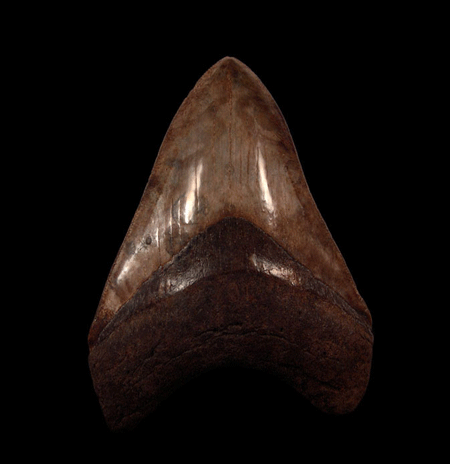
In the world of paleontology and fossil collecting, few specimens spark as much fascination as Megalodon teeth. These massive, serrated remnants from the largest predatory shark to ever roam the oceans represent a direct connection to Earth’s prehistoric past. At Buried Treasure Fossils, we understand the allure of owning such a relic, and we also know how important it is to ensure that what you're adding to your collection is authentic. With the growing popularity of Megalodon fossils, there has also been a rise in fakes, replicas, and artificially modified pieces. Knowing how to tell if a Megalodon tooth is real is crucial for every collector, whether seasoned or new.
In this blog, we walk you through key methods of identifying genuine Megalodon teeth, so you can collect with confidence and clarity.
Surface Texture: Nature’s Signature
The first clue to a tooth’s authenticity is often its surface texture. Genuine Megalodon teeth typically display a natural, aged appearance, shaped by millions of years buried in sediment. These real teeth carry subtle imperfections – such as tiny pits, minor scratches, and naturally worn edges – that are impossible to reproduce convincingly.
On the other hand, replicas or altered teeth may appear overly smooth or too shiny. They sometimes have an artificially applied polish that tries to mimic fossilization but ends up looking too perfect or too uniform. An authentic Megalodon tooth will often exhibit natural variation in texture across the enamel and root, bearing the mark of time and geologic processes.
Weight and Density: Heft That Tells a Story
Authentic Megalodon teeth feel substantial. The fossilization process replaces organic material with minerals over millions of years, making these teeth denser and heavier than newly cast or resin-based fakes.
When held in hand, a genuine fossil will typically have a cold, solid weight to it. If a tooth feels unusually light or hollow, that can be a red flag. Of course, not all teeth are exactly the same – geological differences in fossilization processes can affect weight slightly – but generally, real fossils will not feel flimsy or insubstantial.
Root and Blade Inspection: Details Matter
The structure of the root and blade offers some of the clearest signs of authenticity. In genuine Megalodon teeth, the root is often robust and contains natural anatomical features such as:
● Nutrient foramina: Tiny holes in the root, used during the animal’s life for blood vessels and nerves
● Root lobes: Rounded protrusions that often show subtle asymmetry and irregularity
● Blade serrations: Depending on the preservation, many real Megalodon teeth have tiny, uniform serrations along the edge
Fake teeth may either lack these fine details or display them in a mechanically repetitive way that suggests artificial casting. The blade of a genuine tooth might show wear, chipping, or erosion that adds to its unique character.
Signs of Fossilization: Earth’s Imprint
Real Megalodon teeth are fossils – and fossils tell a geological story. Authentic teeth often show mineral staining, sediment remnants, and a color palette shaped by the type of soil or marine sediment they were buried in.
This can result in striking color variations – from black and grey to tan and brown – that reflect their place of origin. These colorations are often irregular, and the transitions between them are gradual. In contrast, fake teeth might show uniform coloration or even artificial painting to simulate fossil tones.
Look also for sediment trapped in the crevices of the root or the enamel’s microscopic ridges. These natural residues are difficult to fake and usually absent in replicas.
Ask the Experts: Leverage Our Knowledge
Sometimes, despite your best efforts, it’s not easy to determine the authenticity of a fossil with the naked eye. In these situations, seeking guidance from experienced collectors or knowledgeable paleontological experts is recommended.
At Buried Treasure Fossils, we bring decades of hands-on experience with real Megalodon teeth from around the world. We know what to look for, and we’re here to help you develop your own eye for fossil identification. Whether you're building your first collection or refining an established one, don't hesitate to reach out for guidance.
We also encourage you to explore our resources, such as our detailed blog on deciphering fossil authenticity. Learning how to tell if a Megalodon tooth is real is not just a protective step – it’s part of the fascination of fossil collecting.
Why It Matters: Authenticity Connects Us to Prehistory
Owning a real Megalodon tooth isn’t just about display value – it’s about holding a piece of ancient history. Every fossil has a unique journey through time, shaped by geology, biology, and environmental factors. The integrity of that journey is what makes each tooth meaningful.
Replicas may serve decorative purposes, but they lack the weight of story and scientific significance that only a genuine fossil can carry. By learning to identify the real from the fake, collectors preserve the integrity of paleontology and ensure the continued appreciation of prehistoric life.
Final Thoughts: Build Your Collection with Confidence
The fascination with Megalodon teeth is timeless, and rightly so. These majestic fossils embody nature’s ancient power and mystery. At Buried Treasure Fossils, we are committed to helping collectors distinguish the real from the artificial with confidence and clarity.
Remember, look closely at texture, weight, root structure, and signs of fossilization. Don’t hesitate to consult experts when needed, and most importantly, trust your instincts as you become more familiar with authentic specimens.
If you’re ready to explore our hand-selected collection of genuine Megalodon teeth, browse our site and start your fossil journey today.
Explore Authentic Megalodon Fossils at Buried Treasure Fossils – Begin Your Collection with Confidence!
Disclaimer: This blog is intended for informational purposes only. It does not encourage or endorse any unethical or illegal practices related to fossil collection. Please always adhere to local laws and regulations and practice environmental responsibility.






