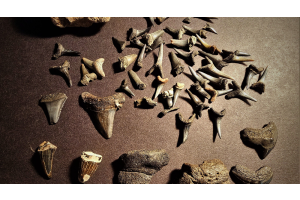
Shark teeth have long been treasures of the sea—small, ancient clues whispering secrets from a time when giants ruled the deep. Most are discovered quietly, brushed off, and displayed on a dusty shelf. But every now and then, something bigger breaks the silence of prehistory.
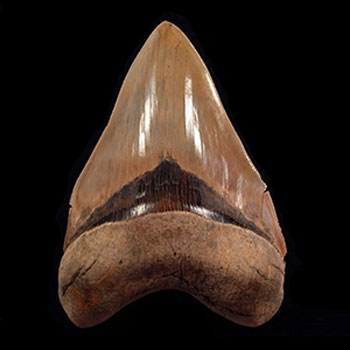
In 2016, the ocean revealed one of its rarest keepsakes. This wasn’t a fossil you’d find buried under driftwood or wedged into a rocky shoreline. It was one of the largest, most intact specimens ever recovered—a megalodon tooth found in 2016—drawing both excitement and awe from marine fossil enthusiasts across the globe.
A Glimpse Into the Mouth of a Legend
For those unfamiliar, the megalodon wasn’t your average predator. Measuring up to 60 feet in length, this ancient shark would have dwarfed today’s great white. Its teeth alone could span over seven inches—razor-edged, triangular relics designed to crush bone and carve through thick hide.
The discovery in 2016 was exceptionally breathtaking, not just for its size but also for its condition. Most megalodon teeth have endured millions of years of erosion, fracturing, and mineralization. Yet this one seemed to defy time. With sharp serrations still visible and its enamel dark and glossy, it was as if the ocean had held onto it, waiting for the right moment to resurface.
What Makes a Tooth This Special?
It’s easy to assume that all megalodon teeth are the same—giant, pointy, and prehistoric. But the truth lies in the subtle differences. The color, for instance, can reveal the type of sediment it was buried in. A deep blue hue may hint at phosphate-rich soil, while earthy browns suggest riverbed origins.
The root structure tells a story, too. A wide, intact root suggests it was lost during feeding rather than as a natural shedding, making it a relic of an ancient feeding frenzy. Serrations along the edges—if they’re still sharp—mean the tooth wasn’t buried too long in rough sediment. And when all these features align in one specimen, collectors take notice.
Where Fossils and Fantasy Meet
There’s something inherently magical about holding a tooth like this in your hand. It’s not the weight or the size that grabs you—it’s the realization that this once belonged to a creature that swam our oceans millions of years ago. Before continents looked the way they do today. Before humans ever existed.
The megalodon’s reign stretched from roughly 23 to 3.6 million years ago, and during that time, oceans teemed with marine mammals, massive fish, and prey large enough to warrant such a predator. The fossilized tooth acts as a time machine, offering a tactile connection to this ancient, untamed era.
Why 2016 Was More Than a Year of Discovery
For fossil collectors, 2016 became a year that rekindled curiosity about the oceans of the past. That single tooth served as a symbol—a reminder that nature still holds mysteries yet to be uncovered. Museums showcased it, collectors clamored for similar finds, and the global appetite for prehistoric relics grew stronger than ever.
It also raised questions: How many other pristine specimens remain hidden in remote, muddy creek beds? Are there places yet untouched by modern tools where these treasures still lie?
Collecting Fossils With Intention and Care
The search for shark teeth isn’t new. Divers, beachcombers, and fossil hunters have been combing rivers and coastlines for decades. But finding a tooth with such exquisite preservation doesn’t happen every day.
Those looking to build a collection should always seek out reputable sources—places that don’t just sell fossils but understand their origin, condition, and story. Whether it’s a smaller specimen or a larger, more complete piece, it’s not about having the biggest trophy—it’s about the connection to history.
A responsible collector asks, "Where was it found?" Was it ethically sourced? Does its size match known averages, or is it something entirely unique?
How to Display a Piece of Prehistory
Once you have a megalodon tooth—whether as pristine as the 2016 discovery or worn and weathered by time—displaying it becomes an art in itself. Some prefer minimalist stands that showcase the tooth's natural contours. Others frame it in glass to protect it from dust and moisture.
Lighting can enhance the fossil’s features—highlighting the enamel’s subtle hues or casting shadows that draw attention to the jagged edges. Placing it beside a card detailing its size, location, and estimated age can also add educational value to its beauty.
Are There More Out There?
Absolutely. While the most significant finds are rare, they’re not impossible. Rivers in the Carolinas, cliffs in Peru, and seabeds near Indonesia have all produced megalodon teeth. The ocean is vast, and though we’ve explored much of its surface, its depths and sediments still guard ancient stories.
With climate shifts and erosion reshaping coastlines, new fossils are unearthed year after year. Each find helps build a clearer picture of what these waters once looked like—and what creatures called them home.
Back to That One Tooth
The megalodon tooth found in 2016 didn’t change science in the way a new species might. But it reminded us that even in the age of satellites and AI, the Earth can still surprise us. It reminded us that awe is not outdated. And for many, it sparked a return to collecting, to exploring, to learning.
Holding that tooth might have felt like holding a piece of a myth. But it was real. Tangible. Proof that giants once ruled the seas.
Start Your Own Journey Into Prehistory
If you’ve ever wanted to own a piece of Earth’s ancient past, now is the time to begin. Explore authentic megalodon teeth, each with its own history and character. Whether you’re a seasoned fossil enthusiast or someone simply drawn to stories etched in stone, something is waiting to be discovered.
Start browsing today and see what ancient secret might be waiting for you.