Page 3 - Monthly Archives: August 2025
- - August 28, 2025
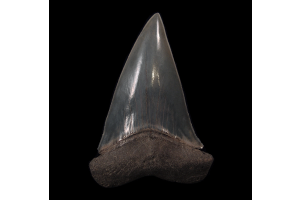
If you think shopping online is just for socks and gadgets, think again! Imagine scrolling through megalodon tooth eBay listings and landing a genuine fossil from a shark so massive it could swallow a car whole. That’s right, this isn’t your everyday eBay find; it’s prehistoric dental bling from a creature that ruled the oceans 2.6 million years ago.
These massive teeth tell stories of an ancient predator, and owning one is like holding a tiny piece of the deep blue past in your hand. Ready to dive into the world of fossil hunting without getting wet? Let’s explore why a megalodon tooth eBay deal might just be the coolest addition to your collection.
Who Was the Megalodon? More Than Just a Big Fish!
The Megalodon was no ordinary shark. Picture a 60-foot-long monster with teeth bigger than your hand, cruising the oceans with one goal: to chomp down on anything in its path. It was the prehistoric heavyweight champion of the seas, and its teeth are some of the most coveted fossils today.
- - August 28, 2025
In our experience working with rare fossils, we have learned that the story of a Megalodon tooth is written not only in its size but also in the fine details that surround its preservation. We know that intact serrations, strong root structure, and verified authenticity can completely change a tooth’s place in the market.
These factors are more than features—they are the elements that help determine whether a specimen captures the attention of collectors, researchers, and enthusiasts alike. For anyone wondering how much a megalodon tooth is worth, the answer depends heavily on these specific qualities.
Serrations That Speak Volumes
A Megalodon tooth’s serrations are more than decorative edges; they are ancient tools, forged millions of years ago for cutting through prey. Natural serrations are usually sharp to the touch, with slight irregularities and tiny signs of wear that hint at a lifetime in the ocean. Replicas and altered fossils often reveal themselves through overly uniform or
- - August 28, 2025
For collectors and enthusiasts, few fossils inspire as much excitement as the massive, serrated teeth of the prehistoric Megalodon. These ancient giants ruled the oceans millions of years ago, and owning one of their fossilized teeth is like holding a piece of marine history. But with their growing popularity comes a rise in replicas and altered specimens, making it essential to know how to tell if a megalodon tooth is real—especially by focusing on two key factors: weight and density. Here at Buried Treasure Fossils, we’ve spent decades working with authentic specimens, so we’re sharing insider tips to help you recognize the real thing.
Why Weight and Density Matter in Authentication
When a tooth fossilizes, it undergoes a process called mineralization. Over millions of years, the organic material in the tooth is gradually replaced by minerals from surrounding sediments—often silica, calcite, or phosphate minerals. This replacement process is what gives fossilized Megalodon teeth their
- - August 28, 2025
The ocean has always been a place of both wonder and mystery. Its depths hold secrets from a world far older than our own, where massive creatures once dominated the seas. Among these prehistoric giants, the megalodon remains the most legendary — a predator so immense and powerful that even modern sharks seem modest by comparison. Its reign spanned millions of years, and though the creature itself is long gone, it has left behind remarkable relics of its existence.
One such relic is its tooth — not just any tooth, but a true titan among fossils. We arrive at the fascination surrounding a 7-inch megalodon tooth, a rare find that continues to mesmerize both collectors and historians. This single fossilized remnant is far more than an object; it is a tangible connection to an age when nature produced predators that reigned supreme over every oceanic horizon.
A relic of scale and power
To hold such a tooth is to appreciate the sheer magnitude of the creature that bore it. Measuring an extraordinary
- - August 28, 2025
In January 2024, an extraordinary fossil emerged from Chile’s Pacific coastline—an immense Megalodon tooth that ranks among the largest ever documented. This discovery drew attention not only for its remarkable size but also for the exceptional state of preservation. The tooth offers a tangible link to a prehistoric apex predator whose reign over the oceans ended millions of years ago. For researchers and collectors, this find has set a new reference point in the ongoing search for the biggest megalodon tooth ever uncovered.
The condition of this specimen is striking. The enamel, root structure, and serrations remain highly defined, offering rare opportunities for scientific analysis. Every groove and edge serves as a clue about the shark’s biology, its feeding methods, and its role within the prehistoric marine food chain. Such detailed preservation makes this fossil invaluable for both academic study and historical recordkeeping.
Why Chile’s Coastline Is an Exceptional Fossil Source
- - August 28, 2025
Owning a real Megalodon tooth is the fossil-lover’s version of buying a mansion on the beach. Impressive? Absolutely. Affordable? Not so much. But here’s the good news: you don’t have to empty your savings or sell your left arm to own a piece of prehistoric awesomeness. Enter the Megalodon tooth replica, the perfect blend of ancient history and modern accessibility.
From collectors to educators to die-hard shark fans, these replicas are gaining popularity faster than you can say prehistoric predator. So why exactly are they making waves? Let’s dive deep into the reasons.
Why Real Megalodon Teeth Cost a Fortune?
Before we gush about the beauty of a Megalodon tooth replica, let’s take a quick look at the real deal. Authentic Megalodon teeth can range from a few hundred dollars to several thousand, depending on size, condition, and origin—the larger and more pristine the tooth, the bigger the price tag.
This isn’t just fossil snobbery. Genuine Megalodon teeth are rare, and like most collectibles,
- - August 28, 2025
Some discoveries make headlines; others rewrite chapters of Earth’s history. The unearthing of the world’s largest Megalodon tooth along Chile’s fossil-rich coastline belongs firmly to the latter. It is not just a remarkable find, it is a tangible relic from an age when oceans roared under the reign of an apex predator whose size and power dwarfed the imagination.
The largest Megalodon tooth ever found, gleaming under the Chilean sun after millions of years in hiding, speaks with silent authority about a creature that once ruled the seas and challenges modern science to uncover more of its story.
Unearthing a Giant in Chile’s Coastal Terrain
This historic find emerged from Chile’s rugged and geologically rich coastal zones, regions long celebrated by paleontologists for their bounty of marine fossils. The expedition was no accident; it was a carefully orchestrated mission that united geologists, paleontologists, and local experts in a shared pursuit of knowledge. They navigated rocky outcrops,
- - August 28, 2025
In our work, we often encounter fossils that tell extraordinary stories, but few are as striking as the record-breaking tooth found in Chile. We have had the privilege of handling and preserving specimens that showcase nature’s ability to safeguard delicate details over millions of years. This particular fossil, widely regarded as the biggest megalodon tooth ever found, with its intricate serrations still sharp and defined, is a stunning example of how natural processes can protect such features through immense spans of time.
Our dedication to studying and sharing these discoveries allows others to appreciate the science and wonder behind them, while also understanding the geological processes that make such preservation possible.
Colossal Dimensions with Uncommon Detail
The sheer size of this fossilized tooth immediately captures attention. Measuring on a scale that reflects the immense power of the ancient predator it once belonged to, it speaks of a creature that dominated its environment.
- - August 28, 2025
When we imagine the megalodon, we often picture a colossal predator dominating prehistoric oceans—a creature so large that even the largest modern sharks would seem small in comparison. Yet, like every apex predator, even this marine titan started its life as a much more undersized, but no less formidable, juvenile. Studying the earliest stages of its life has become a fascinating pursuit for paleontologists, revealing details that go far beyond size alone. The fossilized remains of juvenile teeth hold the key to understanding growth rates, diet, environmental conditions, and even evolutionary lineage.
About a thousand years ago, these young giants navigated oceans teeming with life, adapting to an ever-changing marine environment. By examining their earliest teeth closely, we can reconstruct the survival strategies that led them down the path to becoming rulers of their realm. And right here is where the size of baby megalodon teeth takes center stage—not as a trivial measurement, but
- - August 28, 2025
When most people picture the mighty Megalodon, they imagine massive jaws lined with teeth the size of a human hand. Yet, some of the most intriguing finds from this prehistoric giant are far smaller. A small megalodon tooth may not have the imposing size of its larger counterparts, but it offers a rare window into the early life stages of the ocean’s most formidable predator. At Buried Treasure Fossils, we’ve seen firsthand how these smaller specimens can tell a surprisingly detailed story about juvenile Megalodons and their place in ancient marine ecosystems.
Why Small Megalodon Teeth Matter
For paleontologists and fossil enthusiasts, the size of a Megalodon tooth is more than just a measure of its “wow” factor—it’s a clue. A smaller tooth can indicate a younger shark, likely still learning to hunt and navigate the vast prehistoric seas. Just like modern sharks, Megalodons grew new teeth continuously, replacing them every few weeks. Juvenile Megalodons had proportionally smaller teeth,