

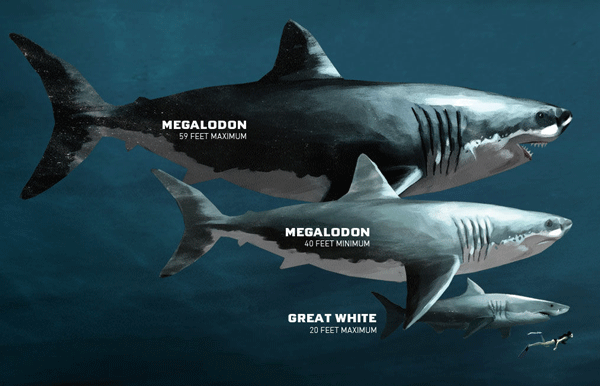
In our work, we often encounter fossils that tell extraordinary stories, but few are as striking as the record-breaking tooth found in Chile. We have had the privilege of handling and preserving specimens that showcase nature’s ability to safeguard delicate details over millions of years. This particular fossil, widely regarded as the biggest megalodon tooth ever found, with its intricate serrations still sharp and defined, is a stunning example of how natural processes can protect such features through immense spans of time.
Our dedication to studying and sharing these discoveries allows others to appreciate the science and wonder behind them, while also understanding the geological processes that make such preservation possible.
Colossal Dimensions with Uncommon Detail
The sheer size of this fossilized tooth immediately captures attention. Measuring on a scale that reflects the immense power of the ancient predator it once belonged to, it speaks of a creature that dominated its environment. However, what truly commands admiration is the fine serration along its edges—still intact despite surviving countless millennia.
These ridges, each one preserved in remarkable clarity, give clues about the tooth’s original function. They also illustrate the preservation conditions that allowed such fragile structures to endure without wearing away. Found along Chile’s geologically active yet fossil-rich coastline, this specimen benefited from the right balance of environmental factors to survive in such exceptional conditions.
Mineral Replacement: A Silent Reinforcement
For a tooth to survive intact for millions of years, it must go through mineral replacement. This is a slow but powerful transformation. Over time, the original organic materials begin to dissolve, and minerals carried by groundwater seep into the structure. As the minerals deposit themselves within the tooth, they take the place of the lost organic matter. This replacement reinforces every part of the tooth, making it more durable. Serrations—typically vulnerable to erosion—are preserved because the mineralization process strengthens them before they can be worn down. In this way, the tooth transitions from a once-living structure into a fossil that can endure both geological time and environmental pressures.
Burial Conditions Shielding from Destruction
Preservation depends heavily on what happens immediately after the tooth is lost. Burial in the right sediments can shield it from destructive forces. Fine-grained sand, silt, or volcanic ash can form a protective casing, isolating the fossil from physical abrasion, scavenging organisms, and decay.
In the case of the Chilean find, such sediments likely surrounded the tooth quickly, creating a protective layer that both preserved its shape and allowed mineral-rich waters to permeate it gradually. This slow infusion of minerals strengthened the serrations, ensuring they could remain sharp and distinct.
Geological Stability Sustaining Preservation
Even with ideal burial conditions, long-term preservation requires geological stability. Without it, shifting sediments, erosion, or exposure to the elements can destroy delicate details. The remarkable condition of this tooth suggests it was left undisturbed for millions of years, allowing mineralization to complete without interference.
The serrations survived because no significant environmental changes disrupted the fossil during this critical preservation period. This stability is one of the reasons the specimen continues to be compared to the biggest megalodon tooth ever found in other parts of the world.
Scientific Insight from a Sharply Preserved Tooth
A tooth’s serrations are more than a visual detail—they are a key to understanding the life of the animal that once carried it. Sharp edges reveal information about feeding strategies, prey selection, and the wear patterns caused by different hunting behaviors.
By studying such features, researchers can reconstruct aspects of the predator’s life that would otherwise remain unknown. The completeness of this fossil’s serrations provides an opportunity to compare it with other specimens and deepen the understanding of this marine giant’s ecological role.
Educational Value and Global Significance
The preservation of this tooth extends far beyond scientific circles. Its visual impact has educational value that cannot be overstated. When students or museum visitors see a fossil of such size with clearly defined serrations, they gain a clearer understanding of prehistoric marine life.
It creates a direct connection between present-day observers and creatures that lived millions of years ago. This fossil also reinforces Chile’s role as a significant location for critical paleontological discoveries, adding to global knowledge of prehistoric ocean ecosystems.
Layers of Time Encapsulated in Stone
The survival of this tooth can be traced to three interconnected factors:
1. Mineral Replacement – The gradual substitution of organic matter with minerals gave strength to every ridge and serration.
2. Protective Burial – Encapsulation in a sediment shielded the tooth from erosion and biological decay.
3. Long-Term Stability – Geological calm allowed these processes to occur undisturbed over millions of years.
When these conditions align, the result is a fossil that can preserve even the most delicate features.
The Remarkable Intersection of Science and Preservation
Every fossil tells a preservation story, but some illustrate the process more vividly than others. This tooth is one such example. It shows how multiple natural forces can work together to protect features as fine as serrations.
Each groove has survived because of a unique combination of chemistry, geology, and time. The survival of these edges allows scientists to make observations that would be impossible with more weathered specimens. It also allows the public to see a tangible piece of prehistory with details as clear as they were millions of years ago.
Closing Reflection
The record-breaking tooth from Chile is more than a remarkable object—it is a window into ancient marine history. Its preservation owes itself to mineral replacement, protective sediments, and geological stability.
Together, these factors have safeguarded its serrations through unimaginable stretches of time. In the broader context of marine fossil discoveries, this remains among the most prominent megalodon teeth ever found, serving as both a scientific treasure and a reminder of the immense creatures that once roamed Earth’s oceans. Studying it allows us to understand not only the animal it came from but also the extraordinary environmental processes that made its survival possible.






