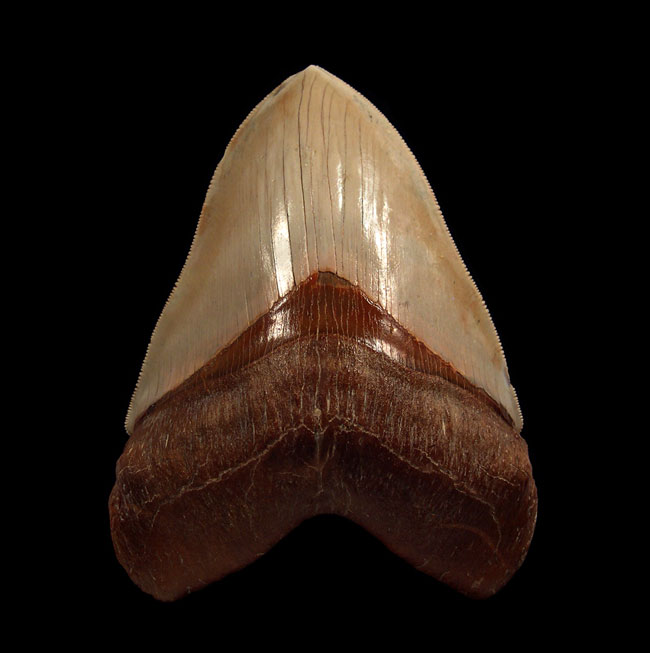
In January 2024, an extraordinary fossil emerged from Chile’s Pacific coastline—an immense Megalodon tooth that ranks among the largest ever documented. This discovery drew attention not only for its remarkable size but also for the exceptional state of preservation. The tooth offers a tangible link to a prehistoric apex predator whose reign over the oceans ended millions of years ago. For researchers and collectors, this find has set a new reference point in the ongoing search for the biggest megalodon tooth ever uncovered.
The condition of this specimen is striking. The enamel, root structure, and serrations remain highly defined, offering rare opportunities for scientific analysis. Every groove and edge serves as a clue about the shark’s biology, its feeding methods, and its role within the prehistoric marine food chain. Such detailed preservation makes this fossil invaluable for both academic study and historical recordkeeping.
Why Chile’s Coastline Is an Exceptional Fossil Source
Chile’s geological environment has played a critical role in producing remarkable marine fossils. Coastal regions shaped by tectonic shifts and volcanic activity have created sedimentary deposits capable of preserving ancient remains in outstanding condition. Over millions of years, these forces have uplifted marine sediments, bringing long-buried fossils within reach of modern explorers.
The sediments in these regions contribute to the fossils’ unique appearance. Mineral content from surrounding rock layers seeps into buried remains, enhancing coloration and hardening structural details. In the case of teeth, this process results in sharp serrations, intact root structures, and a range of natural hues rarely matched elsewhere. Because of these qualities, fossils from Chile are recognized as among the most visually remarkable specimens, with exceptional clarity in features that often erode in other environments.
Breaking the Record: Conditions That Would Be Required
To exceed the size of the Chilean specimen, a new discovery would need more than impressive measurements—it would also need preservation of the highest standard. Several key factors would influence whether such a find is possible:
Rich Fossil-Bearing Sediments
Larger Megalodon teeth are more likely to be uncovered in ancient seabed deposits. Sedimentary formations similar to Chile’s Bahía Inglesa Formation, with their abundance of marine life remains, represent ideal environments for unearthing massive specimens. These deposits provide the geological history and stability necessary for fossil preservation over immense timescales.
Early Burial and Mineral Stabilization
A rapid burial soon after the tooth was shed would shield it from currents, predators, and mechanical wear. Over time, mineral-rich waters could fill microscopic cavities, strengthening the tooth and preserving fine anatomical features. This process can make the difference between a fragmented remnant and a complete, record-worthy fossil.
Scientific Exploration in Less-Studied Areas
Some regions with high geological potential remain underexplored. Areas that share similar environmental histories with known fossil-rich sites may harbor undiscovered specimens of exceptional size. Deploying modern excavation methods and precise mapping could reveal new finds that rival or surpass the current record holder.
Comprehensive Documentation
A larger tooth without confirmed origin or stratigraphic data loses much of its scientific impact. To be recognized as the new record holder, a discovery would require exact measurement, detailed geological context, and careful preservation during recovery.
Speculating on Likely Discovery Sites
While Chile has set a high standard with this remarkable find, other parts of the globe could theoretically produce a larger Megalodon tooth if conditions align.
South American Coastal Formations
Beyond Chile, other South American coastlines share similar geological histories. These areas could yield comparable fossil deposits, particularly where ancient marine sediments have been exposed by erosion or tectonic uplift.
Remote Coastal Zones
Specific coastal environments have remained largely untouched by extensive fossil hunting. Such areas may conceal undisturbed sedimentary layers that could host teeth of significant size and quality. Minimal human interference increases the chance of finding specimens in pristine condition.
Submerged Ancient Seabeds
Offshore fossil deposits could also contain monumental discoveries. While these are more difficult to reach, advances in submersible technology and underwater excavation could open access to deepwater fossil beds in the future. The challenge lies in preserving the fossil’s integrity during recovery from submerged conditions.
The Importance of a Record-Breaking Find
The significance of surpassing the current largest known specimen extends past the excitement of setting a new measurement milestone. A larger, exceptionally preserved Megalodon tooth would provide new data on the species’ biology, from feeding mechanics to growth rates. It might also offer insight into environmental conditions during the shark’s existence, such as water temperature, prey availability, and migration patterns.
The Chilean tooth already represents a landmark in paleontology, serving as a bridge between present-day science and ancient marine history. A find that exceeds it would not only reshape size estimations but could also refine scientific understanding of Megalodon’s evolutionary development. Such a fossil would highlight the interplay between marine predators and their ecosystems during the Cenozoic era.
The Role of Preservation in Setting New Records
Preservation is as important as size when considering a fossil’s value and record eligibility. Large teeth may exist in fractured or worn states, preventing them from being recognized as record-setters. The Chilean specimen’s exceptional condition—featuring intact serrations, enamel, and root—ensures accurate measurement and reliable comparison.
To surpass it, another fossil would need to display similar, if not better, preservation. Features like enamel luster, sharp serrations, and root completeness all contribute to a tooth’s overall classification. Without these, even a slightly longer or wider specimen might not be deemed superior. In the global quest for the biggest megalodon tooth, these factors are equally crucial to sheer size.
Looking Ahead
The Chilean Megalodon tooth discovery represents a rare intersection of environmental conditions, geological history, and careful recovery. To exceed this record, the next find would likely come from an environment rich in fossil-bearing sediments, where a tooth was quickly buried and preserved under stable mineralization for millions of years. It would also require skilled excavation and thorough scientific documentation to verify its place in paleontological history.
Each Megalodon tooth uncovered—whether it breaks records or not—adds to the collective understanding of this apex predator’s life history. These fossils help reconstruct the structure of prehistoric marine ecosystems and clarify the role Megalodon played within them. The search for a larger specimen will continue to draw attention to fossil-rich regions, inspire scientific investigation, and fuel curiosity about Earth’s distant past.
The next contender may rest beneath a remote cliff face, lie hidden in an uncharted coastal formation, or await discovery in an ancient seabed far offshore. Until such a tooth is revealed, the Chilean specimen remains an extraordinary testament to prehistoric life and a reminder that the biggest megalodon tooth might still be waiting to surface from the depths of time.