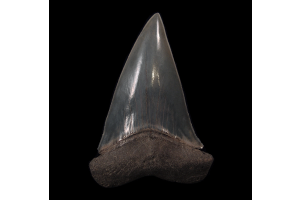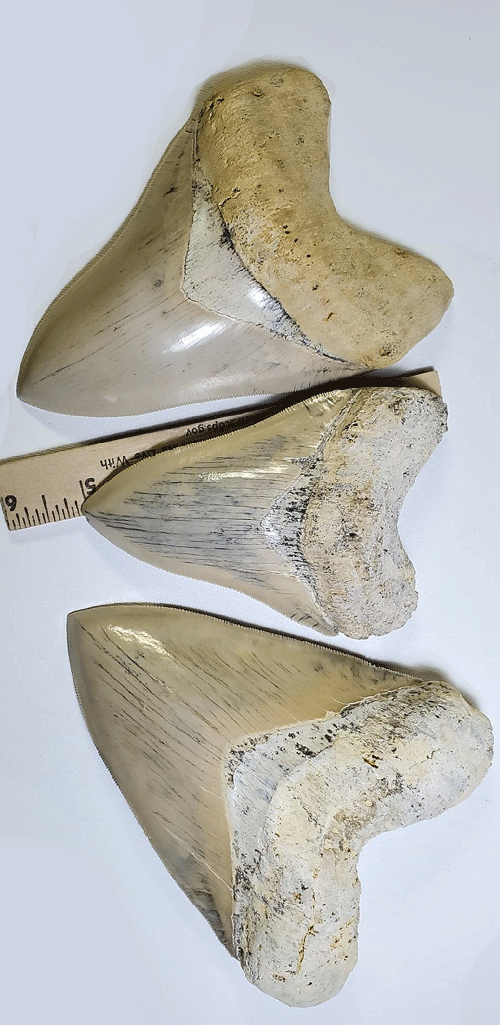
When most people picture the mighty Megalodon, they imagine massive jaws lined with teeth the size of a human hand. Yet, some of the most intriguing finds from this prehistoric giant are far smaller. A small megalodon tooth may not have the imposing size of its larger counterparts, but it offers a rare window into the early life stages of the ocean’s most formidable predator. At Buried Treasure Fossils, we’ve seen firsthand how these smaller specimens can tell a surprisingly detailed story about juvenile Megalodons and their place in ancient marine ecosystems.
Why Small Megalodon Teeth Matter
For paleontologists and fossil enthusiasts, the size of a Megalodon tooth is more than just a measure of its “wow” factor—it’s a clue. A smaller tooth can indicate a younger shark, likely still learning to hunt and navigate the vast prehistoric seas. Just like modern sharks, Megalodons grew new teeth continuously, replacing them every few weeks. Juvenile Megalodons had proportionally smaller teeth, but these still displayed the razor-sharp serrations and triangular shape that made the species such a powerful hunter.
By studying these teeth, scientists can estimate the growth rates, developmental milestones, and dietary shifts of these juvenile predators. This makes each find a valuable piece of evidence in reconstructing the Megalodon’s life history.
Tracing Growth Stages Through Tooth Morphology
A fascinating aspect of a small megalodon tooth is its shape and proportion relative to adult specimens. Juvenile teeth often have narrower crowns, finer serrations, and less wear, reflecting a diet that may have consisted of smaller fish or softer prey compared to the robust marine mammals hunted by full-grown Megalodons.
As these sharks matured, their teeth became broader and more heavily serrated—an adaptation for tackling large, thick-skinned prey. Comparing teeth from different growth stages allows scientists to track how hunting strategies evolved over the course of a Megalodon’s life. These changes also provide insight into how juveniles fit into their ecosystems without directly competing with adults for food.
Insights into Ancient Nursery Grounds
The discovery of smaller teeth concentrated in certain fossil-rich areas has led to an exciting hypothesis: ancient Megalodons may have had designated nursery zones, much like some modern sharks today. These regions likely offered calmer waters, abundant prey, and fewer large predators—a safe haven for young Megalodons to grow before venturing into open ocean territory.
In places like the phosphate-rich Bone Valley Formation in Florida, researchers have found significant numbers of smaller Megalodon teeth. Such concentrations suggest these areas could have served as nurseries millions of years ago. Identifying these ancient safe zones helps us map the migration and survival strategies of one of Earth’s most iconic apex predators.
How We Source and Authenticate Our Megalodon Teeth
At Buried Treasure Fossils, we take immense pride in curating an exquisite selection of genuine Megalodon teeth, featuring not only the iconic larger specimens but also remarkable smaller pieces that capture the imagination. Our extensive network of seasoned fossil hunters operates with the utmost integrity, ensuring that every tooth in our collection is sourced in accordance with legal and ethical standards—primarily from private lands rich in history across the U.S. and Morocco. Each tooth undergoes a meticulous inspection process to guarantee its authenticity, allowing our customers to embrace and hold a true relic of the prehistoric era with confidence. Immerse yourself in the fascinating world of ancient marine life, and discover the captivating stories embedded in each unique fossil.
We also appreciate that smaller teeth are not just “less impressive” versions of large ones. In fact, they’re often in remarkable condition, with sharper serrations and more complete enamel. For collectors, educators, and researchers, these teeth are just as valuable—if not more so—than the massive specimens that often steal the spotlight.
The Role of Small Teeth in Understanding Diet and Behavior
Analyzing the wear patterns, serration sharpness, and mineralization of small Megalodon teeth can reveal much about juvenile diets and behavior. For example, teeth with minimal wear likely belonged to sharks that fed on smaller, softer prey in sheltered environments. In contrast, teeth showing signs of stress fractures or chipping might indicate early encounters with larger, more challenging prey.
By piecing together such evidence, scientists can better understand how Megalodons transitioned from juvenile hunters to the apex predators that dominated ancient seas. These details not only enhance our knowledge of Megalodon biology but also shed light on the evolutionary pressures that shaped their life cycle.
Collecting as a Gateway to Science
Owning a small megalodon tooth is more than adding a fossil to your display—it’s a chance to connect with a story that began millions of years ago. For STEM educators, these teeth are powerful teaching tools. They make evolutionary concepts tangible, spark curiosity about marine biology, and provide a physical link to prehistoric life.
Students holding such a tooth can imagine the young shark it once belonged to, swimming through warm coastal waters and developing the skills it would need to survive in an ocean filled with other formidable predators. This hands-on connection often inspires a deeper interest in paleontology and environmental science.
Why We Value and Share These Fossils
At Buried Treasure Fossils, we believe that even the smallest specimens deserve recognition and appreciation. Our collection includes a variety of smaller Megalodon teeth, each chosen for its condition, color, and historical significance. Whether you’re an advanced collector seeking rare finds or a newcomer to the world of fossil hunting, these teeth offer a unique opportunity to explore the science of shark evolution.
We provide detailed background information for every piece we sell, including where it was found and its estimated geological age. This ensures that each fossil we offer is not only a collectible but also a valuable scientific artifact.
From Ocean Depths to Your Collection
In the end, the study of a small megalodon tooth is a reminder that size isn’t everything in paleontology. These teeth reveal critical details about how the world’s most legendary shark began its life, learned to hunt, and survived in a dynamic prehistoric ocean. They connect us to an ancient world where juvenile Megalodons navigated the same challenges all young predators face—growing strong enough to claim their place at the top of the food chain.
If you’re ready to add a piece of this history to your own collection, explore our curated selection of genuine Megalodon teeth. Each fossil we offer has been carefully chosen for authenticity, beauty, and its ability to tell a story millions of years in the making. Holding one in your hand is like holding a chapter of Earth’s history—one that you can keep, study, and share for years to come.