

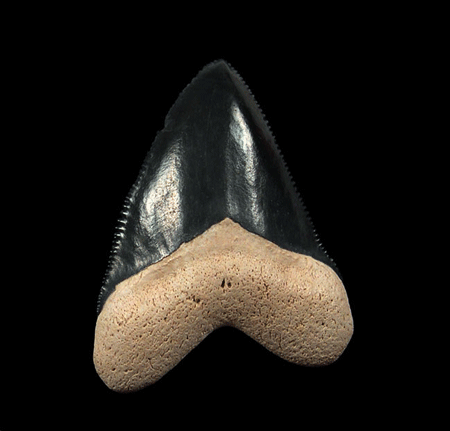
When we imagine the megalodon, we often picture a colossal predator dominating prehistoric oceans—a creature so large that even the largest modern sharks would seem small in comparison. Yet, like every apex predator, even this marine titan started its life as a much more undersized, but no less formidable, juvenile. Studying the earliest stages of its life has become a fascinating pursuit for paleontologists, revealing details that go far beyond size alone. The fossilized remains of juvenile teeth hold the key to understanding growth rates, diet, environmental conditions, and even evolutionary lineage.
About a thousand years ago, these young giants navigated oceans teeming with life, adapting to an ever-changing marine environment. By examining their earliest teeth closely, we can reconstruct the survival strategies that led them down the path to becoming rulers of their realm. And right here is where the size of baby megalodon teeth takes center stage—not as a trivial measurement, but as a vital piece of the puzzle in understanding ancient predators and their modern-day connections.
The hidden story in a single tooth
While adult megalodon teeth can measure over seven inches, juvenile teeth tell a subtler story. Their smaller dimensions may seem underwhelming at first glance, but compared to other marine animals of the time, even these “baby” teeth were impressively large. This difference in scale immediately suggests something about the species’ growth potential.
Every serration, curve, and ridge of these teeth carries biological information. The sharp, finely serrated edges indicate an early adaptation for catching swift prey, perhaps smaller fish or marine mammals. At the same time, the durability of the enamel hints at the powerful bite force that would only grow stronger with age. Under magnification, paleontologists can even detect growth rings—similar to those in tree trunks—helping estimate the age of the juvenile when the tooth was shed.
Why tooth size matters to science today
For us, studying the size of baby megalodon teeth is about more than satisfying curiosity. These measurements allow us to estimate growth rates by comparing juvenile teeth with those of fully grown specimens. Such comparisons reveal whether these apex predators experienced rapid growth in their early years or developed more gradually, adapting over time to the challenges of their ecosystem.
The presence of juvenile teeth in specific fossil-rich areas also provides insight into ancient breeding grounds. Locations with a high concentration of smaller teeth likely served as nursery zones—relatively protected coastal areas abundant with food and free from many threats. By mapping these ancient nurseries, researchers can gain a better understanding of how the megalodon’s environment influenced its survival.
Tooth wear patterns also offer insight into diet. While adults may have hunted massive prey, juveniles likely pursued smaller, more agile species. Differences in diet between young and mature megalodons suggest a clever ecological strategy that reduced competition for food within the species.
Tracing evolutionary connections
One of the most intriguing aspects of this research lies in drawing parallels between the megalodon and its modern relatives. The lineage of this prehistoric predator remains a subject of debate. Still, by studying juvenile teeth, scientists can trace evolutionary patterns that link the megalodon to today’s large shark species, such as the great white.
The shape and structure of a young megalodon’s tooth reflect adaptive strategies—features that may have helped the species dominate the oceans for millions of years. These adaptations, including robust enamel and serrated cutting edges, likely evolved to suit a rapidly growing body that required significant nutrition.
From fossils to the bigger picture
Holding a fossilized juvenile tooth is like having a chapter of Earth’s history in your hands. Each one is a tangible connection to a time when marine ecosystems looked drastically different. And yet, the lessons these fossils teach us apply to the oceans of today.
By understanding how apex predators evolved in the past, we gain insight into the delicate balance of marine ecosystems today. Juvenile megalodons grew in an environment where prey abundance, nursery protection, and migration patterns were all essential to survival. Modern conservationists can draw on these ancient lessons to protect current shark populations, which face threats from climate change, overfishing, and habitat loss.
For us, at Buried Treasure Fossils, the opportunity to share these remarkable specimens is about more than showcasing relics—it’s about connecting people to the awe-inspiring history of our planet and inspiring a more profound respect for marine life, past and present.
Why the fascination continues
Part of the enduring allure of the megalodon lies in its mystery. Despite decades of research, many aspects of its life remain hidden beneath the waves of time. Each newly uncovered tooth—especially those from juveniles—adds another piece to the puzzle.
These fossils don’t just represent a predator; they represent an evolutionary success story. From the moment a juvenile megalodon began hunting, its tools for survival were already finely tuned. That early efficiency, reflected in the size of baby megalodon, speaks volumes about why this species thrived for such a long time.
Moreover, these studies bridge the gap between past and present, helping us better understand how predators adapt to changing environments. In this way, megalodon research continues to offer valuable lessons for modern marine biology and conservation.
Conclusion
The study of baby megalodon tooth size is more than an academic exercise—it is a journey into the origins of one of the most powerful predators to have ever lived. These small yet significant fossils reveal growth patterns, hunting strategies, and ecological dynamics that shaped prehistoric oceans. By piecing together the story of these ancient juveniles, we uncover not only their past but also lessons that remain relevant for protecting today’s marine life.
Our oceans still hold mysteries waiting to be discovered. If the teeth of a predator extinct for millions of years can speak so clearly, imagine what else the deep might reveal. Let’s continue to explore, learn, and protect the wonders beneath the waves—because every discovery brings us closer to understanding the remarkable story of life on Earth.
Ready to explore more prehistoric treasures? Contact us today and take the first step in uncovering the past.






