Page 135 - Blog
- - August 05, 2025
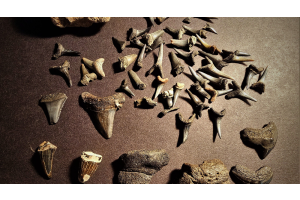
If you’ve been browsing fossil forums, scrolling through toothy treasures on niche marketplaces, or whispering excitedly at a fossil fair booth (we’ve all been there), you might’ve noticed something curious. While giant Megalodon teeth still steal the spotlight and the price tags to match, there’s a new obsession quietly taking hold among seasoned fossil collectors: the small ones. And no, this isn’t about settling for less — this is about getting closer to the untold story of a prehistoric giant in a whole new way.
We’re talking about the small Megalodon tooth that’s turning heads and starting hushed conversations between collectors who know a good thing when they see it. So what’s the deal? Why are these petite chompers suddenly the new darling of the Megalodon world? Let’s dig in.
Not Just a Shrunken Giant
At first glance, the fascination might seem puzzling. Megalodon, after all, is synonymous with big — the kind of jaw-dropping size that makes your palm feel insignificant holding
- - August 05, 2025
Wearing something ancient doesn’t mean looking outdated. When that “something” predates civilization by tens of millions of years, it stops being a fashion accessory and becomes something else entirely. It becomes a marker of time. A symbol of power. A story no trend can replace.
This is the appeal of the megalodon shark tooth necklace. Not flashy for the sake of flash. Not trendy for a single season. It stands apart—because it always has.
A Fashion Statement Forged Beneath the Sea
Trends are fast. They burn bright, collapse quickly, and often resurface in strange new forms. But nothing about fossilized shark teeth is fleeting. These are remnants of a predator so massive that modern great whites look like minnows by comparison. When the megalodon ruled the seas, nothing rivaled its bite, its size, or its myth.
The tooth you wear today began its journey when continents looked unfamiliar and whales swam in fear. Over time, it fossilized. It held onto its form while civilizations rose and
- - August 05, 2025
At our organization, we truly believe these words resonate each time we uncover a fossil. Among the most awe-inspiring relics of the prehistoric world is the megalodon tooth from the UK. These massive fossils are not simply ancient remains; they are vivid reminders of oceans that once stretched far and wide.
Each tooth acts as a time capsule, preserving evidence of marine ecosystems that thrived millions of years ago. These discoveries allow us to peer into a world where giants ruled the seas and life evolved in ways we are still striving to understand.
Ancient Treasures on UK Shores
Imagine walking along a rugged UK coastline as the tide retreats, revealing a gleaming, serrated tooth embedded in the Earth. Megalodon teeth from the United Kingdom are often discovered along coastal cliffs, riverbanks, and fossil-rich deposits. Dating back to the Miocene and Pliocene epochs, these fossils speak of a time when warm seas dominated the landscape and nurtured an extraordinary variety of marine
- - August 05, 2025
Picture this: a riverbank in North Carolina, early morning mist drifting across the water’s surface, and in our hands a tooth the size of a palm, gleaming with an otherworldly copper-red sheen. It’s heavy, sharp, and alive with history. For fossil enthusiasts who work with us, this isn’t simply any Megalodon tooth.
It’s a North Carolina Megalodon tooth, a fossil so rare and spectacular that it is often described as the “Holy Grail” of the collecting world.
The Copper-Red Glow That Captures Attention
What makes these teeth so admired starts with their breathtaking color. Only North Carolina’s Meherrin River copper-red site can provide the special combination of iron-rich sediment and fossilization conditions that form the brilliant copper-red hue. Over millions of years, these ancient shark teeth have absorbed minerals from the soil, changing their enamel into vibrant tones of red and brown that simply are not seen anywhere else.
Unlike the darker grays and blacks typical of Megalodon
- - August 05, 2025
At our fossil collection services, we have been fortunate to work with some of the most extraordinary finds in the world. Among them, the Aurora Megalodon tooth continues to capture our imagination. We have seen collectors marvel at these specimens, and we completely understand why they have become such prized treasures.
Our work in carefully sourcing, preserving, and presenting these fossils has revealed to us the scarcity and uniqueness of each piece.
A Fascinating Geological Origin at Lee Creek
The journey of an Aurora Megalodon tooth begins at the Lee Creek phosphate mine in Aurora, North Carolina. This mine has yielded fossils from Miocene and Pliocene epoch deposits that have been forming for millions of years. These ancient layers have preserved Megalodon teeth in stunning condition, allowing their beauty and scientific importance to remain intact.
Fossil collecting at the mine was officially halted in 2008 when access was closed. That closure means that each tooth on the market
- - August 05, 2025
When we examine a Lee Creek Megalodon tooth, our attention is instantly drawn to the incredible patina that covers its surface. This unique combination of hues and textures is one of the most striking aspects of the fossil, and we take pride in offering specimens that tell such an incredible story.
The patina is not simply decorative. It provides valuable insights into the fossilization process and helps us understand the geological environment, the age, and the conditions that led to such remarkable preservation.
A Journey Through Time: The Geological Origins
The Lee Creek phosphate mine in Aurora, North Carolina, has long been a world-famous location for fossilized shark teeth. These fossils are found in two ancient formations:
● The Pungo River Formation dates back to the Miocene epoch, approximately 15 million years ago.
● The Yorktown Formation is from the Pliocene epoch, about 4.5 million years old.
The phosphate-rich sediments of these formations have been ideal for preserving
- - August 05, 2025
When we hold a fossilized tooth from the largest predatory shark ever known, we feel transported to an ancient ocean world. Our work in sourcing West Java Megalodon tooth specimens allows us to bring that history to life for collectors and researchers across the globe.
These fossils, which we recover from limestone deposits in Indonesia, are preserved with exceptional care and continue to hold answers about Earth’s distant past. By making these authentic finds available, we help safeguard an irreplaceable piece of the world’s fossil record.
The Giant That Ruled the Seas
Megalodon, formally known as Otodus megalodon (previously Carcharocles megalodon), was the largest predatory shark ever to exist. This incredible animal is believed to have reached lengths of up to 60 feet, dominating the oceans with its massive presence and unmatched bite force. Living between 23 and 3.6 million years ago, these sharks thrived during the Miocene and Pliocene epochs. Today, their fossilized teeth remain
- - August 05, 2025
We have always been fascinated by Megalodon teeth, and we know collectors share the same excitement. These fossils hold immense historical value and offer a sense of wonder about the prehistoric seas where the mighty Otodus megalodon once ruled. Over the years, popular Megalodon hunting sites like Chile, Peru, Lee Creek, and the Bone Valley mines have slowed down in production, leaving collectors searching for fresh sources.
In May 2020, we were thrilled to introduce top-quality Indonesian Megalodon tooth fossils from West Java, Indonesia. These discoveries have brought renewed excitement as they showcase unique qualities that cannot be found elsewhere.
A Remarkable Discovery from West Java
The Megalodon teeth from West Java are extraordinary fossils unearthed from limestone deposits dating back 10-15 million years during the Middle Miocene period. These fossils, belonging to the extinct Giant White shark, carry traits that make them unforgettable. As traditional fossil sites become less
- - August 05, 2025
At our fossil shop, we often receive questions about the possibility of discovering an 8-inch megalodon tooth. As collectors and enthusiasts ourselves, we understand the excitement behind this inquiry. We have spent years curating and studying Megalodon teeth, and our experience allows us to share valuable insights about the size ranges and rarity of these remarkable fossils.
Using the information we maintain through our catalog and records, we can explain just how rare an 8‑inch Megalodon tooth would be in modern times.
A Glimpse Into the Size Spectrum
Megalodon teeth can vary widely in size, reflecting different stages of the species’ life cycle. According to documented records, these teeth typically range from only a few centimeters up to over 7 inches (17.8 cm) in length. Teeth measuring 2–3 inches often belonged to juveniles, while those between 3–5 inches likely came from maturing sharks.
Larger teeth, measuring 5–7 inches, are considered exceptional and belong to full‑grown
- - August 05, 2025
If you’re a fan of prehistoric sharks, you’ve probably heard about the mighty Megalodon. This giant predator ruled the oceans millions of years ago. It was bigger, stronger, and more terrifying than any shark we know today. But there’s one question that keeps shark tooth collectors buzzing—how big was the largest Megalodon tooth ever found?
Let’s dive into the fascinating world of these ancient teeth and find out just how massive they can get. You might think you know, but the real numbers might surprise you.
What Is a Megalodon Tooth?
Before we talk about size, let’s understand what a Megalodon tooth really is. The Megalodon, or Otodus megalodon, was a prehistoric shark that lived around 3.6 million years ago. These sharks didn’t just have sharp teeth—they had thousands of them. A single Megalodon could have up to 276 teeth arranged in five rows!
As the shark grew, it constantly shed old teeth and grew new ones. That’s why we can still find Megalodon teeth in rivers, oceans, and fossil