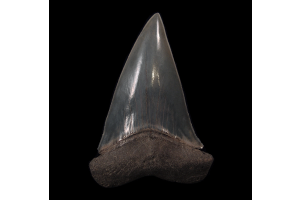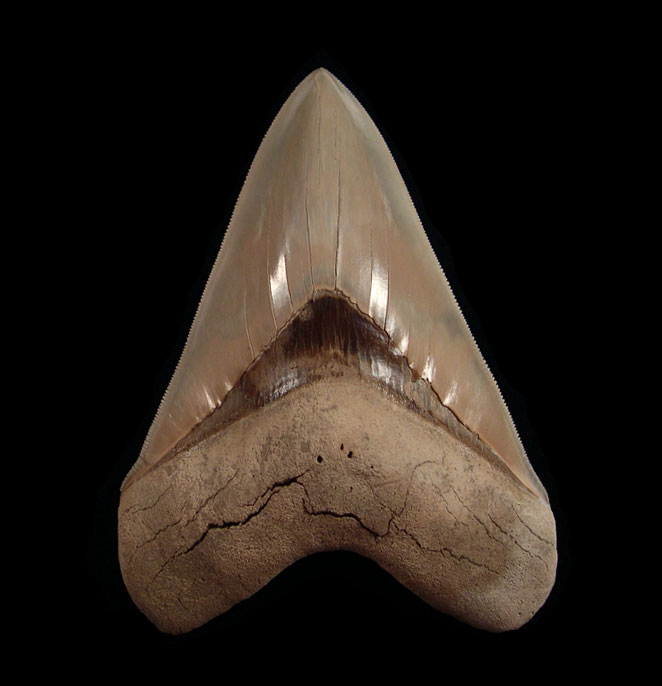
When we examine a Lee Creek Megalodon tooth, our attention is instantly drawn to the incredible patina that covers its surface. This unique combination of hues and textures is one of the most striking aspects of the fossil, and we take pride in offering specimens that tell such an incredible story.
The patina is not simply decorative. It provides valuable insights into the fossilization process and helps us understand the geological environment, the age, and the conditions that led to such remarkable preservation.
A Journey Through Time: The Geological Origins
The Lee Creek phosphate mine in Aurora, North Carolina, has long been a world-famous location for fossilized shark teeth. These fossils are found in two ancient formations:
● The Pungo River Formation dates back to the Miocene epoch, approximately 15 million years ago.
● The Yorktown Formation is from the Pliocene epoch, about 4.5 million years old.
The phosphate-rich sediments of these formations have been ideal for preserving fossils. They provided the minerals necessary to transform the original tooth material into the strong, colorful specimens that are admired today. Since the mine has been closed to collecting since 2008, these fossils have become increasingly rare and more treasured.
The Patina: A Natural Masterpiece
Patina is the surface coloration, sheen, and texture that develops as minerals replace the tooth’s biological material over millions of years. Each Lee Creek Megalodon tooth displays its own unique patina, shaped by the specific conditions of its burial environment.
The patina can be seen most clearly on the enamel and root. Crowns may display rich tan or striking blue colors. These colors contrast beautifully with the dark brown bourlette, the band that sits just above the root. Every subtle shift in color reflects the mineral interactions in the phosphate matrix, making each tooth unlike any other.
Reading the Crown: Color and Bourlette Clues
The crown of a Lee Creek Megalodon tooth tells a fascinating story through its colors. Some specimens feature tan-colored crowns paired with brown bourlettes, showing iron or phosphate mineral staining during burial. Others reveal blue crowns with brown bourlettes, suggesting the presence of minerals such as vivianite or glauconite in the surrounding sediment.
The bourlette itself is also essential. Its rich brown hue provides a visual boundary between the enamel and root. This contrast enhances the tooth’s natural beauty and points to the structural integrity that has been preserved throughout fossilization.
Roots That Reveal the Passage of Time
The root of a Lee Creek Megalodon tooth often displays light brown coloration with fine hydration cracks. These cracks develop slowly as moisture levels fluctuate over millions of years. They are a hallmark of age and authenticity.
A root with consistent patina and intact structure is an indication that a tooth has not been restored or altered. When paired with sharp serrations and a solid root form, it demonstrates exceptional preservation.
Enamel Quality That Stands the Test of Time
The enamel of Lee Creek Megalodon teeth is often praised for its impressive quality. It remains smooth and glossy, and many specimens still retain their original serrations. This level of preservation is the result of the phosphate-rich environment, which allowed minerals to slowly replace the organic material without eroding the tooth’s delicate details.
The enamel’s condition is directly tied to the surrounding patina. Even coloration and crisp definition show that the fossilization process occurred steadily and evenly. This balance makes the teeth not only scientifically valuable but also visually stunning.
Miocene or Pliocene? How Formation Affects Color
The geological formation where a tooth is found can influence the look of its patina. Teeth from the Miocene-aged Pungo River Formation tend to feature warmer tan tones. In contrast, specimens from the Pliocene-aged Yorktown Formation may lean toward cooler gray or blue shades.
This difference in coloration reflects the varying sediment chemistry and burial environments between the two formations. Regardless of which formation a tooth comes from, its patina serves as a natural fingerprint of its ancient origin.
Why Patina Matters So Much
Patina is more than surface detail. It has significance for both collectors and scientists.
● For collectors, patina is a trusted sign of authenticity. Rich coloration, intact roots, and natural hydration cracks indicate that a fossil has not been restored or artificially enhanced.
● For scientists, patina reveals valuable information about the tooth’s burial environment, including mineral content and moisture conditions. These clues help reconstruct ancient ecosystems and better understand how fossilization took place.
Lee Creek Megalodon teeth are especially prized because their patina often accompanies exceptional enamel preservation and sharp serrations.
The Patina’s Silent Story
Each feature of the patina adds a piece to the puzzle of the fossil’s history:
● Crown color points to the specific minerals that were present during fossilization.
● Bourlette contrast highlights the boundaries within the tooth and its fossilization conditions.
● Root color and hydration cracks confirm both the length of burial and the tooth’s authenticity.
● Serration detail demonstrates how well the fossilization process preserved even the smallest features.
When all of these elements are considered together, they reveal the complete journey of a Lee Creek Megalodon tooth from the jaws of a prehistoric predator to its discovery in phosphate-rich sediments.
Conclusion: Patina as a Window to the Past
The patina on a Lee Creek Megalodon tooth is much more than surface coloring. It is a detailed record of fossilization, shaped by millions of years of mineral-rich burial.
The striking enamel colors, the dark brown bourlette, the hydrated root, and the overall exceptional preservation all speak to the unique conditions of the Miocene and Pliocene formations where these fossils were found. Each tooth carries a signature that cannot be replicated.
By studying the patina, one can appreciate the fascinating story of how these fossils formed. Each Lee Creek Megalodon tooth serves as a remarkable time capsule from the prehistoric oceans, its patina holding the evidence of the natural forces that shaped it.