Page 4 - Home Page Latest Post
- - December 07, 2025
Few things excite the imagination quite like discovering a link to Earth’s ancient past. Long before kids fall in love with dinosaurs or dream of exploring the ocean depths, there’s often a single spark—a moment that makes prehistory feel real, touchable, and full of wonder. That’s exactly what my first Megalodon can be: a tangible gateway to curiosity, discovery, and a lifelong fascination with fossils.
At Buried Treasure Fossils, we believe every collector, young or old, remembers the thrill of their first fossil. It’s that moment when history sits in the palm of your hand—millions of years old, yet completely yours. Our My First Megalodon collection was created to capture that feeling and turn it into an experience that inspires learning and adventure for years to come.
The Thrill of Holding Prehistoric Power
Imagine handing a child a fossilized tooth from one of the largest predators that ever lived—the mighty Carcharocles megalodon. This prehistoric shark ruled the oceans between
- - December 07, 2025
Millions of years ago, a colossal shark ruled the oceans—a creature so massive that its bite could crush whales with ease. Within the first 60 words, we must highlight the wonder of prehistoric relics like an authentic megalodon tooth, a fossil that connects us directly to the ancient seas. Today, holding such a specimen in your hand is like holding time itself—a relic that once belonged to the greatest marine predator Earth has ever known.
The Legend of the Giant Shark
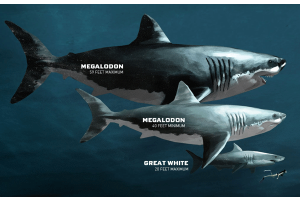
The Megalodon, whose name means “big tooth,” was an apex predator that dominated the oceans roughly 23 to 3.6 million years ago during the Miocene and Pliocene epochs. This prehistoric shark could reach up to 60 feet in length—twice as long as the largest great white shark living today. According to scientific estimates, its biting force was more than 40,000 pounds per square inch, making it the strongest biter in animal history.
What fascinates collectors and paleontology enthusiasts is that the Megalodon’s reign left
- - December 07, 2025
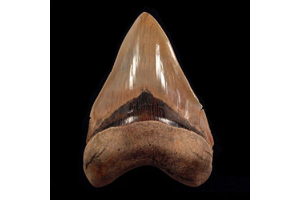
Collectors often seek fossils that have remained untouched by restoration. Among these finds, the Megalodon Tooth from North Carolina stands out for its deep copper-red tone and natural preservation. Many of these fossils come from riverbeds and sediment layers rich in minerals that enhance their color and texture. However, some specimens on the market have undergone repair to appear more complete. Learning to identify an unrepaired fossil helps collectors avoid altered pieces and protect both authenticity and value in their collections.
How Natural Features Confirm a Megalodon Tooth from North Carolina?
To recognize an unrepaired specimen, focus on what nature leaves behind. Authentic fossils display features that restoration cannot duplicate. Real enamel maintains a steady texture and tone, while altered enamel often shows sharp transitions in color or shine. The copper-red hue common to North Carolina fossils develops over time from mineral absorption, not artificial coating. Under
- - December 07, 2025
At our fossil collection company, we take immense pride in presenting some of the most remarkable pieces of natural history, and among them, megalodon teeth continue to hold a special place. As collectors, researchers, and enthusiasts, we have seen how these extraordinary fossils captivate people worldwide. The fascination lies not only in their enormous size and rarity but also in the incredible history each tooth carries.
Over the years, megalodon teeth have become more than collectible fossils; they are tangible connections to one of the ocean’s most dominant predators and a symbol of prehistoric power and beauty. Understanding the value of megalodon tooth adds depth to this fascination, as it reflects both the rarity and historical significance of these ancient relics.
A Window into Prehistoric Power
Megalodon teeth provide a direct connection to an ancient world dominated by a giant shark that once ruled the seas. These fossils are physical reminders of a species that inspired awe
- - December 07, 2025
Collectors searching for Otodus megalodon in Indonesia will quickly notice one thing. Fossil shark teeth found across different regions of the country can vary significantly in their appearance and condition. Some display bold natural colors and near-perfect preservation. Others appear more weathered or worn. These variations are not random. They result from geological differences across Indonesian locations, particularly in areas such as West Java. For any collector aiming to make informed choices, understanding how location influences fossil quality helps avoid costly mistakes.
Fossil Traits Shift with Location and Environment
Indonesia’s terrain is characterized by layers of ancient marine sediment that once cradled species like Otodus megalodon. Fossils formed under these layers react differently depending on their surroundings. West Java is notable for its limestone-rich beds, which have cushioned and protected the teeth of its inhabitants for millions of years. In contrast, regions
- - December 07, 2025
Few fossils excite collectors as much as the Aurora Megalodon tooth. These ancient shark teeth are not just remnants of the past, they are windows into a time when the oceans were ruled by one of the most powerful predators in history. The fascination comes not only from their size and beauty but also from their rarity and the scientific story they carry. But what makes the Aurora Megalodon tooth truly special?
The Origins of the Aurora Megalodon Tooth
The journey of every Aurora Megalodon tooth begins in Aurora, North Carolina, at the Lee Creek phosphate mine. Fossils from this site date back millions of years, from the Miocene and Pliocene periods. The unique geological conditions at Lee Creek helped preserve the teeth in remarkable detail, keeping sharp edges and roots intact.
Since the mine closed in 2008, no new specimens have been discovered, making every Aurora Megalodon tooth rare. Collectors prize these teeth not just for their physical appearance but also for the story
- - December 07, 2025
Beneath the quiet blue of the ocean lies a world of forgotten stories—some whispered in coral canyons, others frozen in stone. Among the most awe-inspiring remnants of the prehistoric sea are the fossilized teeth of an ancient predator whose name still sends ripples through the scientific community: Otodus megalodon.
This creature may be long gone, but its shadow continues to loom large over marine history. These fossilized fragments don’t speak, yet they reveal volumes about one of the most dominant species ever to swim Earth’s oceans.
Let’s explore how these teeth help us piece together the life of a vanished giant.
A Predator Measured in Feet, Not Inches
Millions of years ago, a different ruler commanded the seas. With a body stretching up to 60 feet or more, this shark was larger than a school bus and had a bite that could crush a whale’s spine. While its skeleton—made of cartilage—left few traces, its teeth remain as nature’s evidence.
Unlike most shark species today, which boast
- - December 07, 2025
Children are naturally drawn to mystery, adventure, and discovery. Whether they’re digging in the backyard or collecting seashells at the beach, curiosity drives them to ask questions about the world around them. Introducing them to a megalodon tooth fossil can transform that curiosity into a lasting passion for science, history, and exploration. At Buried Treasure Fossils, we’ve seen firsthand how a single fossil can ignite a spark that lasts a lifetime.
A Window into Prehistoric Wonders
For most kids, science becomes fascinating when it feels real—when they can touch, hold, and imagine the story behind an object. That’s where fossils come in. A megalodon tooth fossil isn’t just a relic from millions of years ago; it’s a tangible connection to the Earth’s distant past. This ancient shark tooth, once belonging to the largest predator that ever lived, can inspire young minds to think about evolution, adaptation, and life beneath prehistoric oceans.
Imagine a child holding a tooth larger
- - December 07, 2025
Oceans of the past were home to giants, and one of the best ways to understand them is through fossils. A baby megalodon tooth might be small, but it holds big clues about the early life of the largest predator in history. These tiny teeth can reveal how young sharks grew, what they ate, and how they survived in dangerous waters.
By studying a baby megalodon tooth, scientists can piece together the life story of a juvenile megalodon. Each fossil gives insights into ocean ecosystems millions of years ago. Even a small tooth is a window into a world that existed long before humans walked the earth.
Tiny Teeth, Big Clues
Even though a baby megalodon tooth is small, it carries important information. The shape, size, and serrations can tell scientists how young sharks hunted and what kind of prey they preferred.
Juvenile megalodons had to be smart hunters to survive. Studying a baby megalodon tooth helps researchers understand how these sharks avoided larger predators and thrived in a
- - December 07, 2025
In our experience with fossil collecting, we have witnessed how certain discoveries capture curiosity more than others. Among them, the megalodon tooth remains one of the most extraordinary finds. These massive, serrated fossils have continued to fascinate collectors around the world.
Through our work, we have seen how some teeth possess a level of rarity and preservation that makes them suitable for auction. Understanding when a tooth deserves such distinction requires exploring the features that define its worth in the fossil market.
The Legacy of the Megalodon Tooth
The megalodon, classified under the genus Otodus megalodon, was once the largest known predator of the ancient oceans. It lived during the Miocene and Pliocene epochs and is believed to have reached lengths of nearly 50 to 60 feet. Because its skeleton was made of cartilage, only the teeth and a few vertebrae have survived as fossils. These teeth, often discovered in marine sediments, stand as powerful reminders of a time