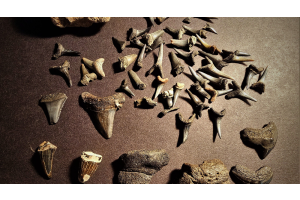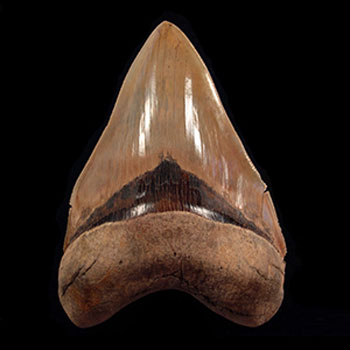
At Buried Treasure Fossils, we’re constantly in awe of the ancient wonders that lie beneath our feet—and few are as compelling as the legendary Megalodon shark. This colossal predator ruled the oceans millions of years ago and continues to captivate fossil enthusiasts around the globe today.
With a name that literally translates to "large tooth," the Megalodon left behind the most iconic remains: massive, fossilized teeth that give us rare insight into one of the ocean’s most dominant giants. While the full Megalodon shark skeleton may never be uncovered due to the nature of its cartilage-based body, the teeth and spinal centra that have endured tell a captivating story.
From their staggering size to the fossilization process that preserved them for millennia, Megalodon teeth are more than just collectibles—they’re pieces of Earth’s ancient history. As curators of some of the most premium Megalodon fossils available, we at Buried Treasure Fossils are proud to offer a window into the marine world that existed long before our time.
The Origins of a Giant: Misunderstood Teeth Through Time
The discovery of Megalodon teeth is steeped in mystery and legend. Before science could correctly identify them, people believed these impressive fossils were something entirely different. Some thought they were dragon tongues, while others imagined they were chunks of the moon. It wasn’t until the 17th century that these teeth were accurately classified as belonging to a gigantic prehistoric shark—now known to us as Megalodon.
With lengths reaching up to 60 feet and estimated weights between 50 to 75 tons, Megalodon was undoubtedly a dominant force in the oceans. This monstrous fish used its enormous teeth, some over 7 inches long, to feed on creatures like prehistoric whales. These teeth are among the only surviving parts of the Megalodon, as the rest of its cartilage-based body decomposed over time in the ocean’s salt water. Each fossil tooth we handle at Buried Treasure Fossils connects us to that incredible predator of the deep.
Fossilization: How Megalodon Teeth Survived the Ages
The process that allows us to hold Megalodon teeth in our hands today is known as petrification. As the organic materials in a tooth break down, they are slowly replaced by minerals, turning them into stone over millions of years. This process locks in details like ridges, serrations, and color variations—each telling its own story about the environment where the shark once swam.
In rare cases, parts of the Megalodon's spinal column—known as centra—are also preserved. Much like tree rings, these centra can reveal the age of the shark and give us an idea of how quickly it grew. While a full Megalodon shark skeleton remains an elusive dream due to the shark's cartilaginous structure, the teeth and centra remain invaluable to understanding this magnificent animal.
Evidence in Ancient Whales: A Trail of Enormous Bite Marks
One of the most compelling connections between Megalodon and its prey came in the 1700s, when paleontologists discovered ancient whale bones scarred with massive bite marks. These weren’t accidental scrapes—they were wide, deep impressions that perfectly matched the shape and curvature of Megalodon teeth. This solidified the shark’s reputation as a dominant predator of its time.
Fossilized teeth not only offer size estimates but also allow us to understand behavior. The presence of Megalodon teeth alongside whale bones paints a picture of a fearsome predator lurking in ancient seas, targeting large marine mammals with its powerful jaws. At Buried Treasure Fossils, we appreciate the gravity of handling these fossils—not as mere objects, but as relics that bring us closer to the ancient sea's top predator.
A Closer Look at the Jaw of Giants
A single Megalodon tooth is impressive, but envisioning a full Megalodon shark jaw is something else entirely. This predator's mouth could span over 9 feet wide, lined with hundreds of razor-sharp teeth arranged in multiple rows. When we examine the size and shape of these teeth, we get a glimpse into the sheer power of the Megalodon’s bite.
Though soft tissue doesn’t fossilize, experts have used existing teeth and centra to model what a Megalodon shark jaw may have looked like. These reconstructions highlight not only the shark's fearsome anatomy but also its astonishing evolutionary adaptations. It was built for strength, dominance, and scale—qualities reflected in every fossil we offer.
Why Collect Megalodon Teeth?
Owning a Megalodon tooth isn’t just about possessing a unique artifact—it’s about connecting with a time when giants roamed the oceans. These fossils symbolize Earth’s dynamic past, when marine life was ruled by creatures so massive, their legacy continues to leave us in awe. Whether you’re a seasoned collector or a newcomer to fossil hunting, a Megalodon tooth is a must-have for any collection.
At Buried Treasure Fossils, we take pride in sourcing authentic Megalodon teeth from around the world. Each piece is carefully inspected and selected for quality, preservation, and uniqueness. These fossils are not just ancient relics—they're conversation starters, display-worthy treasures, and educational tools rolled into one.
Final Thoughts: The Timeless Legacy of Megalodon
The Megalodon shark continues to capture the imagination of fossil lovers, ocean enthusiasts, and history buffs alike. With a name that inspires curiosity and a fossil record that speaks volumes, this prehistoric predator stands as a testament to the raw power of nature. While the full Megalodon shark skeleton may remain undiscovered, the teeth and jaws that have survived tell a story as captivating as any legend.
At Buried Treasure Fossils, we are honored to help keep the legacy of the Megalodon alive. Each fossil we offer is a bridge to the past—an ancient echo of a creature that once ruled the seas.
Explore our curated collection of authentic Megalodon teeth at Buried Treasure Fossils and bring home a fossil that tells a story millions of years in the making.
Disclaimer: This blog is intended for informational purposes only. It does not encourage or endorse any unethical or illegal practices related to fossil collection. Please always adhere to local laws and regulations and practice environmental responsibility.