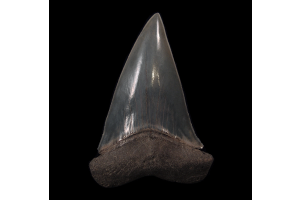
Page 70 - Megalodon
- - September 22, 2025
Fossil hunting is more than a pastime—it is a window into Earth’s deep past. Along the winding waterways of northeastern North Carolina, enthusiasts and educators alike uncover prehistoric treasures that speak volumes about marine history. Among these finds, the Megalodon tooth in North Carolina holds a special place, both for its scientific significance and its irresistible allure to amateur fossil hunters.
Coastal Rivers as Fossil Time Capsules
The rivers of coastal North Carolina, especially the enchanting Meherrin River and its winding tributaries, hold a treasure trove of ancient stories just waiting to be discovered! Over millions of years, nature has skillfully sculpted this landscape through fascinating sediment shifts, graceful erosion, and the relentless flow of water, revealing layers of our planet's incredible history. The stunning geological formations—Castle Hayne, the Pungo River, and Yorktown—are like nature’s own museums, filled with fossilized marine wonders. Here, you
- - September 22, 2025
The discovery of fossils always sparks curiosity about the deep past, but some finds hold extraordinary clues about how our planet has changed. Among the most fascinating are the Megalodon tooth from Chile, which not only reveal the size and power of this prehistoric predator but also tell us about the climate shifts that shaped marine ecosystems roughly four million years ago. These fossils allow us to bridge the gap between paleontology and climate science, helping researchers and students alike understand how prehistoric life adapted—or failed to adapt—to environmental change. Within the first 60 words of examining these specimens, one cannot overlook how such treasures expand our knowledge of both ancient oceans and the global climate story.
A Glimpse into the Giant of the Seas
Otodus megalodon, the largest shark to ever exist, dominated the oceans between 20 and 3 million years ago. Measuring up to 60 feet in length, this massive predator preyed on whales and other large marine animals.
- - September 22, 2025
Long before modern oceans teemed with whales, sharks, and dolphins, an apex predator ruled the seas with unmatched dominance. Fossils remain as the only silent testimony of its existence, and among them, the black Megalodon tooth stands as one of the most captivating relics of the past. These teeth, unearthed in places like West Java, Indonesia, reveal extraordinary stories about marine ecosystems that thrived millions of years ago, bridging the gap between today’s collectors and the vanished giants of prehistory.
The Marine Titans of the Miocene and Pliocene
Carcharocles megalodon—often simply called Megalodon—was not just any shark. It stretched up to 60 feet in length, dwarfing modern great whites and orcas. Its enormous serrated teeth were perfectly designed to shear through whale bone and thick cartilage, granting it the highest estimated bite force of any known creature, reaching up to 180,000 newtons. The black Megalodon tooth, often found preserved in limestone deposits in West
- - September 22, 2025
Sharks have ruled the oceans for hundreds of millions of years, and their fossilized teeth continue to provide fascinating windows into their evolutionary history. Among the most sought-after finds are those massive, serrated Megalodon tooth from Peru, which tell a story not just of a giant predator, but of how sharks adapted across dynamic prehistoric seas. At Buried Treasure Fossils, we are passionate about sharing these extraordinary specimens with fellow enthusiasts, helping collectors and students alike explore their scientific and historical importance.
The Fossil Treasures of Peru
Peru is one of the most remarkable localities for shark teeth fossils. Its coastal desert regions, including the Miocene Caballos Formation near Rio Ica and the Pliocene Pisco Formation near Sacaco, have yielded an incredible diversity of shark species. These formations span millions of years, from approximately 20 million years ago in the Miocene to around 3 million years ago in the Pliocene. The preservation
- - September 22, 2025
For centuries, mysterious fossilized objects washed up on shores and emerged from rocky cliffs, sparking endless speculation. Some believed they were remnants of mythical beasts, others thought they were celestial fragments fallen from the moon. Among the most captivating of these relics is the real megalodon tooth, a specimen that bridges folklore with science and continues to fascinate collectors and researchers alike. As our understanding grew, these fossils transformed from misunderstood curiosities into powerful evidence of one of the ocean’s most extraordinary predators.
The First Misunderstandings: Dragon Tongues and Mythical Beasts
Long before marine science existed as a formal discipline, natural historians and villagers alike tried to make sense of unusual stone objects. Large fossil teeth, often discovered in Europe and Asia, were frequently interpreted as “dragon tongues.” Their triangular, serrated shape lent itself to comparisons with mythological creatures. In medieval times,
- - September 22, 2025
The fascination with prehistoric treasures has grown into a global passion, driven by collectors, investors, and fossil enthusiasts seeking rare specimens that connect us to ancient oceans. Among the most coveted pieces are megalodon teeth for sale, which continue to dominate auctions, online fossil markets, and private collections. This surge in interest isn’t just about owning a fossil; it’s about holding a tangible piece of marine history and investing in an asset that blends rarity with storytelling power.
The Legend of the Megalodon
The Megalodon, often referred to as the “megatooth shark,” was the largest predatory fish ever to exist. Measuring up to 60 feet in length, this prehistoric shark dwarfed even today’s Great White. Its bite force—estimated at nearly 180,000 newtons—was unmatched in the animal kingdom. Feeding on massive whales and other marine mammals, Megalodon left behind a legacy that can still be seen in fossilized teeth, often discovered in coastal sediments around
- - September 22, 2025
When researchers explore the fossil record, they often find themselves captivated by the wide variation in Megalodon teeth. These fossils allow insights into how this prehistoric shark lived, grew, and hunted. Among the wide range of specimens recovered, the exceptional Chile discovery provides an extraordinary example of size and preservation. It is often described as the world's biggest megalodon tooth, raising new questions about the upper limits of this ancient predator.
Growth, Age, and the Life Cycle of a Giant
Variation often begins with age. Like modern sharks, Megalodon replaced its teeth throughout life, producing smaller, less robust teeth during its juvenile years and much larger teeth as it matured. Fossil evidence shows that older individuals shed teeth significantly bigger than those of younger sharks, which helps explain why most specimens recovered today are smaller.
Larger teeth were less common in life and, therefore, less likely to survive through time. The Chile
- - September 22, 2025
In our work with rare fossils, we have often noticed that the most remarkable specimens are those measuring six inches or more in slant height, with collectors frequently comparing them to the legendary 8-inch megalodon tooth.
As we guide enthusiasts through our offerings, we are often asked why the most prominent examples almost always come from what is called the upper jaw principal anterior position. By exploring placement, structure, function, and preservation, it becomes clear why this location consistently produces the most extraordinary specimens.
Understanding the Term
The phrase “upper jaw principal anterior” may sound complex, but it can be broken down into simple parts. The upper jaw refers to the shark’s top row of teeth, which tend to differ in shape and size from those in the lower jaw. The term anterior indicates that these teeth are located at the very front of the mouth, where biting begins.
The word principal suggests that these are the primary central teeth, not the
- - September 22, 2025
In our work, we are often asked what makes Alpha Megalodon teeth so much more fascinating than standard finds. As providers of these incredible fossils, we have seen how collectors are drawn to Alpha specimens because they represent something far greater than an ordinary discovery.
Their rarity, powerful display impact, sharp lines, massive size, and the prestige they bring to a collection make them treasures that stand in a category of their own.
The Mark of an Alpha Tooth
Alpha Megalodon teeth are fossils that immediately stand out because of their exceptional features. These teeth are usually over six inches long, with thick, triangular blades and wide, sturdy roots. The serrations are often still sharp, and the tooth appears balanced and symmetrical. This level of preservation gives Alpha specimens a commanding presence.
In comparison, standard Megalodon teeth—while still impressive in their own right—tend to show cracks, chips, or heavy erosion that dulls their appearance. An Alpha
- - September 22, 2025
When we hold a Megalodon tooth, we are having a fragment of prehistoric time. Our fascination with these fossils drives us to study, preserve, and share them with care. The massive size, serrated edge, and mineralized surface tell the story of an apex predator and the geological processes that shaped it.
For us, authenticity is not only about appearance but also about ensuring that each specimen reflects its true history. Fossilization and preservation leave behind indicators that replicas cannot convincingly reproduce. These subtle yet consistent signs form an unmistakable record of natural history.
Serrations and Natural Wear
A genuine Megalodon tooth exhibits serrations that reveal the impact of both feeding activity and geological processes. These serrations may be chipped, softened, or slightly uneven, revealing a history of natural wear. They demonstrate how the tooth was used during the animal’s life and later altered by burial, pressure, and shifting sediments. Such irregularities