Page 117 - Gary Greaser
- - August 27, 2025
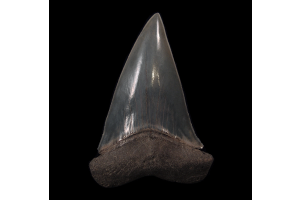
You hold a fossil in your hand that feels heavier than you expected. Its enamel glints under the light, the serrations catch your eye, and the root still carries the texture of the sediment where it rested for millions of years. This is not an ordinary fossil. This is the largest megalodon tooth, a preserved fragment of the ocean’s most powerful predator. For anyone drawn to fossils of scale and history, moments like this do not wait. These extraordinary teeth grow rarer each year, and hesitation can mean watching one vanish into a collection forever.largest megalodon tooth.
Let’s explore more detailed information:
The Apex Hunter of the Ancient Seas
The megalodon did not simply rule its environment. It shaped the balance of life in the oceans. Its jaws, lined with massive serrated teeth, could crush bone and slice through thick hide. The teeth alone tell a story of an apex predator built for efficiency and dominance. They reached lengths that dwarf those of any modern shark, and each
- - August 27, 2025
A remarkable discovery in the coastal regions of Chile has now fueled fascination among fossil enthusiasts and serious collectors. A megalodon tooth found here carries immense historical and scientific weight. This specimen offers a direct link to the ocean’s most dominant predator. Its size and striking preservation inspire experts and private collectors alike. The tooth’s story goes beyond its physical appearance. It connects modern curiosity with a prehistoric giant that once ruled ancient seas. Researchers, dealers, and enthusiasts continue to discuss the find because it combines natural wonder with scientific insight, creating a rare and compelling combination that demands attention.
Let’s explore more detailed information:
A Landmark Discovery in Chile
Geological forces have shaped Chile’s coastline into one of the richest marine fossil regions on Earth. Tectonic movement lifted ancient seabeds, exposing layers filled with marine relics. Over centuries, waves and erosion revealed
- - August 26, 2025
For fossil collectors and ocean history enthusiasts, few discoveries capture the imagination quite like the massive teeth of prehistoric sharks. From the average sizes that are still impressive by modern standards to the record-breaking giants that redefine scale, each find tells a story of the ocean’s most formidable predators. We can’t help but be fascinated by the sheer variety in megalodon tooth size and the clues it offers about life millions of years ago.
Let’s explore how these teeth range from common treasures to extraordinary rarities, and what makes them so captivating for collectors today.
A Range That Inspires Awe
The megalodon, an apex predator that roamed Earth’s oceans between roughly 23 and 3.6 million years ago, left behind some of the most sought-after fossils in existence. Its teeth are not just large—they are a window into an era when marine life operated on a scale far greater than today. While many finds measure between 3 and 5 inches, even these average specimens
- - August 26, 2025
The Middle Miocene epoch was a turning point in shark evolution, producing species whose teeth continue to fascinate collectors and paleontologists alike. These ancient seas were home to predators of incredible size and diversity, leaving behind fossilized remains that tell the story of their reign. Among these relics, the Otodus megalodon - Sharktooth Hill specimens capture a unique chapter in prehistoric ocean history. As collectors, researchers, and enthusiasts, we are drawn to these extraordinary finds because they combine rarity, beauty, and scientific value in a way few fossils can match.
Let’s explore how these teeth define an era of shark dominance and why they continue to inspire such passion.
The Middle Miocene: An Oceanic Apex Era
The Middle Miocene, dating roughly between 15 and 11 million years ago, was a period of significant climatic and ecological change. Oceans were warm, marine biodiversity was at a peak, and massive predators roamed the waters. This was the era in which
- - August 26, 2025
The Otodus megalodon remains one of the most awe-inspiring creatures to have ever ruled Earth’s oceans. Known for its sheer size, unmatched bite force, and teeth that can still make an impact millions of years after they were lost, this apex predator continues to fascinate fossil collectors and marine history enthusiasts. From serrated triangular crowns to roots designed for maximum strength, every surviving tooth tells a story of dominance and adaptation. Specimens such as those from Otodus megalodon – So. Carolina offers a rare opportunity to connect with this prehistoric giant through tangible evidence of its existence.
Let’s explore exactly what this giant shark may have looked like and why its teeth remain such prized finds for serious collectors.
Reconstructing the Otodus Megalodon’s Size and Shape
The Otodus megalodon is estimated to have reached lengths between 50 and 60 feet, with some reconstructions suggesting even larger individuals. Its body structure was built for power—massive,
- - August 26, 2025
Among fossil enthusiasts, few treasures stir the same excitement as a Megalodon tooth. Yet, within this already captivating category, one variety has been making waves — the Black Megalodon tooth. Prized for its dramatic coloration, storied origins, and rarity, this fossil has moved from being a specialty find to a must-have centerpiece for many serious collections. We’ve seen this shift firsthand, and it’s clear the allure is more than just skin deep. Its presence in a display instantly commands attention, setting a tone of prestige and depth for any collection.
Let’s explore why this fascination is rapidly growing among collectors worldwide.
A Dark Beauty with a Prehistoric Story
The deep, rich black of these teeth isn’t a result of the shark’s biology, but rather of the fossilization process. Over millions of years, buried in sediment and surrounded by mineral-rich waters, the tooth’s original structure absorbs elements such as iron, manganese, and other minerals. This slow transformation
- - August 26, 2025
Prehistoric teeth, especially those from apex predators like the Megalodon, carry a special fascination for fossil collectors and history enthusiasts. They connect us to a time when the oceans were ruled by giants and nature’s forces shaped life in remarkable ways. But as interest in fossil collecting has grown, so has the market for replicas and altered specimens. That’s why it’s essential to know how to identify a genuine megalodon tooth fossil and avoid being misled. We understand how important authenticity is, both for the integrity of your collection and for the story each specimen tells.
Let’s explore the key signs that help you separate genuine prehistoric teeth from modern reproductions.
Understanding What “Authentic” Means in Fossil Terms
When we talk about an authentic prehistoric tooth, we mean a naturally fossilized specimen that was preserved in sediment for millions of years. Fossilization replaces the original tooth material with minerals, giving it its unique weight,
- - August 26, 2025
If you’ve ever stumbled upon an 8-inch megalodon tooth, you might wonder if a prehistoric sea monster just decided to say hello, or maybe even give you a high five! These massive fossils aren’t just jaw-dropping in size; they tell a story of ancient oceans ruled by the largest predator ever to swim the seas: the Megalodon shark.
Today, we’re diving deep into everything you need to know about the 8-inch megalodon tooth, from how rare these colossal teeth are to tips on collecting them responsibly.
The Legend Behind the 8 Inch Megalodon Tooth
The Megalodon shark, scientifically known as Otodus megalodon, dominated the oceans millions of years ago. Its teeth, some reaching a staggering 7 inches or more, are a testament to its massive size, often exceeding 50 feet in length! So when you find an 8-inch megalodon tooth, it’s like holding a piece of that legend right in your hand.
But how did these teeth get so big? Megalodons continuously shed and replaced their teeth throughout their lives,
- - August 26, 2025
Owning a genuine fossil from the ancient Megalodon allows you to hold a piece of history that has survived for millions of years. Collectors seek not only size and shape but also the deep connection such a fossil offers. However, the growth of online sales has attracted sellers who push convincing replicas. You must learn the key details that separate authentic fossils from copies. Understanding how to identify a real megalodon tooth fossil helps you protect your investment. It ensures your collection contains specimens that carry the actual weight of Earth’s prehistoric past.
Let’s explore more detailed information:
Identify Natural Imperfections in Shape and Serrations
Authentic fossils tell their story through natural imperfections. You can see slight irregularities in serrations, edges, and shape because no fossil forms are in perfect symmetry. Real Megalodon teeth show serrations that vary in sharpness and spacing. These minor differences result from both the shark’s use of the tooth
- - August 26, 2025
Collectors act quickly when they encounter a fossil that carries both beauty and historical significance. The Megalodon teeth from Lee Creek belong to that rare category. When you hold an Otodus megalodon – Lee Creek specimen, you feel the presence of a predator that ruled the ancient oceans. This tooth has more than enamel and roots. It holds the story of an apex hunter that swam through vast seas millions of years ago. Opportunities to own such a fossil are rare and come along only once. Waiting too long can close the door to something extraordinary.
Let’s explore more detailed information:
A Journey From Prehistoric Seas
Millions of years ago, massive sharks cruised the oceans, hunting whales and other large marine animals. These predators left behind teeth of remarkable size and strength. The Lee Creek site in North Carolina produced fossils of unmatched preservation and color. Sediments in the Pungo River Formation locked each specimen in place, shielding it from erosion. Over time,