

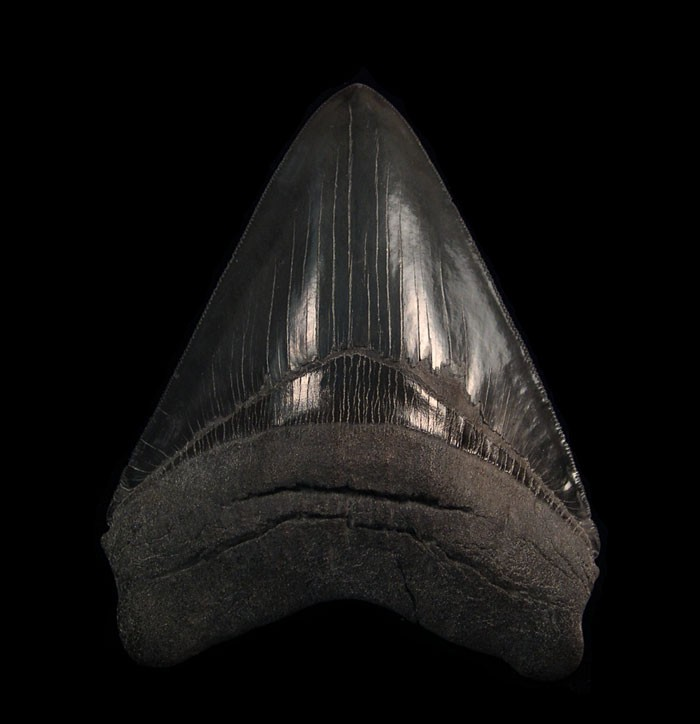
Among fossil enthusiasts, few treasures stir the same excitement as a Megalodon tooth. Yet, within this already captivating category, one variety has been making waves — the Black Megalodon tooth. Prized for its dramatic coloration, storied origins, and rarity, this fossil has moved from being a specialty find to a must-have centerpiece for many serious collections. We’ve seen this shift firsthand, and it’s clear the allure is more than just skin deep. Its presence in a display instantly commands attention, setting a tone of prestige and depth for any collection.
Let’s explore why this fascination is rapidly growing among collectors worldwide.
A Dark Beauty with a Prehistoric Story
The deep, rich black of these teeth isn’t a result of the shark’s biology, but rather of the fossilization process. Over millions of years, buried in sediment and surrounded by mineral-rich waters, the tooth’s original structure absorbs elements such as iron, manganese, and other minerals. This slow transformation turns once-white enamel into a striking, almost obsidian hue.
Collectors aren’t just acquiring a fossil — they’re acquiring a tangible link to an oceanic predator that ruled the seas up to 3.6 million years ago. A Black Megalodon tooth serves as both a geological time capsule and a dramatic visual statement, making it an irresistible acquisition for enthusiasts seeking more than just size or symmetry.
How Rarity Fuels Demand
While Megalodon teeth are found worldwide, black specimens are far less common. The conditions required to produce the iconic color are highly specific, and not all fossil sites offer the right mineral makeup. Many of these teeth originate from certain deep-water riverbeds, coastal cliffs, or offshore dredging sites where the unique chemistry of the environment allows for such transformation.
Collectors understand that rarity isn’t just about numbers — it’s about the difficulty of sourcing quality specimens. A well-preserved Black Megalodon tooth with intact serrations, solid root structure, and a flawless enamel finish commands attention both in private collections and at fossil auctions.
The Role of Condition in Value
For collectors, condition is paramount. Even a black specimen loses value if the enamel is cracked, the serrations are worn, or the root is heavily damaged. The most sought-after examples are those that retain sharp, well-defined edges, complete roots, and deep, consistent color across the enamel.
This emphasis on condition creates a hierarchy in collecting — not all black teeth are equal. A large, intact fossil with rich black coloration and minimal restoration work can fetch significantly higher prices compared to more common finds. Serious collectors often wait months or even years to find a specimen that meets their personal standards.
From Fossil Beds to Display Shelves
The journey of a Black Megalodon tooth from its resting place to a collector’s display case is a story of both patience and precision. Divers often scour riverbeds, battling strong currents, low visibility, and unpredictable conditions in hopes of uncovering a single tooth. Coastal erosion and dredging can also expose new specimens, but the risk of damage during recovery is always high.
Once unearthed, the tooth undergoes careful cleaning to preserve its natural luster. Unlike some fossils that benefit from polishing, black Megalodon teeth often require minimal intervention, as their color and texture speak for themselves. For display, many collectors opt for clear stands or shadow boxes that highlight the fossil’s natural beauty while protecting it from accidental damage.
A Symbol of Authority in Collections
In the fossil world, certain pieces serve as status symbols. A Black Megalodon tooth often holds this position because it merges aesthetic appeal with paleontological significance. Displaying one signal both dedication to the craft of collecting and an appreciation for the nuances of fossil formation.
This prestige factor has made black specimens a centerpiece for many established collections. They’re often displayed alongside other marine fossils, but their stark coloration ensures they capture the viewer’s attention instantly. For many, acquiring one marks a significant milestone in their collecting journey.
Investment Appeal
Beyond the thrill of ownership, collectors recognize that rare fossils can appreciate in value over time. With Megalodon teeth already being a limited resource — no new ones are being “made” — demand will only rise as high-quality examples become scarcer. Black specimens, with their added rarity, have shown strong interest in private sales and auctions.
While the primary motivation for most is passion, the investment angle adds another layer of appeal. Care, preservation, and proper display ensure the fossil remains in top condition, helping maintain or even increase its worth over decades.
Connection to the Prehistoric Ocean
Owning a Black Megalodon tooth isn’t just about having a rare object — it’s about holding a piece of prehistoric ocean history. These teeth belonged to a shark estimated to grow up to 60 feet long, with a bite force unmatched in today’s marine life. Each tooth tells a silent story of hunting, survival, and eventual burial beneath the shifting seafloor.
This deep-time connection is what makes fossil collecting so much more than a hobby. It’s a form of stewardship, preserving ancient relics so future generations can continue to marvel at the giants that once ruled the seas.
Why Enthusiasts Are Acting Now
The rise in demand for black specimens isn’t accidental. Social media exposure, fossil hunting shows, and online marketplaces have brought these once-obscure finds into mainstream awareness. As more people learn about the visual and historical appeal of these fossils, competition for the best examples increases.
Seasoned collectors understand that hesitation can mean missing out. With fossil sites being finite and certain locations facing legal restrictions on collection, availability could shrink even further in the coming years.
Conclusion
A Black Megalodon tooth is more than a fossil — it’s a statement piece, an investment, and a tangible connection to one of the ocean’s most legendary predators. From the unique conditions that create its striking coloration to the skill required to recover and preserve it, every aspect of these specimens commands respect.
For those who’ve been considering adding one to their collection, now may be the time to act. The market shows no signs of cooling, and the thrill of finally placing such a fossil on display is unmatched. We’ve witnessed firsthand how owning one transforms not just a collection, but the collector’s appreciation for the ancient world it represents.
Secure your piece of prehistoric history today—add a rare Black Megalodon tooth to your collection before it’s gone forever.






