

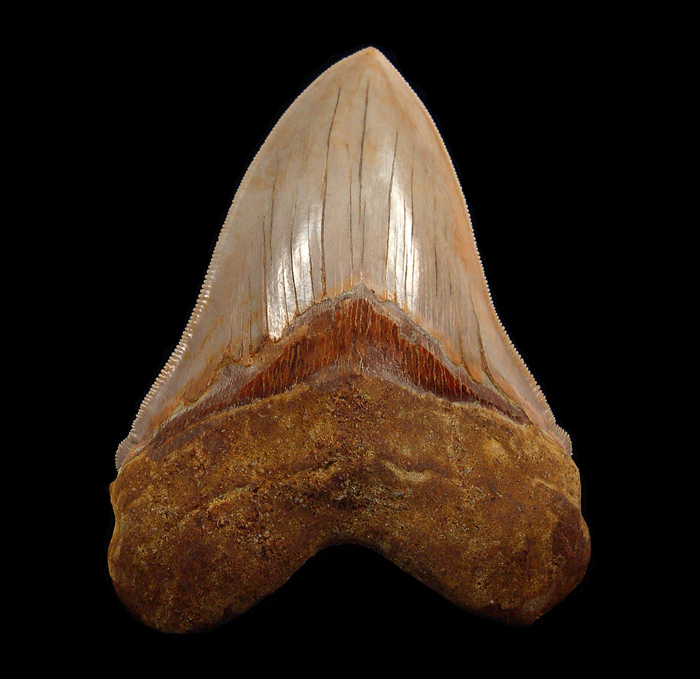
The Middle Miocene epoch was a turning point in shark evolution, producing species whose teeth continue to fascinate collectors and paleontologists alike. These ancient seas were home to predators of incredible size and diversity, leaving behind fossilized remains that tell the story of their reign. Among these relics, the Otodus megalodon - Sharktooth Hill specimens capture a unique chapter in prehistoric ocean history. As collectors, researchers, and enthusiasts, we are drawn to these extraordinary finds because they combine rarity, beauty, and scientific value in a way few fossils can match.
Let’s explore how these teeth define an era of shark dominance and why they continue to inspire such passion.
The Middle Miocene: An Oceanic Apex Era
The Middle Miocene, dating roughly between 15 and 11 million years ago, was a period of significant climatic and ecological change. Oceans were warm, marine biodiversity was at a peak, and massive predators roamed the waters. This was the era in which Otodus megalodon evolved into one of the largest and most formidable sharks in history.
The fossil record from this period, particularly in regions like Sharktooth Hill in California, is a window into this ancient ecosystem. Here, layers of marine sediment have preserved countless shark teeth, each providing direct evidence of the species that thrived in these nutrient-rich waters.
The teeth from this site reveal the evolutionary traits that set Middle Miocene sharks apart from both their predecessors and descendants. Their size, preservation, and variety offer rare insight into predator-prey relationships of the time. Each specimen recovered adds another piece to the puzzle of how these sharks adapted to dominate such a dynamic marine world.
What Makes Sharktooth Hill Fossils Exceptional
Sharktooth Hill, located in the Temblor Formation of California’s Central Valley, is one of the world’s richest fossil shark deposits. The preservation quality of teeth from this site is exceptional, with colors, textures, and serration patterns often remarkably intact.
Otodus megalodon - Sharktooth Hill teeth from this locality display features that collectors prize: robust triangular crowns, finely serrated edges, and broad roots that indicate their role as apex predators. The coloration often ranges from warm tans and creams to striking browns and grays, influenced by the unique mineral content of the surrounding sediments.
These attributes make each specimen not only a scientific artifact but also a work of natural art. Many also exhibit subtle mineral staining patterns, adding to their individuality. Their visual appeal, paired with their historical significance, makes them highly sought after in both private collections and museum displays.
Defining Traits of Middle Miocene Shark Teeth
Middle Miocene shark teeth exhibit certain physical traits that distinguish them from fossils of other eras. For Otodus megalodon, these include proportionally wide crowns, uniform serrations, and thick enamel, all adapted for capturing and processing large prey.
The roots are often symmetrical and sturdy, reflecting the immense bite forces these sharks could generate. In some specimens, subtle variations in shape and serration patterns provide clues to the shark’s age, diet, and even hunting strategies. For collectors, identifying these nuances is part of the thrill, adding depth to the value beyond simple size or color.
The presence of well-preserved feeding wear or growth lines can also reveal fascinating details about an individual shark’s life history. Each of these traits transforms a tooth from a simple fossil into a direct, tangible record of prehistoric behavior.
The Science Behind the Rarity
While Sharktooth Hill contains an abundance of fossils, Otodus megalodon teeth of exceptional preservation and size remain scarce. The rarity stems from several factors: the geological conditions required to fossilize teeth without damage, the natural breakage during the shark’s lifetime, and the selective erosion that uncovers only a fraction of what is buried.
In addition, larger and more complete specimens are statistically less common because they have endured millions of years of sediment pressure and shifting earth. The result is that a fully intact, aesthetically striking tooth from this site represents a convergence of natural luck and geological stability—qualities that drive collector demand.
Why Collectors Seek Otodus Megalodon from Sharktooth Hill
For fossil enthusiasts, Otodus megalodon - Sharktooth Hill teeth occupy a special category. Their connection to one of the largest predatory sharks in history gives them undeniable appeal, while the site’s unique preservation conditions produce specimens with unmatched visual and structural qualities.
Owning one of these fossils is like holding a tangible piece of marine history—a direct link to a predator that shaped oceanic food chains millions of years ago. The distinctive blend of scientific significance and natural beauty makes these teeth highly desirable in the fossil trade.
Preservation and Presentation
For collectors, maintaining the integrity of a Sharktooth Hill fossil is crucial. These teeth require careful handling to preserve their enamel, serrations, and root structure. Many choose to display them in cases that protect against dust, light, and temperature fluctuations, ensuring their condition remains as close as possible to the state in which they were unearthed. The appeal of these fossils is not only in their rarity but also in their presentation. When displayed properly, they become conversation pieces that bridge science, art, and history.
The Ongoing Allure of Middle Miocene Fossils
The fascination with Middle Miocene shark teeth is unlikely to fade. Each new specimen unearthed provides more information about the ancient oceans and the role apex predators played within them. Sites like Sharktooth Hill continue to yield remarkable finds, but the most extraordinary pieces are quickly claimed by collectors who understand both their rarity and their significance. These fossils also serve as enduring educational tools, helping scientists reconstruct prehistoric marine ecosystems in remarkable detail. For enthusiasts, owning such a piece is as much about preserving history as it is about appreciating the artistry of nature’s ancient design.
Conclusion
Middle Miocene sharks, particularly Otodus megalodon - Sharktooth Hill specimens, are defined by their extraordinary preservation, historical significance, and unmatched visual appeal. These fossils encapsulate a moment in oceanic history when predators reigned supreme and the seas were alive with diversity and power. For collectors, they are more than just artifacts—they are enduring connections to an ancient world. We value these finds not just for their rarity, but for the story they tell about life millions of years ago and the predators that once ruled the waves.
Secure a rare piece of prehistoric history today—add an authentic Middle Miocene megalodon tooth to your collection before it’s gone.






