Page 25 - Monthly Archives: August 2025
- - August 05, 2025
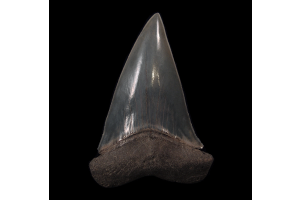
Some things leave us in awe not because of their beauty, but because of the mystery they carry. Among the most fascinating relics of Earth’s ancient past is a stark reminder of one of the largest predators to have ever existed—the Megalodon. A single glance at an actual megalodon tooth can stir questions that stretch back millions of years. But how can we be sure what we’re holding is the real thing?
Let’s take a slow dive into the world of these ancient giants, uncover how to tell the real from the replica, and why it even matters to collectors and curious minds alike.
Fossil or Fake? Here's Where to Begin
Before we delve into identifying signs of authenticity, it's helpful to understand what you're dealing with. A Megalodon tooth is not simply a relic—it’s a preserved piece of a prehistoric predator. However, with demand rising and lookalikes flooding the market, it’s essential to approach with a careful eye.
Your journey starts with observation. Don’t be quick to judge—replicas are
- - August 05, 2025
Far below the crashing waves and sunlit ripples of the ocean’s surface lies a history that predates the earliest human footsteps. It's a world teeming with giants, creatures of immense strength and grandeur, long lost to time. Fossils serve as fragments of this era—silent storytellers preserved beneath layers of sediment. Among the most captivating of these relics is a black megalodon tooth, an extraordinary find that carries with it the weight of legend and the allure of the unknown.
Before diving deeper into the significance of such a fossil, let’s take a step back and understand what makes this particular tooth so compelling—not just to collectors, but to anyone with an eye for natural history.
The Story Behind the Tooth
Millions of years ago, during the Miocene and Pliocene epochs, oceans were ruled by a behemoth unlike any other—the Megalodon. This now-extinct shark species measured up to 60 feet in length, making it one of the largest predators to have ever existed. Unlike modern
- - August 05, 2025
Florida’s land is a quiet storyteller. Its winding rivers and soft limestone beds cradle secrets from a time when the sea stretched farther inland, and creatures larger than any known today roamed its depths. Among these remnants is something both fierce and mesmerizing—evidence that once, an ancient predator ruled these prehistoric waters. Midway through the layers of phosphate-rich soil, nestled between ancient sediment and the pull of curiosity, lies a truly stunning relic: the Bone Valley Megalodon tooth.
Unlike many fossil finds that feel disconnected from their environments, this one tells a vivid story. It’s not simply about age or size—it’s about place, process, and the soft touch of time sculpting something magnificent. The Bone Valley region of central Florida, with its mineral-rich composition and unique preservation conditions, has become a treasure chest for fossil hunters, both professional and amateur.
This article takes you into the heart of what makes these teeth so extraordinary
- - August 05, 2025
Wearing something ancient doesn’t mean looking outdated. When that “something” predates civilization by tens of millions of years, it stops being a fashion accessory and becomes something else entirely. It becomes a marker of time. A symbol of power. A story no trend can replace.
This is the appeal of the megalodon shark tooth necklace. Not flashy for the sake of flash. Not trendy for a single season. It stands apart—because it always has.
A Fashion Statement Forged Beneath the Sea
Trends are fast. They burn bright, collapse quickly, and often resurface in strange new forms. But nothing about fossilized shark teeth is fleeting. These are remnants of a predator so massive that modern great whites look like minnows by comparison. When the megalodon ruled the seas, nothing rivaled its bite, its size, or its myth.
The tooth you wear today began its journey when continents looked unfamiliar and whales swam in fear. Over time, it fossilized. It held onto its form while civilizations rose and
- - August 05, 2025
At our organization, we truly believe these words resonate each time we uncover a fossil. Among the most awe-inspiring relics of the prehistoric world is the megalodon tooth from the UK. These massive fossils are not simply ancient remains; they are vivid reminders of oceans that once stretched far and wide.
Each tooth acts as a time capsule, preserving evidence of marine ecosystems that thrived millions of years ago. These discoveries allow us to peer into a world where giants ruled the seas and life evolved in ways we are still striving to understand.
Ancient Treasures on UK Shores
Imagine walking along a rugged UK coastline as the tide retreats, revealing a gleaming, serrated tooth embedded in the Earth. Megalodon teeth from the United Kingdom are often discovered along coastal cliffs, riverbanks, and fossil-rich deposits. Dating back to the Miocene and Pliocene epochs, these fossils speak of a time when warm seas dominated the landscape and nurtured an extraordinary variety of marine
- - August 05, 2025
Picture this: a riverbank in North Carolina, early morning mist drifting across the water’s surface, and in our hands a tooth the size of a palm, gleaming with an otherworldly copper-red sheen. It’s heavy, sharp, and alive with history. For fossil enthusiasts who work with us, this isn’t simply any Megalodon tooth.
It’s a North Carolina Megalodon tooth, a fossil so rare and spectacular that it is often described as the “Holy Grail” of the collecting world.
The Copper-Red Glow That Captures Attention
What makes these teeth so admired starts with their breathtaking color. Only North Carolina’s Meherrin River copper-red site can provide the special combination of iron-rich sediment and fossilization conditions that form the brilliant copper-red hue. Over millions of years, these ancient shark teeth have absorbed minerals from the soil, changing their enamel into vibrant tones of red and brown that simply are not seen anywhere else.
Unlike the darker grays and blacks typical of Megalodon
- - August 05, 2025
If you’re a fan of prehistoric sharks, you’ve probably heard about the mighty Megalodon. This giant predator ruled the oceans millions of years ago. It was bigger, stronger, and more terrifying than any shark we know today. But there’s one question that keeps shark tooth collectors buzzing—how big was the largest Megalodon tooth ever found?
Let’s dive into the fascinating world of these ancient teeth and find out just how massive they can get. You might think you know, but the real numbers might surprise you.
What Is a Megalodon Tooth?
Before we talk about size, let’s understand what a Megalodon tooth really is. The Megalodon, or Otodus megalodon, was a prehistoric shark that lived around 3.6 million years ago. These sharks didn’t just have sharp teeth—they had thousands of them. A single Megalodon could have up to 276 teeth arranged in five rows!
As the shark grew, it constantly shed old teeth and grew new ones. That’s why we can still find Megalodon teeth in rivers, oceans, and fossil
- - August 05, 2025
Picture this. You’re holding a tooth the size of your palm. It’s heavy. Cold. Perfectly serrated. You’re not just holding a fossil. You’re holding the echo of a monster.
That’s the feeling. That pause. That sharp inhale when you first see a real megalodon great white shark tooth. These aren’t just collector pieces. They’re time machines. And they deserve more than a museum label or casual shelf spot. They deserve reverence.
Shark Teeth Aren’t Like Other Fossils
Bones don’t last. At least not when you’re a shark. Sharks are built from cartilage, soft and quick to decay. Their teeth, though? That’s where things get interesting. Enamel-heavy and resilient, they survive what the rest of the body doesn’t. Over time, minerals replace the organic material. Sediment presses in. Colors change. But the shape? That brutal, brilliant shape? It stays.
The result isn’t just fossilized bone. It’s a sculpture—one shaped by both predator and planet.
Megalodon vs Great White: More Than Just Size
Let’s get
- - August 05, 2025
The world of paleontology has been stirred by a recent revelation in Chile—an extraordinary Megalodon tooth, thought to be among the biggest ever found. This prehistoric relic has sparked passionate debate among scientists, not only for its sheer size but for what it might reveal about the marine giant that once ruled the oceans. While some researchers believe it provides definitive proof of the shark’s maximum size, others caution against drawing conclusions from a single specimen.
Let’s dive into why this discovery has become so controversial—and so captivating.
A Historic Find from Chile’s Coastline
In the rugged terrain along Chile's Pacific coast, a team of geologists and paleontologists unearthed something extraordinary—a massive Megalodon tooth unlike anything they had seen before. The fossil’s sheer length and width suggest it belonged to a creature of truly immense proportions. Although Megalodon teeth have been found around the world, this one stands out for its exceptional dimensions.
- - August 05, 2025
Fossils are like puzzle pieces from Earth's deep past—and sometimes, even one fragment can challenge long-standing beliefs. In the realm of paleontology, few fossils generate as much excitement—or skepticism—as a real megalodon tooth. When one such tooth surfaces, it often sends ripples through the scientific community, raising critical questions: Is it authentic? Does it belong to the iconic Megalodon? And could it reshape our understanding of prehistoric sharks?
While most fossils confirm what we already suspect, every now and then, a single discovery adds new layers to our knowledge. Could a solitary tooth be enough to revise our understanding of ancient shark evolution? Let’s dive into the significance of this possibility.
Why Are Megalodon Teeth So Fascinating?
The Megalodon, whose name means "big tooth," lived approximately 23 to 3.6 million years ago and is considered one of the largest and most fearsome predators in Earth's history. Some estimates suggest it grew up to 60 feet