

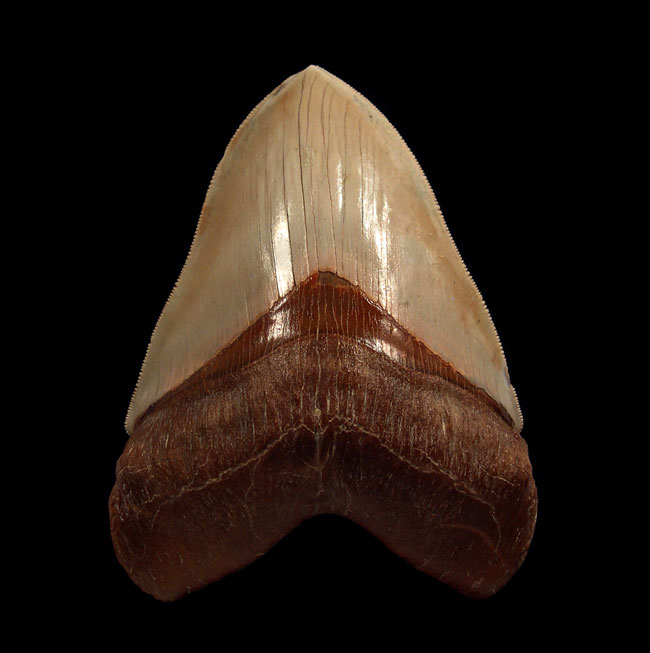
The world of paleontology has been stirred by a recent revelation in Chile—an extraordinary Megalodon tooth, thought to be among the biggest ever found. This prehistoric relic has sparked passionate debate among scientists, not only for its sheer size but for what it might reveal about the marine giant that once ruled the oceans. While some researchers believe it provides definitive proof of the shark’s maximum size, others caution against drawing conclusions from a single specimen.
Let’s dive into why this discovery has become so controversial—and so captivating.
A Historic Find from Chile’s Coastline
In the rugged terrain along Chile's Pacific coast, a team of geologists and paleontologists unearthed something extraordinary—a massive Megalodon tooth unlike anything they had seen before. The fossil’s sheer length and width suggest it belonged to a creature of truly immense proportions. Although Megalodon teeth have been found around the world, this one stands out for its exceptional dimensions.
What makes the Chilean specimen so compelling is how well-preserved it is. It offers a rare, tangible glimpse into the prehistoric seas, giving us a chance to understand not only how large these sharks may have grown but also what role they played in their environment.
This has led some scientists to label it the biggest Megalodon tooth ever found, a title that brings both prestige and scrutiny.
The Megalodon: Apex Predator of the Ancient Seas
To appreciate the debate, it helps to understand the creature behind the tooth. The Megalodon, meaning “big tooth,” roamed Earth’s oceans between 3.6 and 23 million years ago. Often compared to the modern great white shark, the Megalodon was in a league of its own, with estimated lengths reaching up to 60 feet—or possibly more.
Its teeth alone could be over 7 inches long, adapted perfectly for biting through bones and tough marine prey like whales. The Chilean specimen pushes those boundaries even further, making some scientists wonder if we’ve underestimated this predator’s maximum size.
Yet here lies the dilemma: is one tooth enough to reshape our understanding of the Megalodon’s size? Or are we at risk of over-interpreting a single, albeit massive, data point?
Why the Scientific Community Is Divided
The heart of the debate revolves around interpretation. Paleontologists use tooth size to estimate a Megalodon's full body length, applying a general formula based on fossil records and modern shark anatomy. But tooth size can vary, even within a single shark's jaw. Anterior teeth (from the front of the jaw) are typically longer, while side teeth may be shorter. Tooth size also varies depending on the shark’s age and sex.
This means that even though the Chilean tooth may be the biggest Megalodon tooth ever found, it might not automatically signal the largest Megalodon ever to swim Earth’s oceans.
Some researchers argue the tooth could belong to an exceptionally old individual, or one with an unusual jaw configuration. Others suggest the growth was influenced by regional prey abundance, environmental conditions, or genetic variation.
In short, the tooth has opened up more questions than it’s answered—which is exactly why it’s such a fascinating subject of debate.
Chile’s Fossil-Rich Landscape Adds Context
Chile’s coastal region has proven to be a paleontological treasure trove. Tectonic shifts, erosion, and sedimentary layering have made it possible for fossils like this Megalodon tooth to be preserved in incredible detail. The country has emerged as an essential site for uncovering marine life from millions of years ago.
This new find enhances Chile’s scientific reputation, providing more opportunities to study prehistoric life in the Southern Hemisphere. It’s also a reminder that many significant paleontological discoveries lie outside the more commonly explored regions of North America and Europe.
Why One Tooth Isn’t the Whole Story
Estimating a creature’s size from fossilized teeth alone is tricky. Tooth size is only one factor, and without a complete skeleton—which has never been found for Megalodon—it’s difficult to form definitive conclusions. Sharks, being cartilaginous, don’t fossilize as easily as bony animals. This leaves scientists with isolated teeth and occasional vertebrae as the primary clues.
While this tooth is exceptionally large, the variation among Megalodon teeth makes it challenging to use as a singular measure. In fact, some scientists are advocating for a more holistic approach—using multiple teeth from different regions and ages to build a broader understanding of the species’ growth patterns.
So while some are eager to label this specimen as belonging to the largest Megalodon ever, others are urging caution and context.
A Connection to Modern Marine Science
Interestingly, the study of this Megalodon tooth doesn’t just appeal to those studying the distant past. Marine biologists are also taking note. Understanding the ecological role of such an apex predator helps researchers draw comparisons to today’s ocean dynamics.
By studying the Megalodon’s feeding behavior, size, and dominance, scientists can make more informed predictions about the balance of marine ecosystems today—especially in the face of declining shark populations and climate change.
It’s not just about what the ocean looked like 10 million years ago. It’s about what our oceans could look like in the future.
Inspiring the Next Generation
Beyond the scientific circles, the Chile Megalodon tooth has captured the imagination of students, educators, and the general public. Museums and science centers have already expressed interest in showcasing replicas of the tooth, and classrooms around the world are using it as a gateway into paleontology and ocean science.
It’s also a cultural moment for Chile, where the find has been celebrated not just as a scientific milestone but as a symbol of national pride. Local communities, universities, and even government agencies are recognizing the value of investing in fossil research and preservation.
This colossal relic has bridged the gap between academic research and public fascination.
So, What Does the Tooth Really Tell Us?
At the end of the day, the Chile Megalodon tooth offers something rare in science—a physical clue big enough to spark big questions. But it also serves as a reminder that science isn’t about rushing to conclusions; it’s about gathering evidence, debating interpretations, and staying open to new information.
While it might be tempting to declare it the definitive marker of the largest Megalodon ever, the truth is more complex. This tooth is a powerful data point, but not the whole story.
Still, the excitement it has generated is undeniably positive for the field of marine paleontology. It’s encouraging collaboration, drawing media attention, and inspiring young minds to ask important questions.
Final Thoughts
Whether or not it belonged to the largest Megalodon ever, there’s no doubt that the Chilean specimen has made its mark. It offers a fascinating glimpse into prehistoric oceans, challenges scientific assumptions, and enriches our understanding of the world’s most powerful marine predators.
And yes, even if opinions differ, most researchers can agree on one thing: this might just be the biggest Megalodon tooth ever found, and it’s certainly one of the most thought-provoking.
As the study continues, we’ll be watching closely—not just for answers, but for the new questions that arise along the way.






