

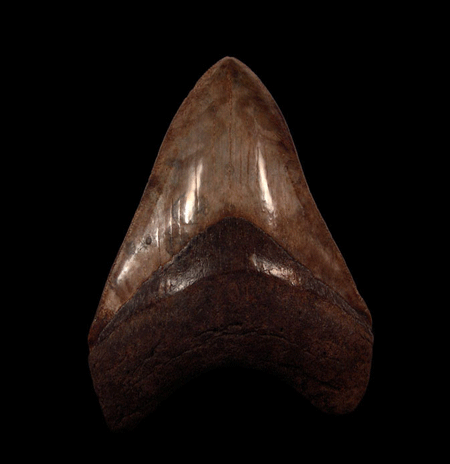
Fossils are like puzzle pieces from Earth's deep past—and sometimes, even one fragment can challenge long-standing beliefs. In the realm of paleontology, few fossils generate as much excitement—or skepticism—as a real megalodon tooth. When one such tooth surfaces, it often sends ripples through the scientific community, raising critical questions: Is it authentic? Does it belong to the iconic Megalodon? And could it reshape our understanding of prehistoric sharks?
While most fossils confirm what we already suspect, every now and then, a single discovery adds new layers to our knowledge. Could a solitary tooth be enough to revise our understanding of ancient shark evolution? Let’s dive into the significance of this possibility.
Why Are Megalodon Teeth So Fascinating?
The Megalodon, whose name means "big tooth," lived approximately 23 to 3.6 million years ago and is considered one of the largest and most fearsome predators in Earth's history. Some estimates suggest it grew up to 60 feet long, with jaws capable of crushing whales. While no complete skeletons exist—shark skeletons are mostly cartilage and don’t fossilize well—the Megalodon’s teeth have become iconic fossils due to their size, sharpness, and sheer mystique.
These teeth are more than just collectible treasures. They're crucial to understanding the size, diet, behavior, and even the geographic range of the Megalodon. That’s why identifying whether a tooth is genuine is so important—not just for collectors but for science itself.
The Power of a Tooth in Scientific Research
When paleontologists study a tooth, they’re looking at much more than just its size. Tooth shape, wear patterns, root structure, and mineralization all tell stories. A single tooth can suggest:
● New migration patterns
● Previously unknown feeding habits
● Evolutionary relationships with other shark species
● Environmental conditions of the prehistoric seas
So, when a previously unknown or unusually large real megalodon tooth emerges, scientists may ask: does this fossil challenge what we believed to be true about the species? Or even more provocatively, could it belong to a different, as-yet-unclassified prehistoric shark?
Real or Replica? Why It Matters
The fossil trade is booming. From museum exhibitions to private collectors, demand for ancient relics—especially Megalodon teeth—is high. Unfortunately, so is the market for fakes. Distinguishing a real Megalodon tooth from a skillfully crafted replica requires careful analysis.
Telltale Signs of the Real Deal
1. Surface Texture: A genuine tooth usually shows a natural, weathered appearance with minor imperfections. Fakes often look too clean, glossy, or artificially distressed.
2. Weight and Density: Due to mineralization over millions of years, an authentic tooth feels dense and solid. A replica may feel hollow or too lightweight for its size.
3. Blade and Root Characteristics: Real Megalodon teeth have defined serrations and root structures, such as nutrient holes, which are challenging to replicate accurately.
4. Fossilization Evidence: Discoloration from mineral deposits, remnants of sediment, or unique layering often points to authenticity.
Even if a tooth looks promising, consulting an expert—such as a seasoned paleontologist or a trusted fossil dealer—is often necessary to confirm whether you’re holding a genuine relic or a clever imitation.
Could One Tooth Redefine a Whole Species?
It might sound improbable, but history has shown it’s possible. There have been instances in paleontology where a single fossil changed scientific understanding. For example:
● The discovery of a single feathered dinosaur fossil in China reshaped how we view the connection between birds and dinosaurs.
● A unique jawbone find in Ethiopia added a new chapter to human evolutionary history.
So yes, one tooth—especially one with unusual features—could suggest that the Megalodon had a broader range than previously known, lived longer than assumed, or shared traits with other large shark species. In rare cases, it might not be Megalodon at all but a cousin species not yet documented in the fossil record.
Imagine a tooth with unexpected curvature, size, or mineral composition—these anomalies could trigger a fresh scientific debate, lead to new excavation efforts, or spark reanalysis of previously discovered specimens.
The Role of Advanced Technology
Today’s paleontologists don’t rely solely on visual inspection. CT scans, isotopic analysis, and 3D modeling allow researchers to examine internal structures, understand growth patterns, and even determine the diet of ancient sharks based on wear marks and microscopic damage.
When a potentially significant real megalodon tooth is unearthed, these tools can help validate its authenticity and reveal details invisible to the naked eye. Technology bridges the gap between speculation and science, allowing a tooth to tell a much fuller story.
Separating Fact from Fossil Fiction
Not every unusual fossil is a paradigm-shifting find. Sometimes, erosion can distort shapes, or mineral intrusions can alter color. Other times, composite fossils—where parts from multiple specimens are fused—can create misleading interpretations.
That’s why scientific verification is a rigorous process. Researchers consider the tooth’s geological context, compare it against verified specimens, and collaborate with international experts before drawing conclusions.
And yet, the process starts with a single fossil—and often, just a tooth.
A Collector’s Perspective: What to Look For
If you’re a fossil enthusiast or aspiring collector, understanding what separates an authentic Megalodon tooth from a replica is vital. Before adding a piece to your collection, remember:
● Reputable dealers will disclose where and how the tooth was found.
● Authentic fossils usually come with documentation or certificates of authenticity.
● Price alone doesn’t determine legitimacy; even high-priced items can be fake.
● Don’t hesitate to get a second opinion if something feels off.
A true fossil enthusiast isn't just looking to own a piece of history—they’re also helping preserve scientific accuracy. Every real megalodon tooth collected and verified adds value to our shared understanding of ancient marine life.
Can a Tooth Really Change Everything?
In paleontology, big breakthroughs often begin with small fragments. A tooth might seem like a small discovery, but in the world of prehistoric sharks, it can be monumental. From challenging scientific assumptions to fueling public interest, one carefully examined fossil can make waves.
In an age of mass replication, distinguishing between fake and authentic fossils is more important than ever. But when a rare, verified specimen turns up—whether it confirms current understanding or opens the door to new theories—it holds the potential to reshape our knowledge.
So yes, a single tooth can indeed rewrite parts of prehistoric history. The key lies in knowing how to read what that tooth is trying to tell us.
And when that tooth happens to be a real megalodon tooth, its story is likely far more than just ancient history—it’s a living link to one of nature’s most awe-inspiring predators.






