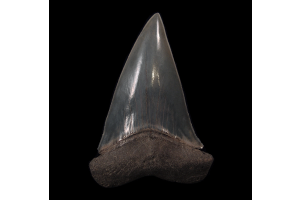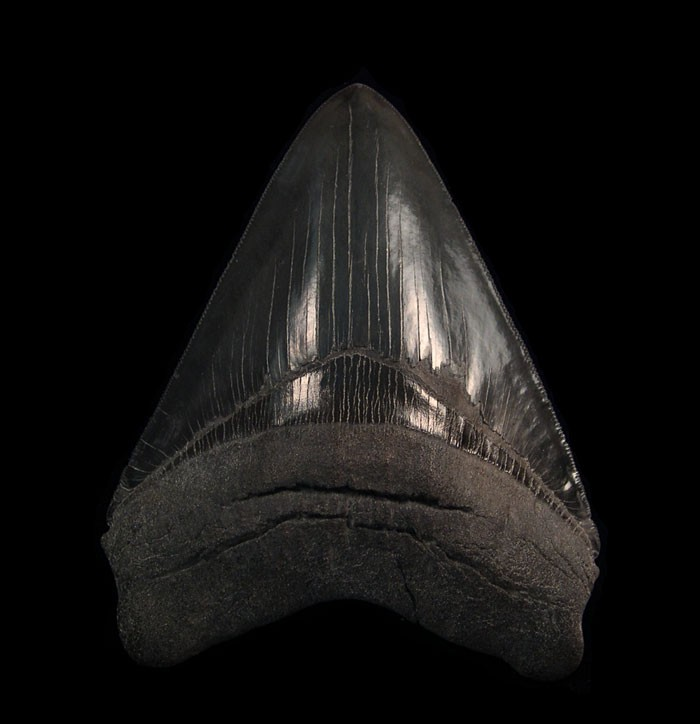
Far below the crashing waves and sunlit ripples of the ocean’s surface lies a history that predates the earliest human footsteps. It's a world teeming with giants, creatures of immense strength and grandeur, long lost to time. Fossils serve as fragments of this era—silent storytellers preserved beneath layers of sediment. Among the most captivating of these relics is a black megalodon tooth, an extraordinary find that carries with it the weight of legend and the allure of the unknown.
Before diving deeper into the significance of such a fossil, let’s take a step back and understand what makes this particular tooth so compelling—not just to collectors, but to anyone with an eye for natural history.
The Story Behind the Tooth
Millions of years ago, during the Miocene and Pliocene epochs, oceans were ruled by a behemoth unlike any other—the Megalodon. This now-extinct shark species measured up to 60 feet in length, making it one of the largest predators to have ever existed. Unlike modern sharks, which shed thousands of teeth over their lifetimes, Megalodon’s teeth were impressively large, with some reaching over seven inches long.
Over time, these teeth would settle deep into the ocean floor and eventually become fossilized. The rarest among them display deep, rich hues—a result of mineralization during fossilization. Some, like the black ones, exhibit a dramatic visual intensity that reflects the mysterious world from which they came.
Why Color Matters in Fossil Hunting
To the untrained eye, one tooth might appear much like another. But experienced collectors know that color is more than a superficial trait. It offers a hint at the fossil’s environment, the minerals it absorbed, and how it has weathered the ages.
A dark, obsidian-like tooth isn’t something artificially enhanced. Instead, it is nature’s artistry at work. The shades of black are due to the presence of iron, manganese, and other elements in the soil where the tooth was buried. Over thousands or even millions of years, these elements permeate the enamel and dentin, creating that shadowy elegance.
For enthusiasts, the appeal lies in more than rarity—it’s about holding a genuine piece of the Earth’s ancient chemistry.
The Charm of Fossil Collecting
There’s a calm, almost meditative joy in collecting fossils. Whether it begins as a hobby or grows into a serious pursuit, there’s something inherently grounding about seeking out objects that were once part of a living creature. Fossils bridge time, offering a tangible link to a natural world that shaped our present.
For many, it begins with a single piece—a gift, a find, or a moment of curiosity. Before long, each collector develops a sense of personal style. Some prefer pristine pieces, with sharp serrations and perfect enamel. Others are drawn to those with imperfections—cracks, chips, and weathering—that tell a richer story.
Black Megalodon Tooth in Modern Collections
There’s a particular reverence reserved for the black megalodon tooth in today’s fossil collections. Whether displayed in a case or kept as a talisman, its presence evokes curiosity and a sense of wonder. The sharpness of its serrations, the heft in one’s hand, and the subtle gleam across its surface speak of something once alive, powerful, and dominant.
It’s not uncommon for these teeth to become conversation starters, centerpieces, or even heirlooms passed down through generations. Some collectors frame them with minimalist elegance, allowing the natural textures and tones to take center stage. Others mount them on stone or metal bases to mimic their prehistoric origins.
No matter the approach, the emotional impact remains the same—it's awe.
What Makes a Tooth Authentic?
In a marketplace filled with reproductions and artificially colored specimens, authenticity matters. Genuine megalodon teeth carry signs of their past—natural wear, sediment deposits, mineral inclusions, and an unmistakable structure.
Experts examine root integrity, enamel preservation, and even the microscopic serrations to assess value and origin. A black specimen, in particular, tends to attract attention due to its visual appeal and relative scarcity.
When shopping for one, pay close attention to documentation and sourcing. Trustworthy sellers provide complete transparency about a tooth’s origin, size, and treatment history.
Caring for a Fossilized Treasure
Owning a fossil comes with a quiet responsibility. While these objects have endured the passage of time, they remain sensitive to human environments. Avoid harsh cleaning agents and prolonged exposure to sunlight. Simple dusting with a soft brush or cloth is often enough.
For those interested in preservation, display cases with UV-protected glass and climate control help maintain the integrity of the fossil over the course of decades. Some collectors opt to use archival materials or padded bases to minimize movement and contact.
And while the material is rigid—after all, it survived oceans and geological shifts—it’s worth treating with respect. You're not holding an object. You're holding history.
A Bridge Between Curiosity and Wonder
Collectors often describe the moment they first held a Megalodon tooth as one of quiet disbelief. It feels heavy—literally and metaphorically. You begin to imagine what this predator must have looked like, how it moved, how it hunted. Your mind travels, not back a few years or centuries, but millions of years.
It's this journey that continues to draw people to fossil collecting. The practice turns science into art, memory into story, and silence into curiosity. Each piece, especially one as visually unique as a black fossilized tooth, becomes a personal link to something larger than ourselves.
A Conversation Starter, A Keepsake, A Discovery
Perhaps you’re someone who’s always been fascinated by the sea. Or maybe you're seeking a one-of-a-kind artifact to commemorate a special milestone. Either way, there’s something undeniably stirring about fossils. A black tooth from the Megalodon is more than a collectible—it’s an invitation to learn, to imagine, and to appreciate.
Its appeal spans far beyond science. It becomes part of your space, your story, and your perspective on time.
Conclusion: Echoes of the Deep in the Palm of Your Hand
As we reflect on the immensity of prehistoric oceans, we realize how small yet connected we are to the long threads of nature’s past. Holding a black megalodon tooth is like grasping a frozen moment from Earth’s forgotten pages—a piece of something larger, darker, and infinitely mesmerizing.
If you’re ready to add a unique relic to your personal collection or explore what ancient oceans left behind, consider browsing carefully curated selections offered by Buried Treasure Fossils. You might discover a piece that speaks to you in the same way it spoke to time.