Page 130 - Blog
- - August 12, 2025
There’s a strange moment that happens when your fingers wrap around something sharp, stone-cold, and unmistakably ancient—something that doesn’t belong in this century, or even the last hundred centuries. You’re crouched over a riverbank or waist-deep in murky blackwater, and the world around you falls away. That moment, when your eyes meet the jagged edge of a fossilized giant, feels like stepping straight into a rip in time.
And this isn’t exaggeration for effect. Anyone who’s spent time finding a megalodon tooth knows it’s not just about fossils. It’s about chasing ghosts and chasing the colossal predators that once ruled the oceans. Chasing a version of Earth that has been buried under layers of silt and time. When we say megalodon tooth hunting is a kind of time travel, we mean it quite literally.
The Prehistoric Predator That Never Really Let Go
Long before any mammal dared walk on two legs, a creature cruised the oceans that made even great white sharks look like toddlers on a
- - August 12, 2025
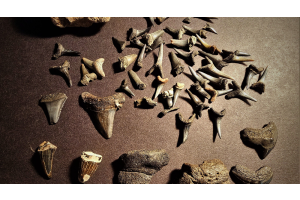
At Buried Treasure Fossils, we take immense pride in offering some of the most extraordinary fossil finds available anywhere—and none command attention quite like our Megalodon tooth in North Carolina. These stunning specimens hail from the rich fossil beds of the Meherrin River, a region renowned not only for its paleontological wealth but also for yielding one of the rarest fossil shark teeth colors in the world: copper red.
If you're a collector or an enthusiast of prehistoric marine life, you've likely come across the buzz surrounding these exceptional fossil shark teeth. Here's everything you need to know about why copper red Megalodon teeth are so highly prized—and how we at Buried Treasure Fossils are your trusted source for these treasures from deep time.
Here are some key highlights to know about the Megalodon tooth in North Carolina:
A Glimpse Into Prehistoric Giants
The Megalodon, scientifically known as Otodus megalodon, was a massive prehistoric shark that dominated the
- - August 12, 2025
At our facility, we have been helping fossil enthusiasts and collectors explore the fascinating details behind an authentic megalodon tooth. We take pride in guiding others through the process of identifying genuine fossils, ensuring that every find or purchase comes with the confidence of knowing its true origin. The Megalodon, an ancient predator that once dominated the seas, left behind massive teeth that are both scientifically significant and visually striking.
These teeth, which can measure up to seven inches in length, often hold subtle clues about the past—clues that sometimes only become visible when examined under ultraviolet light. In some instances, this glow can reveal necessary information about the fossil’s history and authenticity.
The Role of UV Fluorescence in Fossil Identification
When we set out to determine whether a Megalodon tooth is genuine, UV light testing can play a key role. Authentic specimens may display a unique form of fluorescence when exposed to UV light.
- - August 11, 2025
If you’re fascinated by fossils or love ancient sharks, the Parotodus tooth is one of the most exciting finds you can own. These rare shark teeth come from an extinct species called the False Mako shark and are treasured by collectors worldwide. But how do you find a real one? And what should you know before buying? This blog will guide you through everything about getting a genuine Parotodus tooth for sale online.
What Makes the Parotodus Tooth Unique?
The Parotodus tooth stands out because it comes from a rare shark species that lived millions of years ago. Unlike common shark teeth, these are large, sharp, and have thick roots. Their age traces back to the Miocene and Pliocene periods, which means they are often 3 to 5 million years old.
Collectors value these teeth because they are extremely rare, and each tooth tells a story of the ancient seas. If you want to add a unique item to your fossil collection, the Parotodus tooth is a top choice.
How to Spot a Real Parotodus Tooth?
- - August 11, 2025
Have you ever looked at a stone and wondered if it once belonged to something alive—something that roamed the Earth long before humans existed? There’s a quiet magic in fossil hunting that goes beyond science and enters the realm of connection. When you hold a fossil, you're not holding a rock. You're holding a story. One such story is told through an ancient molar—a Gomphotherium tooth for sale, a piece of prehistoric history preserved in stone.
Between the lines of age and geology lies the tale of a creature that once trampled forests and plains, long before mammoths ruled the tundra. Let’s step gently into this ancient world and discover why a single fossil can hold so much significance for those who cherish the past.
The Mammal Before Mammoths
Long before mammoths became symbols of the Ice Age wonder, the Gomphotherium walked the Earth. It wasn’t a giant in the way dinosaurs were, but it had an unmistakable presence. Shaped like an elephant but with distinct differences, this ancient
- - August 11, 2025
Have you ever wondered what it would be like to hold a piece of the Ice Age in your hands? Imagine discovering a massive tooth or jawbone that once belonged to a giant bear that lived more than 25,000 years ago. That is the magic of cave bear fossils. These ancient remains continue to spark curiosity among scientists, collectors, and nature lovers worldwide.
So how rare are they? And why do they matter so much to science? Let’s explore the world of cave bears and the fossils they left behind.
Who Were the Cave Bears?
Cave bears, scientifically known as Ursus spelaeus, inhabited Europe during the Ice Age. These massive creatures were bigger than most modern bears. Some males weighed over 1,000 pounds and stood more than 10 feet tall when on their hind legs.
They got their name because they often lived and died inside caves. These shelters protected their bones from weather and animals, which helped some remains survive for thousands of years. Thanks to this natural protection, we now have
- - August 11, 2025
Beneath layers of earth and time lies a delicate world forgotten by most but remembered by stone. These are not monuments or artifacts crafted by human hands—they are whispers of life itself, preserved with quiet precision. From tiny fins to delicate spines, fossilized fish from ancient lakebeds reveal a world teeming with movement and mystery. Somewhere in the middle of this incredible history lies the charm and significance of green river formation fossils, a subject of deep fascination for collectors, educators, and curious minds alike.
A Window into a Prehistoric Freshwater World
Roughly 50 million years ago, the region that now encompasses parts of Wyoming, Colorado, and Utah looked vastly different from its current appearance. Back then, it was home to a series of large, subtropical lakes that supported a wide array of plant and animal life. These waters provided nourishment, shelter, and balance to an ecosystem whose residents left behind one of the richest fossil records ever discovered.
- - August 11, 2025
Something is grounding about the presence of a fossil. Unlike most collectibles, it doesn’t speak of a decade or even a century—but of an era so distant that human existence hadn’t even begun. These ancient remnants, pulled from prehistoric layers of sediment and sand, awaken our sense of curiosity and reverence for Earth’s vast history. One such fossil, rare and visually striking, is the tooth of an extinct shark species known for its size and legacy.
About midway through the Oligocene epoch, the oceans were home to a creature that would someday leave behind one of the most beautiful and distinctive relics in the field of fossil collecting today. That relic—a serrated tooth bearing both strength and symmetry—can still be found by those who know where and how to look. For those interested in adding such a relic to their collection, an Angustidens shark tooth for sale is more than an acquisition. It is an invitation to connect with nature's long story.
Let’s explore what makes these teeth
- - August 11, 2025
In the remote fossil beds of the Atlas Mountains in Morocco, a remarkable creature has captured the awe of both paleontologists and collectors alike. This extraordinary arthropod, Erbenochile erbeni, wasn't just another ocean-dwelling organism from the Devonian period—it was a visual marvel. Known for its dramatic spines and stunning eye architecture, this species has brought renewed attention to the beauty and scientific importance of the trilobite fossil. For those fascinated by ancient life, our collection offers both scientific insight and genuine excitement, especially with a variety of trilobites for sale.
A Fossil That Changed the Way We See Ancient Eyes
Trilobites, some of the earliest and most fascinating arthropods, burst onto the scene during the Cambrian explosion, thriving for an astonishing span of over 270 million years. Their remarkable and extensive fossil record serves as a crucial window into the evolutionary journey of exoskeletons, the process of molting, and the
- - August 11, 2025
Fossil collecting is an immersive journey into Earth’s prehistoric past, where every specimen tells a story of ancient ecosystems, evolutionary marvels, and geological time. Among the most enchanting marine relics unearthed from Morocco’s fossil-rich landscapes are the beautifully preserved echinoderms that continue to captivate collectors across the globe. From their striking symmetry to their remarkable detail, these fossils remain essential additions to any serious collection, especially for those seeking a starfish fossil for sale or hoping to add a unique brittlestar fossil for sale to their growing display.
Discovering Prehistoric Elegance: Moroccan Brittle Stars and Starfish
Morocco has long been revered as a paleontological treasure trove. Its vast deposits span millions of years and contain fossils from nearly every major period of life on Earth. One of its most awe-inspiring contributions to the fossil world is the unmatched preservation of brittle stars (Ophiuroidea) and starfish