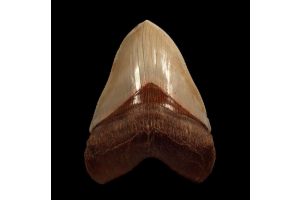
Page 3 - Home Page Latest Post
- - December 08, 2025
Experienced fossil collectors know that location drives value. When it comes to Megalodon teeth, North Carolina continues to stand out for its rare geological profile, consistent fossil preservation, and distinct coloration. Collectors don’t settle for vague listings or generic origins. They seek fossils with proven context and traceable details. That’s why many start their search for a megalodon tooth in North Carolina. The riverbeds and marine deposits in this region deliver specimens that carry scientific weight and long-term collector value.
Why Do Megalodon Teeth from North Carolina Stand Apart?
Not all Megalodon teeth offer the same traits. The ones sourced from North Carolina show better preservation, more substantial mineralization, and most importantly, traceable recovery. This region produces fossil layers from both the Miocene and Pliocene periods. These include the Pungo River Formation and the Yorktown Formation, both of which are known for their dense fossil beds and rich
- - December 08, 2025
Not all megalodon teeth are created equal. While each one is a relic of Earth’s ancient oceans and a testament to the sheer scale of the Otodus megalodon - So. Carolina, there’s a wide range in their market value, and for good reason. As fossil enthusiasts, we often ask what makes one specimen command a much higher price than another. The answer lies in a combination of factors: size, preservation, color, provenance, and rarity. These are not just prehistoric artifacts; they are collector’s items where every detail matters. So let’s walk through why the value of these teeth varies so dramatically.
The Rarity Factor: Not Every Tooth Survives Time Equally
The megalodon roamed the oceans millions of years ago, leaving behind countless teeth over time. But that doesn’t mean all of them have survived in collectible condition. The conditions needed to preserve a tooth over millennia are specific and rare. When teeth are found whole, with intact enamel, minimal erosion, and no missing serrations,
- - December 08, 2025
Real Megalodon teeth have become prized fossils that connect collectors with a marine predator that once ruled ancient oceans. These teeth are no longer just geological artifacts. They carry value, legacy, and unmistakable natural detail that cannot be replicated in a factory or duplicated with resin. Those who search for a real megalodon tooth for sale are not just shopping for a relic. They are choosing history, preservation, and trust. The challenge is no longer about availability. The challenge lies in knowing where to look, who to trust, and how to distinguish the real from the artificially produced.
Let’s explore more detailed information:
Recognizing Authenticity Through Geological Markers
When a Megalodon tooth is unearthed from sediment-rich marine deposits, its physical properties speak louder than any certificate. Actual specimens exhibit distinct features, such as phosphate coloration, enamel layering, and well-formed serrations, which are shaped by the passage of time. The
- - December 07, 2025
Collectors and fossil buyers do not look for decorations. They search for authenticity. A real Megalodon tooth stands apart because it holds the raw signature of time. You can feel it in the weight, see it in the enamel, and trace its story through natural wear that no copy can fake. No mold, no paint, and no machine can imitate millions of years beneath the Earth. That is why buying without proof opens the door to disappointment. When you explore genuine megalodon teeth for sale, always focus on proof of origin and condition before you buy. The rise of replicas makes knowledge your best tool. If you want truth in your hands, you must shop with that mindset.
Replicas Hurt More Than Just Value
The problem is not just aesthetics. It is trust. Many sellers post bold claims with no factual background. They offer low-priced fossils that look right in photos but arrive as resin casts. These imitations mislead first-time buyers and frustrate serious collectors. If you invest in fossils without
- - December 07, 2025
Few things excite the imagination quite like discovering a link to Earth’s ancient past. Long before kids fall in love with dinosaurs or dream of exploring the ocean depths, there’s often a single spark—a moment that makes prehistory feel real, touchable, and full of wonder. That’s exactly what my first Megalodon can be: a tangible gateway to curiosity, discovery, and a lifelong fascination with fossils.
At Buried Treasure Fossils, we believe every collector, young or old, remembers the thrill of their first fossil. It’s that moment when history sits in the palm of your hand—millions of years old, yet completely yours. Our My First Megalodon collection was created to capture that feeling and turn it into an experience that inspires learning and adventure for years to come.
The Thrill of Holding Prehistoric Power
Imagine handing a child a fossilized tooth from one of the largest predators that ever lived—the mighty Carcharocles megalodon. This prehistoric shark ruled the oceans between
- - December 07, 2025
Finding a genuine megalodon tooth is one of the most thrilling experiences for fossil enthusiasts and collectors alike. We understand the excitement that comes with discovering such a remarkable piece of prehistoric history, especially when it comes to fossils from Morocco. The Carcharocles megalodon - Morocco fossils have become popular among beginners and seasoned collectors because of their affordability, unique coloration, and fascinating geological origin. But before making a purchase, there are key details every buyer should know to ensure they’re getting an authentic, high-quality specimen worth adding to their collection.
Understanding the Carcharocles Megalodon and Its Moroccan Origins
The Carcharocles megalodon was one of the largest sharks to ever exist, reaching estimated lengths of up to 60 feet. Their massive teeth, often over six inches long, are prized for their rarity and beauty. Moroccan megalodon teeth, in particular, come from phosphate mines in regions such as Khouribga,
- - December 07, 2025
Beneath the quiet blue of the ocean lies a world of forgotten stories—some whispered in coral canyons, others frozen in stone. Among the most awe-inspiring remnants of the prehistoric sea are the fossilized teeth of an ancient predator whose name still sends ripples through the scientific community: Otodus megalodon.
This creature may be long gone, but its shadow continues to loom large over marine history. These fossilized fragments don’t speak, yet they reveal volumes about one of the most dominant species ever to swim Earth’s oceans.
Let’s explore how these teeth help us piece together the life of a vanished giant.
A Predator Measured in Feet, Not Inches
Millions of years ago, a different ruler commanded the seas. With a body stretching up to 60 feet or more, this shark was larger than a school bus and had a bite that could crush a whale’s spine. While its skeleton—made of cartilage—left few traces, its teeth remain as nature’s evidence.
Unlike most shark species today, which boast
- - December 07, 2025
The tall clay cliffs overlooking the Chesapeake Bay aren’t merely beautiful—they’re a secret vault of ancient treasures. Among the layers of sediment and shells lies something much more captivating: fossilized teeth from one of the largest sharks to ever roam Earth’s oceans. For beachcombers, paleontology enthusiasts, and curious souls alike, these rugged cliffs offer something special.
Between the waves and weather-worn ledges, there’s an unspoken promise: if you search long enough, you might uncover a tooth that once belonged to an apex predator now long gone. One such prize is the awe-inspiring Otodus megalodon Calvert Cliffs fossil. This tooth carries stories from a time when giants ruled the sea.
Let’s trace the roots of this ancient relic and understand what makes these coastal cliffs a magnet for fossil lovers.
A Brief Look at the Otodus megalodon
Before jumping into the geography, let’s meet the tooth’s original owner. The Otodus megalodon was a prehistoric shark that cruised warm,
- - December 07, 2025
There’s something truly magical about holding a piece of Earth’s ancient history in your hand — a glimpse into a time when colossal predators ruled the seas. Among these incredible relics, Sharktooth Hill Megalodon tooth fossils stand out as extraordinary tools for teaching children about evolution, adaptation, and the dynamic story of life on Earth. At Buried Treasure Fossils, we’re passionate about how these fossils not only capture young imaginations but also offer hands-on lessons in science, geology, and environmental change.
Discovering the Fascinating World of Sharktooth Hill
Nestled north of Bakersfield, California, Sharktooth Hill is one of the richest Miocene-age fossil sites in the world. Around 12 to 15 million years ago, this region was submerged under a vast, warm ocean teeming with marine life — from ancient whales and sea lions to the most feared predator of all, the Megalodon. Today, the Sharktooth Hill Megalodon tooth remains one of the most remarkable remnants from
- - December 07, 2025
Few fossils excite collectors as much as the Aurora Megalodon tooth. These ancient shark teeth are not just remnants of the past, they are windows into a time when the oceans were ruled by one of the most powerful predators in history. The fascination comes not only from their size and beauty but also from their rarity and the scientific story they carry. But what makes the Aurora Megalodon tooth truly special?
The Origins of the Aurora Megalodon Tooth
The journey of every Aurora Megalodon tooth begins in Aurora, North Carolina, at the Lee Creek phosphate mine. Fossils from this site date back millions of years, from the Miocene and Pliocene periods. The unique geological conditions at Lee Creek helped preserve the teeth in remarkable detail, keeping sharp edges and roots intact.
Since the mine closed in 2008, no new specimens have been discovered, making every Aurora Megalodon tooth rare. Collectors prize these teeth not just for their physical appearance but also for the story