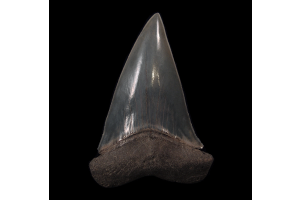
Page 60 - Megalodon
- - September 29, 2025
Collectors value more than appearance. They look for a specimen that tells a story, one that speaks through its color, structure, and origin. You can hold the past in your hand when you own a fossil that formed naturally over millions of years. When that fossil comes from Aurora, North Carolina, you receive more than a relic. You receive a tooth that formed in the Pungo River Formation, where nature created one of the richest marine deposits. A megalodon tooth in Aurora reflects that legacy with unmatched clarity. This tooth stands out not just for its age but for its place in fossil history.
Let’s explore more detailed information:
Fossils From Aurora Hold a Different Kind of Value
Collectors know how to recognize a valuable fossil. Teeth found in the Aurora region often carry deeper colors, stronger roots, and a clear geological signature. The unique sediment from the Pungo River Formation helps minerals settle into the fossil without weakening it. As time passes, these teeth develop
- - September 29, 2025
Intro: The Tooth Fairy’s Toughest Job Yet
We’ve all heard of the Tooth Fairy. She leaves coins, maybe a note, sometimes glitter, if she’s feeling fancy. But imagine what she would’ve done with a 7-inch tooth from a 60-foot shark. That’s where Florida comes in. Known for its beaches, oranges, and yes, strange news headlines, Florida has one more claim to fame: it’s one of the best places on Earth to find Megalodon teeth in Florida.
These prehistoric treasures are more than just big, sharp souvenirs. They tell stories from a time when sharks ruled the seas and humans didn’t even exist. And the best part? You can actually find them yourself.
So, let’s sink our teeth into this jaw-dropping topic.
What Exactly Is a Megalodon Tooth?
A Megalodon tooth isn’t just any shark tooth, it’s a prehistoric giant’s calling card. The Megalodon, believed to be the largest shark ever, lived over 3 million years ago and could grow up to 60 feet long. Its teeth were massive, with some measuring over 7 inches,
- - September 29, 2025
Collectors who search for rare fossils often reach a point where every new addition must feel significant. Not every piece earns a place on a seasoned collector’s shelf. A Black Megalodon tooth brings more than color—it introduces rarity, environmental history, and the prehistoric force of a bygone era. This isn’t about size or flash. It’s about what that tooth went through underground before anyone ever found it. You add more than a fossil. You introduce something that shapes the energy of your entire collection.
Let’s explore more detailed information:
Understanding how mineral-rich layers transform Megalodon teet
Most Megalodon teeth come from sedimentary layers with light minerals that leave behind tan, brown, or gray coloring. In rare places, the right minerals create darker shades through natural preservation. That occurs over thousands of years and is limited to specific environments. When iron and phosphate seep into the fossil layers, the result often reveals rich black or charcoal
- - September 29, 2025
Collectors eventually reach a point where size changes the conversation. When you hold a Megalodon tooth that measures 7 inches or more, you feel something shift. You no longer browse for a basic addition to your shelf. You now pursue a rare fossil that sets your collection apart. That leap in scale tells a different story, one that connects to power, time, and rarity. Buyers actively search for a 7-inch megalodon tooth for sale, not just for its size but for the presence it brings. This fossil has an impact on both science and storytelling.
Let’s explore more detailed information:
Size Separates Common from Rare
Not every large Megalodon tooth carries the same meaning. Teeth that pass the 7-inch mark enter a small category that most collectors never reach. Only a few Megalodons ever grew to that size, and even fewer left behind teeth that survived in near-complete condition. The size instantly signals rarity. It tells collectors they’ve moved into elite fossil territory. When you find
- - September 29, 2025
Mass producers flood the fossil jewelry market with fake teeth that confuse and mislead. These copies utilize plastic or resin molds that appear appealing but lack a genuine connection to history. People often feel disappointed when they realize the tooth they bought tells no ancient story. The surface feels too smooth, the weight too light, and the colors too uniform. These items offer no value and no indication of a genuine prehistoric presence. Buyers start noticing the differences and lose trust in what they purchase. To avoid that frustration, many now search for genuine fossils that are appropriately certified and have precise details.
Let’s explore more detailed information;
The Difference a Certified Fossil Creates
We offer certified fossils that speak for themselves. You will feel the difference the moment you hold one. The surface tells its story through natural texture and pressure-born patterns. Each tooth displays original wear, rough edges, and uneven mineral deposits. These
- - September 29, 2025
Megalodon teeth possess both physical mass and profound historical significance. These fossilized teeth belonged to a prehistoric predator that ruled the ancient seas. Their massive size and distinct serrated edges continue to inspire collectors and curious minds. Many people ask can you buy a megalodon tooth and the answer rests on understanding authenticity, availability, and the reasons that make these fossils worth owning. Buying one becomes possible when buyers know what to search for and why those details matter.
Let’s explore more detailed information:
Learn How Fossils Differ From Regular Shark Teeth
Megalodon teeth differ from ordinary shark teeth in more ways than size alone. Their preservation, fossil age, and recovery conditions define their uniqueness. These teeth come from a species that lived over three million years ago. Divers recover them from prehistoric coastal deposits, while erosion and excavation also reveal them. Every detail about where and how someone finds a
- - September 29, 2025
Fossil collectors often seek large and rare specimens that convey a powerful story. For years, adult Megalodon teeth held the spotlight due to their size and sharp presence. Recently, attention has shifted toward baby Megalodon teeth, which bring something more subtle yet equally valuable. Their size does not lessen their importance. Many collectors now recognize that rarity and condition often matter more than scale. The baby size megalodon tooth remains small, but the interest in these pieces continues to grow for solid reasons grounded in fossil science and collecting trends.
Let’s explore more detailed information:
Rarity Adds Long-Term Value to Smaller Fossils
You will rarely find baby Megalodon teeth in fossil beds compared to their adult counterparts. These juvenile teeth formed during the early growth stage of the Megalodon and did not often survive the fossilization process. This rarity increases their market value, making each discovery feel more meaningful. Collectors usually
- - September 29, 2025
The ground beneath our feet is more than soil and stone, it is a vault of history, preserving the stories of creatures that roamed the Earth millions of years ago. Fossils, especially those belonging to dinosaurs, are windows into that ancient world. Yet, in today’s age, they are not just scientific treasures. They have also become commodities, symbols of wealth, prestige, and even power.
When a Tyrannosaurus rex fossil fetched $7.6 million at auction in 1990, it was more than a sale; it was the spark that ignited a fossil frenzy. Collectors, investors, and enthusiasts began treating these prehistoric relics as status symbols, setting off what has been called a modern-day gold rush. But wherever demand surges and money flows, deception follows. Enter the shadowy trade of fake and forged fossils, where history itself is manipulated for profit.
How to tell if a Megalodon tooth is real, that is from enhanced fossils to outright fabrications, the black market of dinosaur bones has grown into
- - September 29, 2025
When we think of the ocean's most fearsome predators, the great white shark often comes to mind. However, paleontologists, scientists, and enthusiasts exploring the prehistoric age know that today's great white shark is not the largest of them all. Long before the great white ruled modern oceans, Megalodon — a colossal super-shark — dominated aquatic life nearly 20 to 2.6 million years ago. This prehistoric giant could grow up to 16–18 meters (55–60 feet) in length, making it approximately three times larger than the largest recorded great white shark.
At Buried Treasure Fossils, we’ve always been fascinated by these massive predators, and we dive deep into their incredible differences, especially when comparing a Megalodon tooth vs great white tooth.
The Size Factor: Megalodon vs. Great White Shark
When it comes to sheer size, Megalodon has no rival. While great white sharks typically measure up to 6 meters (20 feet) long, Megalodon stretched up to an astonishing 18 meters (60 feet).
- - September 29, 2025
At Buried Treasure Fossils, we are thrilled to introduce one of our most exciting additions — high-quality commercial-grade Megalodon teeth from West Java, Indonesia. These extraordinary fossils feature the same mesmerizing colors, intricate patterns, and razor-sharp serrations that collectors admire. While these specimens may have minor natural imperfections, their exceptional preservation and breathtaking visual appeal make them highly sought after. Each Megalodon tooth in West Java offers a rare opportunity to own a stunning fossil from an ancient predator that once ruled the oceans.
A Fresh Discovery for Megalodon Enthusiasts
For many fossil collectors, the hunt for unique Megalodon specimens has become increasingly challenging. Some of the world’s most famous fossil sites, including Chile, Peru, Lee Creek, and the Bone Valley mines, have seen production slow down or stop entirely. These drying fossil beds left collectors craving something new — and the discoveries in West Java, Indonesia,