The ground beneath our feet is more than soil and stone, it is a vault of history, preserving the stories of creatures that roamed the Earth millions of years ago. Fossils, especially those belonging to dinosaurs, are windows into that ancient world. Yet, in today’s age, they are not just scientific treasures. They have also become commodities, symbols of wealth, prestige, and even power.
When a Tyrannosaurus rex fossil fetched $7.6 million at auction in 1990, it was more than a sale; it was the spark that ignited a fossil frenzy. Collectors, investors, and enthusiasts began treating these prehistoric relics as status symbols, setting off what has been called a modern-day gold rush. But wherever demand surges and money flows, deception follows. Enter the shadowy trade of fake and forged fossils, where history itself is manipulated for profit.
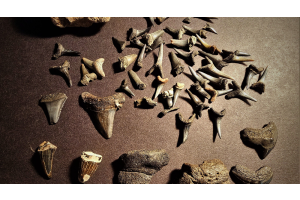
How to tell if a Megalodon tooth is real, that is from enhanced fossils to outright fabrications, the black market of dinosaur bones has grown into a global problem that continues to challenge paleontologists and mislead collectors.
The Rise of Fossil Fever
The fascination with fossils is nothing new. Victorian-era explorers once showcased dinosaur bones as exotic curiosities. But the late 20th century transformed fossil collecting into big business. High-profile auctions, often attended by wealthy bidders, turned fossils into luxury items. Suddenly, a fossil wasn’t just an object of study, it was an investment, a conversation piece, and a symbol of status.
This surge in demand didn’t just drive up prices; it opened the door for opportunists. The combination of high profit margins and relatively low entry barriers meant that forgers could make small fortunes by altering, reconstructing, or outright fabricating fossils. The market quickly became flooded with fakes so convincing that even trained eyes sometimes struggle to spot them.
The Business of Forgery
The types of fake fossils vary widely, each exploiting different buyer expectations:
Enhanced Fossils – Genuine fossils are modified, polished, painted, or filled in, to appear more complete or valuable than they truly are.
Composite Fossils – Different pieces from separate specimens (or species) are fused together, creating an illusion of a whole skeleton.
Reconstructed Fossils – Missing parts are fabricated with stone, resin, or plaster to give the impression of completeness.
Casts and Replicas – While casts can serve educational purposes, unethical sellers sometimes present them as authentic fossils.
Outright Fakes – Manufactured entirely, often from stone, resin, or even animal bones, designed to mimic the appearance of rare specimens.
Each of these forgeries feeds into the black market, duping buyers and distorting the scientific record.
Why Fossil Forgery Matters
At first glance, one might think fake fossils only affect wealthy collectors. But the implications stretch far deeper:
Scientific Damage – When fakes enter the scientific record, they can mislead researchers and skew our understanding of evolution and history.
Cultural Erosion – Fossils are not just scientific artifacts; they are cultural heritage. Forging them disrespects the story of life on Earth.
Economic Exploitation – Collectors and enthusiasts, often inexperienced, lose money to fraudsters.
Legal Issues – Many fossils are illegally excavated from protected sites, creating conflicts between governments, collectors, and black-market traders.
How to Tell a Fake Fossil from the Real Thing
The good news is that while fossil forgery is rampant, there are ways to spot a counterfeit. Professionals use advanced technology to verify authenticity. But for novices and collectors, simple awareness goes a long way.
Price
If something seems too good to be true, it probably is. Genuine, rare fossils command high prices because of their scarcity and historical significance. A supposed “dinosaur claw” offered for a few hundred dollars should raise immediate suspicion. In auctions, if no one else is bidding on a specimen, chances are it’s either fake or of very low scientific and commercial value.
Place of Origin
Fossils aren’t found just anywhere. They are discovered in specific rock formations and fossil-rich regions. In the U.S., states such as Utah, Colorado, and Montana are considered fossil hotspots, while countries like Mongolia and China yield significant finds abroad. Sellers should be able to provide clear documentation about a fossil’s origin. Without provenance, authenticity becomes questionable.
Historical Accuracy
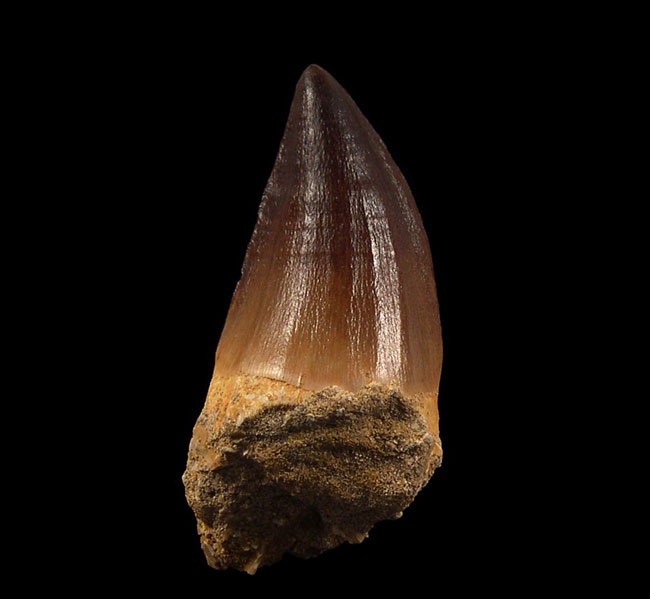
Every fossil tells a story tied to its formation and age. If a seller claims a Mosasaur tooth comes from a particular formation, cross-check that information. Does the formation even produce Mosasaur fossils? Are the characteristics consistent with what paleontologists have documented? If the historical context doesn’t align, it’s a red flag.
Anatomical Accuracy
Forgeries often falter in anatomical detail. Composite fossils may merge parts from different species, creating inconsistencies. Carefully study the specimen: Do the proportions look natural? Are the features symmetrical in ways that shouldn’t be? Does the fossil show wear and texture consistent with millions of years of burial? Unnatural perfection is often a giveaway.
Protecting Yourself as a Collector
For those interested in collecting fossils, how to tell if a Megalodon tooth is real,vigilance is key:
Buy from Reputable Sources – Established fossil dealers and certified auction houses are far less likely to deal in forgeries.
Demand Documentation – Provenance is everything. If a fossil’s origins can’t be verified, proceed with caution.
Consult Experts – Paleontologists, geologists, and fossil appraisers can provide valuable insights.
Educate Yourself – The more you know about fossils, formations, and species, the harder it becomes for fraudsters to deceive you.
Toward a More Ethical Fossil Market
Addressing the problem of fake fossils requires more than just vigilance from collectors. Governments must enforce stricter regulations, auction houses must verify provenance more rigorously, and museums must remain cautious about acquisitions. Technology, too, can play a role—noninvasive scanning techniques continue to improve, making it easier to detect forgeries without damaging specimens.
At its core, though, this is about respect. Fossils are more than objects to be bought and sold; they are the echoes of deep time, carrying with them the story of life’s triumphs, struggles, and extinctions. Treating them as mere status symbols diminishes their value.
Conclusion
The black market of dinosaur bones is a sobering reminder that where money flows, history itself can be forged. From the multimillion-dollar auctions of T. rex skeletons to the resin trilobites sold at roadside stands, the trade in fossils spans from glamorous to grimy. How to tell if a Megalodon tooth is real, amidst the forgeries and fraud, authentic fossils continue to inspire awe, teaching us about Earth’s deep past.
For collectors, scientists, and enthusiasts alike, the challenge is to separate the genuine from the fake, to ensure that history remains intact, unsullied by forgery. Because in every authentic fossil lies a story written not by human hands, but by the Earth itself.
Explore our curated selection of genuine fossils, from dinosaur teeth to marine treasures—and start building a collection you can trust.