Page 33 - Monthly Archives: September 2025
- - September 17, 2025
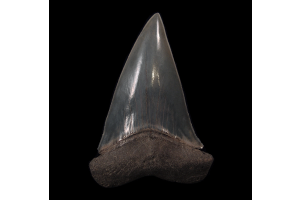
Imagine standing on a riverbank, pulling something heavy and sharp-edged from the mud. At first glance, it looks like a shard of stone. But as you brush it off, the enamel gleams darkly, almost like polished obsidian. What you’re holding is no ordinary fossil. It’s a Black Megalodon tooth, a relic from a shark that ruled the seas millions of years ago.
That moment—when time collapses and history rests in your palm—is what fuels our passion. We don’t just sell fossils; we bring the ocean’s most legendary predator back to life, tooth by tooth. Here’s how we do it, and why collectors around the world trust us to deliver specimens that feel like they belong in a museum.
The Power of a Prehistoric Predator
Megalodon wasn’t just big—it was colossal. At over 60 feet in length, it could outmatch any predator alive today. Picture a shark longer than a school bus, its jaws armed with hundreds of teeth, each serrated like a steak knife. Those teeth were its legacy, and unlike bones that dissolve
- - September 17, 2025
Shark teeth have fascinated people for centuries, but there’s a special kind of magic surrounding megalodon fossils. These teeth aren’t just remnants of an ancient predator; they’re showpieces that command attention the moment you hold them. Collectors around the globe know there’s something distinct about the specimens that surface along South Carolina’s rivers and coastal sands. That’s why Otodus megalodon - So. Carolina’s teeth have gained a reputation for being elite. If you’ve ever wondered what makes them stand out, let’s explore their story together.
The Allure of the Megalodon
The megalodon, often called the “meg” by fossil enthusiasts, wasn’t your average shark. This giant prowled the oceans millions of years ago and could grow up to 60 feet long. Imagine a shark large enough to swallow a small car—now picture its teeth. At over seven inches, these fossils are the largest shark teeth ever discovered.
Size aside, megalodon teeth carry an undeniable charisma. They’re sleek, triangular,
- - September 17, 2025
Shark teeth are more than relics; they are storytellers from ancient oceans. Each serration, each curve, and each fossilized edge carries the history of predators that defined their time. And when you place a megalodon great white shark tooth side by side, you see two very different narratives—one of colossal power, the other of precision and adaptability.
Meet the Ocean’s Heavyweight
The megalodon was the titan of prehistoric seas, stretching close to sixty feet in length. Imagine a school bus gliding silently through ancient waters, its jaws capable of exerting crushing pressure strong enough to snap whale bones. Its teeth matched its size: some spanning seven inches, broader than your palm, thick enough to survive millions of years. These teeth weren’t designed for finesse. They were engineered for domination—flattened and heavy, ready to smash through bones and tear apart massive marine mammals.
Holding a megalodon tooth today is more than a collector’s thrill; it’s a handshake
- - September 17, 2025
Most fossils fit neatly into the “curiosity cabinet” category—small, neat, and something you can pocket as a souvenir from another era. But then there are the showstoppers, the ones that make your jaw drop and your imagination run wild. A 7 inch megalodon tooth for sale belongs to that rare group. Not only is it a fossil, it’s proof that one of the most terrifying predators the planet has ever seen actually swam in our oceans.
The Shark That Owned the Seas
The Megalodon wasn’t just big; it was enormous. Scientists believe it reached lengths of 60 feet, which is twice the size of a school bus, with jaws powerful enough to snap through whale bones like pretzels. Its bite force has been estimated at up to 180,000 newtons. By comparison, the modern Great White—fearsome in its own right—barely registers at one-tenth of that.
And yet, the bones of this marine titan didn’t survive. Its skeleton was made of cartilage, which dissolves over time. What we do have are its teeth, which are massive,
- - September 17, 2025
Fossil collecting has always carried a spark of mystery, but every now and then, a discovery rattles the entire community. When the world’s largest Megalodon tooth surfaced, it did more than set a record. It challenged the way we think about collecting itself. For years, enthusiasts and scientists believed the boundaries were already drawn. Then along came this jaw-dropping find, the biggest megalodon tooth ever seen, and suddenly the conversation shifted.
This was no ordinary fossil. It was a reminder that nature still holds surprises and that our collections, no matter how carefully curated, are never complete. Let’s dig into why this extraordinary discovery has redefined collecting and why it matters not only to scientists but to anyone who feels the thrill of holding deep history in their hands.
Megalodon: The Prehistoric Titan
To appreciate the impact of this tooth, you need to remember what creature it came from. Megalodon wasn’t just another shark. With a maximum length of 60
- - September 17, 2025
Shark fossils captivate collectors everywhere, but nothing compares to the teeth of the Megalodon. These prehistoric giants didn’t just swim the seas—they dominated them. Their fossilized teeth remain the ultimate proof of their unmatched power. Enthusiasts often wonder how big a megalodon tooth gets, and once you dive into the full spectrum of megalodon tooth size, it becomes clear why no other fossil can compete.
The Predator Behind the Fossil
To understand the value of these teeth, you have to picture the creature itself. The Megalodon was an apex predator estimated to grow up to 60 feet in length—three times the size of today’s largest great white sharks. With jaws wide enough to swallow two humans side by side, its teeth were not just tools for survival but symbols of dominance.
Each tooth was serrated, triangular, and built for power. They were capable of crushing whale bones, ripping through flesh, and ensuring that Megalodon stayed at the very top of the food chain. Today, those
- - September 17, 2025
When you think of the Megalodon, the first image that comes to mind is usually a gigantic shark ruling the seas with unmatched power. But even giants begin small. Fossil discoveries focusing on baby megalodon tooth size have given scientists and collectors alike an incredible chance to peek into the earliest days of one of history’s most fascinating predators. These tiny treasures hold clues about where Megalodons were born, how they grew, and the nurseries that shaped their survival.
For us, they also represent one of the most rewarding ways to connect with prehistory. After all, a single tooth can carry millions of years of ocean stories.
Tiny Teeth with Mighty Clues
Adult Megalodon teeth often steal the spotlight with their intimidating size, some stretching past seven inches long. In contrast, baby teeth are smaller—yet still massive compared to most sharks of their era. A juvenile Megalodon tooth may only measure an inch or two, but that’s enough to show just how formidable even
- - September 17, 2025
Shark teeth have long fascinated fossil enthusiasts, but few specimens inspire as much excitement as the enormous teeth of the Megalodon. For seasoned collectors and astute fossil investors, the excitement stems not only from possessing a tangible fragment of the ancient past, but also from delving into the intricate economics that underpin its value. The allure of these prehistoric treasures lies in the stories they tell and the historical significance they carry, transforming each specimen into a valuable investment that bridges the gap between time and knowledge. The megalodon tooth price is shaped by rarity, condition, and sourcing, making it an intriguing market that continues to evolve as demand grows.
The Allure of Megalodon Teeth
The Megalodon, an awe-inspiring apex predator that dominated the oceans millions of years ago, could achieve staggering lengths of up to 60 feet. Its colossal teeth, some measuring more than 6 inches, rank among the largest ever unearthed, leaving paleontologists
- - September 17, 2025
For countless millennia, the vast expanses of the oceans have been sculpted by magnificent giants and relentless hunters. Among the most legendary of these formidable predators are the colossal megalodon and the sleek great white shark. One, a titan of the deep, has long been relegated to the annals of prehistoric history, its reign over the seas a distant memory. At the same time, the other continues to navigate the shimmering waters today, a testament to the remarkable prowess of evolution. As we examine their formidable teeth—crafted for survival and shaped by millions of years of adaptation—we uncover not just awe-inspiring size and form, but also rich narratives of existence, resilience, and the intricate balance of life that flourishes under the surface of the deep blue sea.
It becomes clear that the comparison of megalodon vs. great white teeth offers us one of the most compelling insights into predator-prey dynamics that ever existed in marine ecosystems.
Why Teeth Tell the
- - September 17, 2025
Few prehistoric animals captivate our imagination quite like the gigantic predator that once ruled the oceans millions of years ago. This remarkable ancient shark fascinates both scientists and fossil enthusiasts, not only because of its enormous size—believed to reach lengths of over 60 feet—but also due to the significant legacy it left in the form of its fossilized teeth. These extraordinary remnants, each serving as a testament to its incredible strength and presence, provide more than just scientific knowledge; they represent the awe and magnificence of an era when this mighty hunter dominated the seas. Through these extraordinary remains, the captivating story of the megalodon continues to resonate, inviting us to explore the depths of our planet’s prehistoric past.
The prehistoric apex predator
At an estimated length of up to 60 feet, this colossal shark dominated the seas between 23 and 3.6 million years ago. With jaws strong enough to crush bone and teeth that could reach over