

Shark teeth are more than relics; they are storytellers from ancient oceans. Each serration, each curve, and each fossilized edge carries the history of predators that defined their time. And when you place a megalodon great white shark tooth side by side, you see two very different narratives—one of colossal power, the other of precision and adaptability.
Meet the Ocean’s Heavyweight
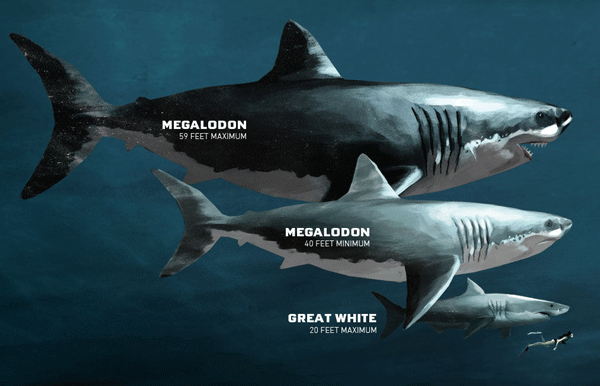
The megalodon was the titan of prehistoric seas, stretching close to sixty feet in length. Imagine a school bus gliding silently through ancient waters, its jaws capable of exerting crushing pressure strong enough to snap whale bones. Its teeth matched its size: some spanning seven inches, broader than your palm, thick enough to survive millions of years. These teeth weren’t designed for finesse. They were engineered for domination—flattened and heavy, ready to smash through bones and tear apart massive marine mammals.
Holding a megalodon tooth today is more than a collector’s thrill; it’s a handshake with history. Each one belonged to a shark that once ruled without rivals, a reminder that even the greatest predators eventually fall to extinction.
The Modern Predator
Fast forward to the present, and the great white claims the spotlight. While smaller in size—averaging fifteen to twenty feet—it is the ocean’s reigning predator. Its three-inch teeth may look modest compared to the megalodon’s, but form follows function. With sharp, triangular edges serrated like the finest blades, these teeth are designed for quick and efficient slicing. A single strike is often enough to incapacitate prey, leaving the shark to circle back and finish its hunt.
The great white represents a different kind of success. Instead of brute force, it relies on agility, stealth, and a surgical bite. Its survival, long after the megalodon vanished, proves that sometimes adaptability outweighs sheer size.
Teeth in Action: Imagining the Hunt
Picture a megalodon pursuing a whale. With a mouth nearly ten feet wide, it clamped down with a force estimated at 40,000 pounds. Its broad teeth shattered bones, ensuring prey never stood a chance. The ocean trembled at the arrival of such a hunter.
Now imagine a great white’s approach. Sleek, fast, and calculated, it surges from below, jaws snapping with pinpoint precision. The teeth slice flesh like butter, allowing the shark to retreat briefly as its prey weakens. This contrast tells us everything: the megalodon was a bulldozer, while the great white is a scalpel.
Fossilization: How Teeth Outlast Time
Teeth are often the only evidence sharks leave behind, since their skeletons are made of cartilage that doesn’t fossilize well. Over millions of years, minerals seep into buried shark teeth, replacing organic material and turning them into stone. That’s why you can find megalodon teeth in hues of copper red, jet black, or earthy tan—colors gifted by the surrounding sediment.
Great white teeth, though much younger, undergo a similar process, often found in lighter shades. These fossils act like timestamps, marking eras of ocean history with each layer of sediment they’ve absorbed.
Why Collectors Are Hooked
Collectors gravitate to shark teeth for more than scientific curiosity. A megalodon tooth is a statement piece, often the centerpiece of a collection. Its sheer size and age—up to 23 million years old—make it breathtaking to behold. A great white tooth, while smaller, connects us to a predator still alive today, one we can see in documentaries or, for the bold, out in the wild.
Some collectors seek size, others elegance. Many want both—the commanding presence of a megalodon fossil and the sleek, sharp beauty of a great white specimen. Together, they strike a balance between power and precision, past and present.
Beyond Science: Natural Works of Art
Shark teeth aren’t just fossils; they’re natural sculptures. A polished megalodon tooth can gleam with metallic hues, its serrations like ancient carvings. Great white teeth, by contrast, are defined by symmetry and sharpness, looking more like jewelry crafted by evolution than remnants of a predator.
That’s part of the appeal. These teeth serve as décor, conversation starters, and educational pieces all at once. Whether displayed in a case or held in your hand, they bridge the gap between science and art.
Caring for Your Fossil Treasures
Shark teeth may have survived millions of years underground, but they still deserve care. Display them away from direct sunlight to preserve their color. Use stands or frames that highlight their structure without risking damage. And always handle them gently—especially the serrations, which can chip if mishandled. With basic attention, these fossils remain pristine for decades to come, ready to impress anyone who sees them.
The Collector’s Journey
For many, the journey begins with curiosity: maybe a small great white tooth found on a beach, or a first purchase of a megalodon fragment. But soon, the fascination grows. Collectors begin seeking larger, rarer, or better-preserved specimens. They start appreciating not just the size but the provenance—the location, the condition, and the unique coloration that makes each tooth one-of-a-kind.
That’s where we step in. Our role is not just to provide fossils, but to guide collectors toward authentic, museum-grade specimens that suit their interests and budgets. From entry-level teeth to rare showpieces, we curate with passion and integrity.
Why Buy From Us
Collecting shark teeth isn’t just about acquiring objects; it’s about trusting the source. We understand that authenticity matters. That’s why every fossil we offer is carefully vetted, with details provided about its age, origin, and features. When you buy from us, you’re not just purchasing a fossil—you’re gaining confidence in its story.
We also believe collecting should be as rewarding as the fossils themselves. That’s why we share context and background, helping you understand not just what you’re holding, but the ancient world it came from. Whether you’re an experienced collector or just starting out, we ensure each piece you acquire adds both beauty and meaning to your collection.
Evolution’s Showdown
Placing a megalodon tooth next to a great white tooth is like setting two philosophies side by side. One represents brute dominance, the other refined survival. One conquered the oceans and vanished. The other adapted and still reigns. Together, they tell a story of nature’s constant balancing act between power and adaptability.
For collectors, owning both isn’t just about size comparison—it’s about appreciating how different paths through evolution can each lead to greatness.
Conclusion
Comparing a megalodon great white shark tooth isn’t just about size or sharpness. It’s about contrasting two predators that shaped the history of our oceans—one through sheer magnitude, the other through adaptability and precision. Both belong in the hands of collectors who value fossils not only for their rarity, but for the stories they carry.
When you’re ready to bring these stories into your own collection, explore our carefully curated selection. With us, you’ll find more than fossils—you’ll find authentic connections to the giants and survivors of Earth’s oceans.






