Page 76 - Blog
- - September 22, 2025
The unearthing of the largest Megalodon tooth ever in Chile has stirred a wave of awe and fascination across the globe. At Buried Treasure Fossils, we are thrilled to share insights into this monumental discovery that has captivated fossil enthusiasts, marine life experts, and curious minds alike.
This exceptional find does more than just excite fossil collectors — it pulls back the curtain on the colossal apex predator that once ruled the oceans, the Megalodon. At the same time, it shines a light on Chile’s thriving fossil-rich landscapes, reinforcing its place as a global hotspot for prehistoric marine life.
The sheer size and preservation of this tooth offer a rare, tangible connection to an era that predates human history by millions of years. It serves as a striking reminder of the vast and mysterious marine ecosystems that once teemed with giants beneath the waves.
A Window into Ancient Ocean Giants
The Megalodon whose name fittingly means “big tooth,” roamed Earth’s oceans millions
- - September 22, 2025
The Megalodon shark, now extinct, continues to inspire awe among fossil collectors and marine enthusiasts alike. This massive predator, whose name fittingly translates to “large tooth,” ruled the oceans millions of years ago. At Buried Treasure Fossils, we specialize in offering fossilized Megalodon teeth that give a glimpse into this prehistoric marvel. For those passionate about marine history or simply intrigued by giant predators of the past, finding a Megalodon tooth is like holding a piece of Earth’s ancient legacy in your hands.
About the Prehistoric Megalodon Shark
The Megalodon was one of the most powerful predators to ever exist in the marine world. Estimates suggest it could reach lengths of up to 60 feet and weigh between 50 to 75 tons. For perspective, that’s roughly three times the length of a modern Great White shark.
Its colossal size was matched only by its formidable dentition. The Megalodon’s teeth are some of the largest fossilized teeth known—some measuring over
- - September 22, 2025
The ocean holds countless mysteries, but every so often, a discovery comes along that forces us to rethink what we know about its past inhabitants. One of the most exciting paleontological finds in recent years comes from Chile, where researchers uncovered what may be the largest megalodon shark tooth ever found. This fossil is more than just an extraordinary specimen—it’s a piece of evidence that could reshape our understanding of one of the most powerful predators to ever roam Earth’s oceans.
A Tooth That Stirs Global Attention
The Chilean discovery quickly gained global attention, and for good reason. At first glance, it might appear to be just another fossilized tooth, but its massive size tells a much bigger story. Megalodon, whose name translates to “big tooth,” lived millions of years ago and is believed to have reached lengths of up to 60 feet. Fossilized teeth are often the best-preserved remains of these sharks, offering vital clues about their size, diet, and even their ecological
- - September 22, 2025
For many fossil enthusiasts, the thrill of finding a prehistoric shark tooth is second to none. These serrated giants, once belonging to the mighty Megalodon, are more than just collectibles—they are fragments of Earth’s deep history. But an interesting question often surfaces: while people set out on megalodon tooth fossil hunting trips, do they also stumble upon other ancient discoveries? The answer is a fascinating yes, and it takes us beyond teeth into a broader world of prehistoric treasures.
Why Megalodon Teeth Are So Popular Among Collectors
The Megalodon was the largest shark to ever live, dominating oceans millions of years ago. Its teeth can measure over seven inches long, and they are remarkably well-preserved compared to many fossils. Their size, durability, and rarity make them prized finds for divers and collectors.
But teeth are only part of the story. When hunters head into rivers, beaches, and cliffs in search of these impressive fossils, they are venturing into layers
- - September 22, 2025
Long before modern oceans teemed with whales, sharks, and dolphins, an apex predator ruled the seas with unmatched dominance. Fossils remain as the only silent testimony of its existence, and among them, the black Megalodon tooth stands as one of the most captivating relics of the past. These teeth, unearthed in places like West Java, Indonesia, reveal extraordinary stories about marine ecosystems that thrived millions of years ago, bridging the gap between today’s collectors and the vanished giants of prehistory.
The Marine Titans of the Miocene and Pliocene
Carcharocles megalodon—often simply called Megalodon—was not just any shark. It stretched up to 60 feet in length, dwarfing modern great whites and orcas. Its enormous serrated teeth were perfectly designed to shear through whale bone and thick cartilage, granting it the highest estimated bite force of any known creature, reaching up to 180,000 newtons. The black Megalodon tooth, often found preserved in limestone deposits in West
- - September 22, 2025
Sharks have ruled the oceans for hundreds of millions of years, and their fossilized teeth continue to provide fascinating windows into their evolutionary history. Among the most sought-after finds are those massive, serrated Megalodon tooth from Peru, which tell a story not just of a giant predator, but of how sharks adapted across dynamic prehistoric seas. At Buried Treasure Fossils, we are passionate about sharing these extraordinary specimens with fellow enthusiasts, helping collectors and students alike explore their scientific and historical importance.
The Fossil Treasures of Peru
Peru is one of the most remarkable localities for shark teeth fossils. Its coastal desert regions, including the Miocene Caballos Formation near Rio Ica and the Pliocene Pisco Formation near Sacaco, have yielded an incredible diversity of shark species. These formations span millions of years, from approximately 20 million years ago in the Miocene to around 3 million years ago in the Pliocene. The preservation
- - September 22, 2025
For centuries, mysterious fossilized objects washed up on shores and emerged from rocky cliffs, sparking endless speculation. Some believed they were remnants of mythical beasts, others thought they were celestial fragments fallen from the moon. Among the most captivating of these relics is the real megalodon tooth, a specimen that bridges folklore with science and continues to fascinate collectors and researchers alike. As our understanding grew, these fossils transformed from misunderstood curiosities into powerful evidence of one of the ocean’s most extraordinary predators.
The First Misunderstandings: Dragon Tongues and Mythical Beasts
Long before marine science existed as a formal discipline, natural historians and villagers alike tried to make sense of unusual stone objects. Large fossil teeth, often discovered in Europe and Asia, were frequently interpreted as “dragon tongues.” Their triangular, serrated shape lent itself to comparisons with mythological creatures. In medieval times,
- - September 22, 2025
The fascination with prehistoric treasures has grown into a global passion, driven by collectors, investors, and fossil enthusiasts seeking rare specimens that connect us to ancient oceans. Among the most coveted pieces are megalodon teeth for sale, which continue to dominate auctions, online fossil markets, and private collections. This surge in interest isn’t just about owning a fossil; it’s about holding a tangible piece of marine history and investing in an asset that blends rarity with storytelling power.
The Legend of the Megalodon
The Megalodon, often referred to as the “megatooth shark,” was the largest predatory fish ever to exist. Measuring up to 60 feet in length, this prehistoric shark dwarfed even today’s Great White. Its bite force—estimated at nearly 180,000 newtons—was unmatched in the animal kingdom. Feeding on massive whales and other marine mammals, Megalodon left behind a legacy that can still be seen in fossilized teeth, often discovered in coastal sediments around
- - September 22, 2025
When researchers explore the fossil record, they often find themselves captivated by the wide variation in Megalodon teeth. These fossils allow insights into how this prehistoric shark lived, grew, and hunted. Among the wide range of specimens recovered, the exceptional Chile discovery provides an extraordinary example of size and preservation. It is often described as the world's biggest megalodon tooth, raising new questions about the upper limits of this ancient predator.
Growth, Age, and the Life Cycle of a Giant
Variation often begins with age. Like modern sharks, Megalodon replaced its teeth throughout life, producing smaller, less robust teeth during its juvenile years and much larger teeth as it matured. Fossil evidence shows that older individuals shed teeth significantly bigger than those of younger sharks, which helps explain why most specimens recovered today are smaller.
Larger teeth were less common in life and, therefore, less likely to survive through time. The Chile
- - September 22, 2025
In our work, we are often asked what makes Alpha Megalodon teeth so much more fascinating than standard finds. As providers of these incredible fossils, we have seen how collectors are drawn to Alpha specimens because they represent something far greater than an ordinary discovery.
Their rarity, powerful display impact, sharp lines, massive size, and the prestige they bring to a collection make them treasures that stand in a category of their own.
The Mark of an Alpha Tooth
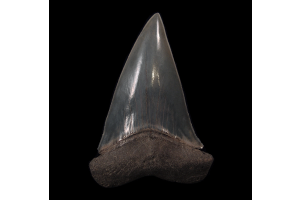
Alpha Megalodon teeth are fossils that immediately stand out because of their exceptional features. These teeth are usually over six inches long, with thick, triangular blades and wide, sturdy roots. The serrations are often still sharp, and the tooth appears balanced and symmetrical. This level of preservation gives Alpha specimens a commanding presence.
In comparison, standard Megalodon teeth—while still impressive in their own right—tend to show cracks, chips, or heavy erosion that dulls their appearance. An Alpha